
Yukon gold
Yukon Gold Yellow Fleshed Potatoes
What it is
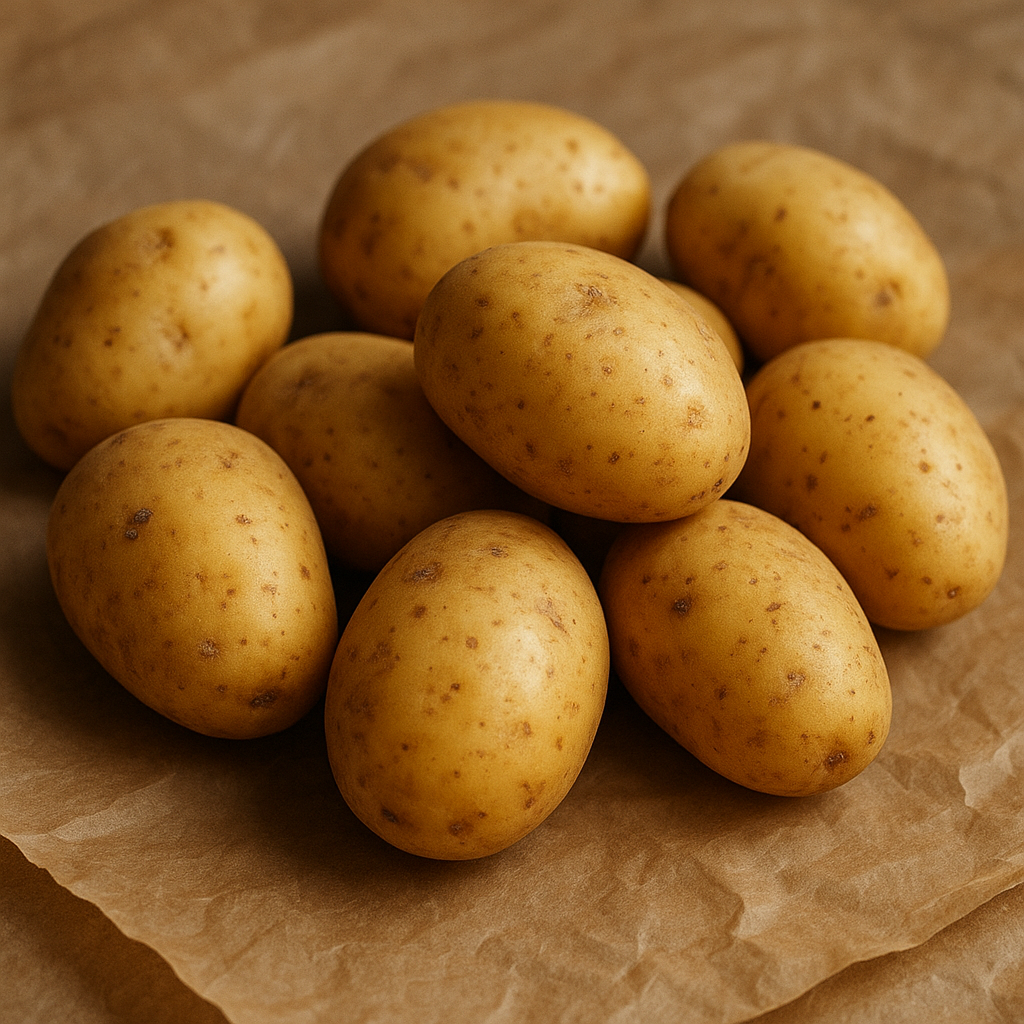
These are versatile, all-purpose potatoes known for their smooth, thin, yellow skin and creamy, buttery yellow flesh. They have a slightly waxy texture that holds its shape well when cooked, making them suitable for a wide range of culinary applications. Their mild, earthy flavor is a pleasing addition to many dishes, and they cook relatively quickly compared to some other potato varieties.
How people cook with it
Yukon Golds are a favorite in kitchens for their adaptability. They can be prepared in numerous ways, from simple boiling to more elaborate roasting.
- Boiled for mashing
- Roasted with herbs
- Added to stews
- Sliced for gratins
To prepare Yukon Golds, begin by washing them thoroughly under cool running water. You can choose to peel them or leave the skin on, depending on your preference and the dish. For boiling, cut them into uniform pieces and cover with cold water, bringing to a boil until tender. When roasting, toss them with oil and seasonings before spreading on a baking sheet. They also lend themselves well to being sliced thinly for layered dishes or diced for inclusion in soups and casseroles. Their texture makes them forgiving, so overcooking is less of a concern than with starchier potatoes.
How it differs from similar foods
Compared to russet potatoes, Yukon Golds are less starchy and have a creamier texture when cooked. They don't break down as easily as some other waxy potatoes, offering a good balance between holding their shape and becoming tender. Their yellow flesh also provides a visually appealing color to dishes.
Who it is for
Home cooks and professional chefs alike appreciate Yukon Golds for their reliable performance and pleasant flavor.
How to keep the rest
Store any unused Yukon Golds in a cool, dark, and well-ventilated place, such as a pantry or cellar. Avoid storing them in the refrigerator, as this can cause their starches to convert to sugars, affecting their taste and texture. Keep them away from direct sunlight to prevent them from turning green.