
Bowl & Basket
Bowl & Basket Whole White Potatoes
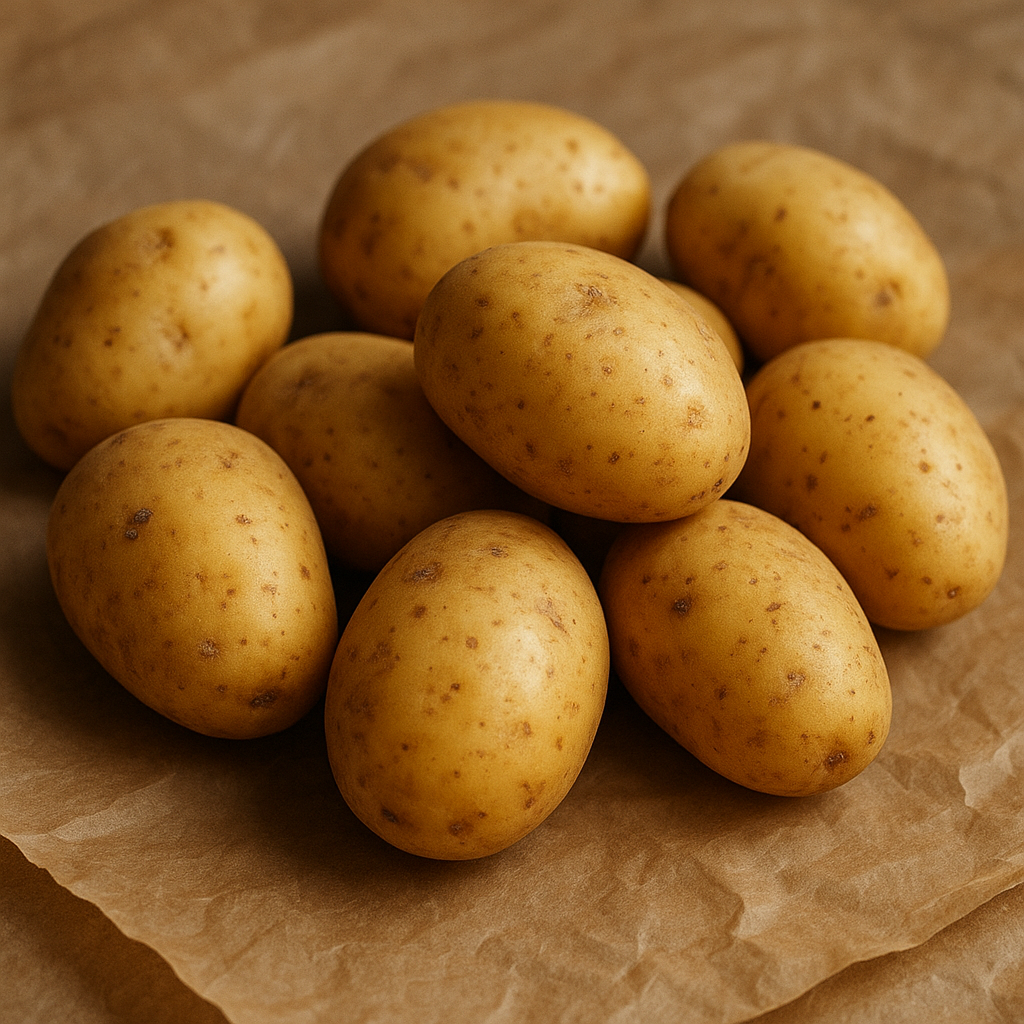
What it is
These are whole white potatoes, a versatile root vegetable. They have a thin, edible skin and a starchy interior. White potatoes are a staple in many kitchens, known for their mild flavor and ability to absorb other tastes. They are a good source of carbohydrates and are commonly found in grocery stores year-round. Their texture can vary depending on how they are prepared.
How people cook with it
Potatoes are a fundamental ingredient in countless dishes, from simple sides to elaborate main courses.
- Baked whole
- Mashed
- Fried
- Roasted
To prepare, wash the potatoes thoroughly to remove any dirt. You can peel them or leave the skin on, depending on your preference and the dish. For baking, prick them with a fork and cook in the oven until tender. For mashing, boil them until soft, then drain and mash with your chosen additions. When frying, cut them into desired shapes and cook until golden brown and crisp. Roasting involves cubing them and tossing with oil and seasonings before baking.
How it differs from similar foods
Compared to red or yellow potatoes, white potatoes tend to have a less creamy texture when mashed. Their skin is typically thinner and more delicate than russet potatoes, making them suitable for dishes where the skin is meant to be eaten.
Who it is for
Home cooks looking for a foundational ingredient for everyday meals will find these potatoes useful.
How to keep the rest
Store any unused potatoes in a cool, dark, and dry place. Avoid refrigerating them, as this can affect their texture and flavor. Ensure they are not exposed to direct sunlight. Keep them away from onions, as they can cause each other to spoil faster.