
Grocery · 1 Cup
Whole Milk, 1 Cup
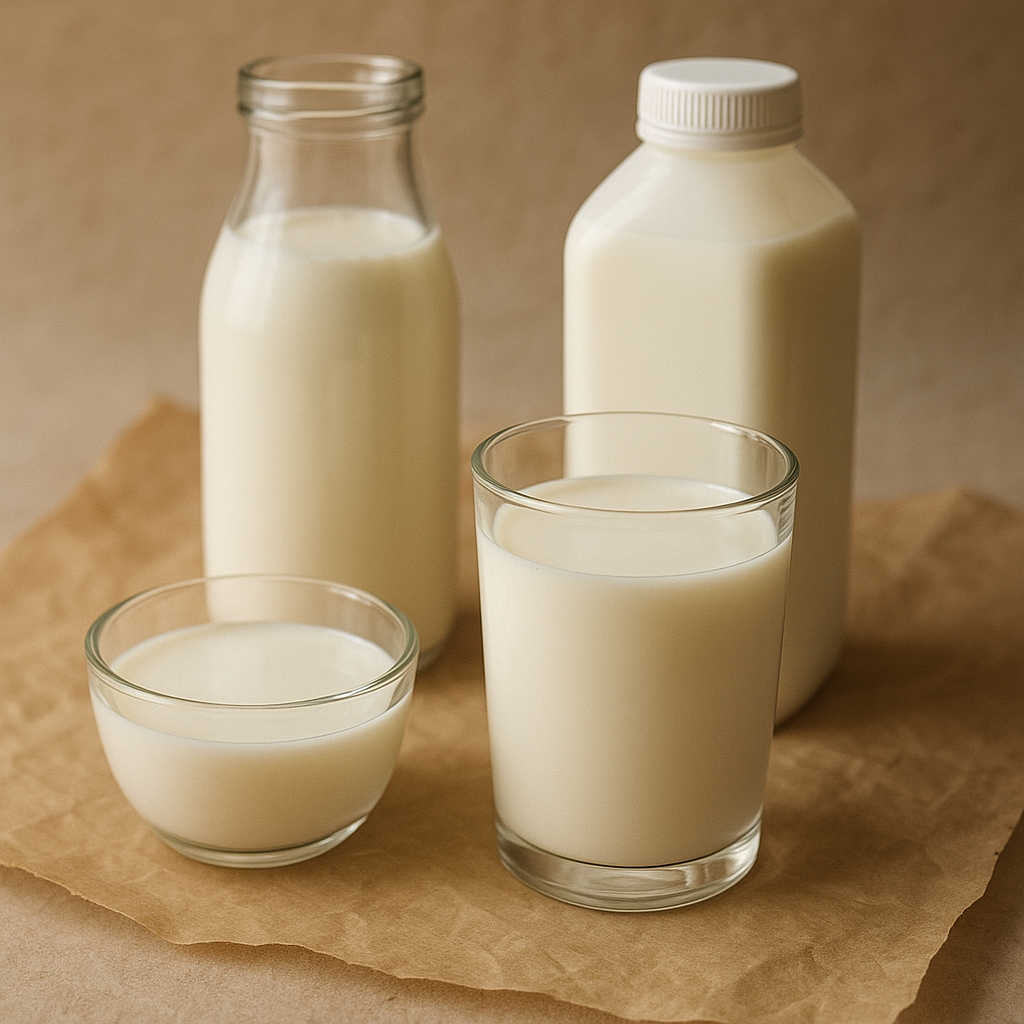
What it is
Whole milk is a dairy beverage that contains its natural fat content. This means it has not had any fat removed during processing. It is a common source of calcium and other nutrients. The fat content contributes to its rich flavor and creamy texture, making it a versatile ingredient in many culinary applications.
How people cook with it
Whole milk is a staple in kitchens, used in both sweet and savory dishes. Its richness adds depth to sauces and baked goods.
- Baking cakes and cookies
- Making creamy sauces
- Adding to coffee or tea
- Drinking as a beverage
Whole milk can be consumed directly as a drink or used as a liquid base in a wide array of recipes. It is excellent for enriching batters for pancakes, waffles, and muffins, providing a tender crumb. In savory cooking, it forms the foundation for béchamel sauce, creamy soups, and gratins. When heating, it should be done gently to prevent scorching. It can also be incorporated into smoothies for added creaminess and body. Its natural sweetness is a welcome addition to many preparations.
How it differs from similar foods
Compared to reduced-fat or skim milk, whole milk has a higher fat content. This difference results in a richer mouthfeel and a more pronounced dairy flavor. It also contributes to a smoother texture in baked goods and sauces, as the fat helps emulsify ingredients and prevent separation.
Who it is for
Home cooks and bakers often choose whole milk for its superior flavor and texture in their recipes.
How to keep the rest
After opening, store any remaining whole milk in its original container in the refrigerator. Keep it tightly sealed to maintain freshness and prevent it from absorbing odors from other foods. It is best consumed within a few days of opening for optimal quality.