
Grocery
Fresh Whole Carrots
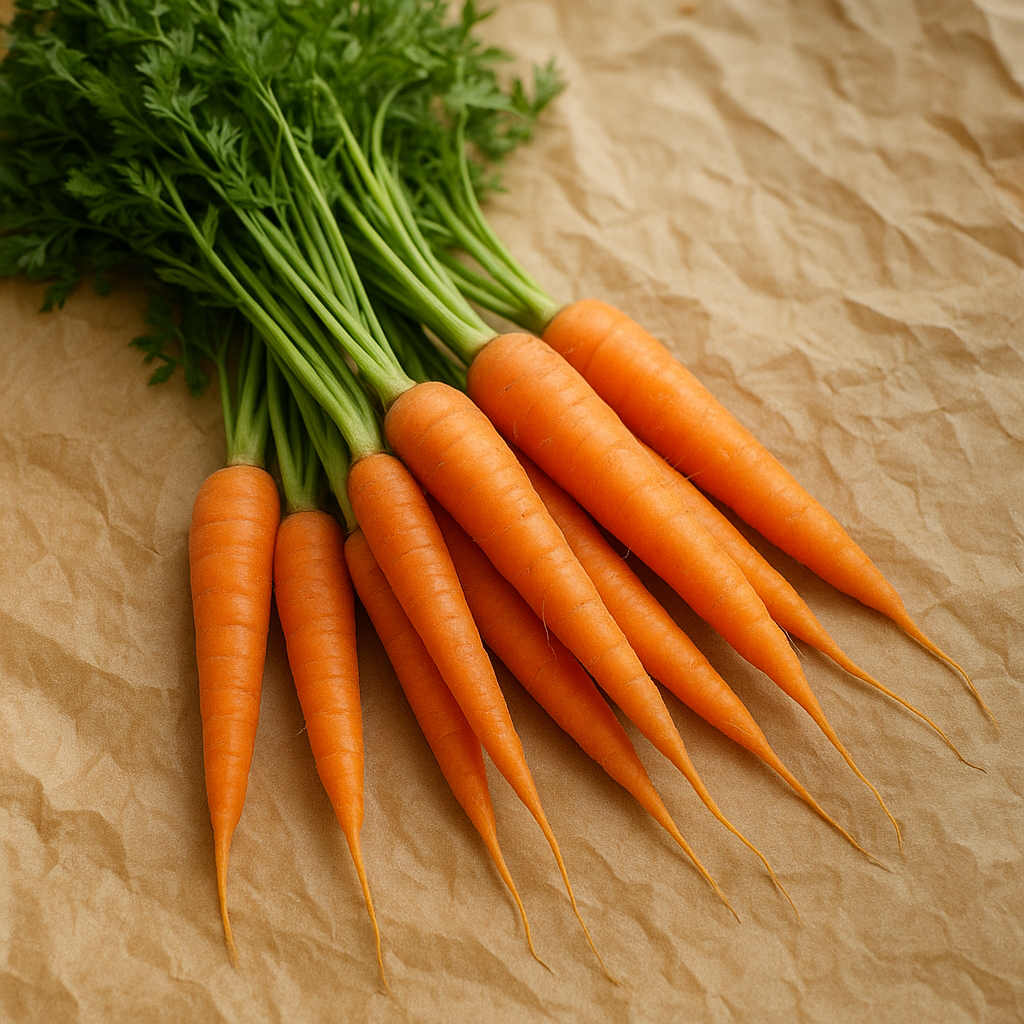
What it is
These are whole, unprocessed carrots, a root vegetable known for its vibrant orange color and slightly sweet, earthy flavor. They are typically sold with their green tops removed, though some varieties might still have a small amount attached. Carrots are a common and versatile ingredient, valued for their crisp texture when raw and their tender, sweeter profile when cooked. They are a staple in many kitchens worldwide.
How people cook with it
Whole carrots can be prepared in numerous ways, from simple snacks to complex dishes.
- Snacking raw
- Roasting with herbs
- Adding to stews
- Juicing
Before using, wash the carrots thoroughly to remove any soil. You can peel them if desired, though the skin contains nutrients. For raw consumption, they can be eaten whole, sliced into sticks, or grated. When cooking, carrots can be diced, chopped, or left whole depending on the recipe. They are excellent when roasted, which concentrates their natural sugars, or simmered in soups and stews where they absorb surrounding flavors. They also lend sweetness and color to baked goods.
How it differs from similar foods
Unlike pre-cut carrots or baby carrots, whole carrots offer the most flexibility in preparation. Their size and shape are entirely up to the cook. They also tend to have a firmer texture than baby carrots, which are often harvested earlier and may be sweeter.
Who it is for
Home cooks and professional chefs alike use whole carrots for their versatility and fresh flavor.
How to keep the rest
To keep the rest of your whole carrots fresh, store them unwashed in the crisper drawer of your refrigerator. Avoid washing them until just before you plan to use them, as excess moisture can lead to spoilage. They can typically last for several weeks when stored properly.