
Grocery
Whole Raw Almonds
What it is
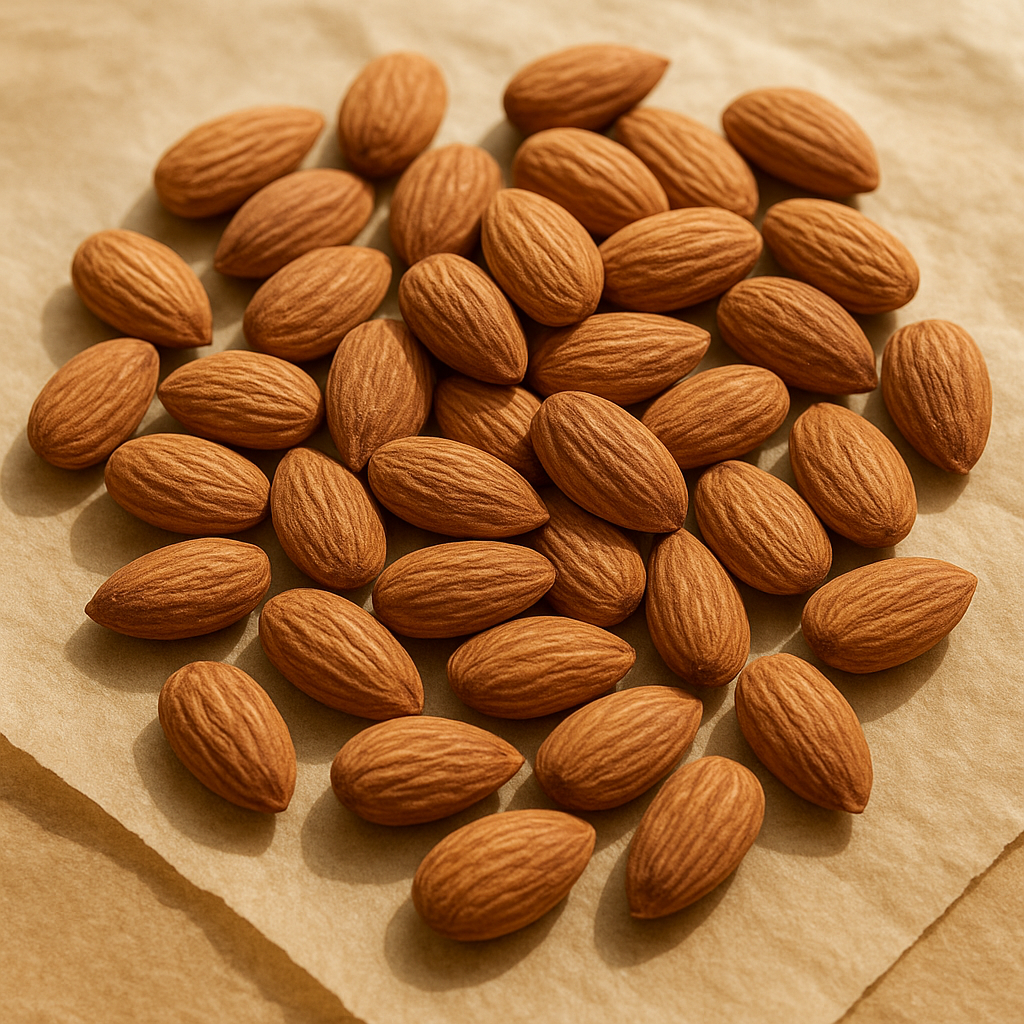
These are whole, raw almonds, meaning they have not been roasted, salted, or flavored. They come directly from the almond tree, retaining their natural state and texture. The outer skin is still present, giving them a slightly more rustic appearance and a subtle earthy flavor. They are a versatile ingredient, perfect for snacking or incorporating into various culinary creations.
How people cook with it
Whole almonds can be enjoyed as a simple snack or used as a foundational element in both sweet and savory dishes.
- Snack on them directly
- Add to baked goods
- Incorporate into trail mix
- Garnish salads
You can eat these almonds as they are for a satisfying crunch. For a deeper flavor and crispier texture, consider toasting them lightly in a dry skillet over medium heat until fragrant, or spread them on a baking sheet and roast in a moderate oven. They can also be chopped or ground to add texture and flavor to baked goods like cookies and muffins, or blended into sauces and dips for a creamy, nutty base. Their natural sweetness makes them a good addition to granola and energy bars.
How it differs from similar foods
Unlike roasted almonds, these raw almonds have a softer texture and a milder, more natural almond flavor. They do not have the enhanced crispness or the intensified nutty notes that come from the roasting process. Their natural skin also contributes a slightly different mouthfeel and a subtle, almost woody undertone.
Who it is for
Home cooks and snack enthusiasts often choose whole raw almonds for their versatility and natural appeal.
How to keep the rest
To maintain freshness, store any unused portion in an airtight container in a cool, dark, and dry place. Refrigeration can extend their shelf life further, especially in warmer climates. Ensure they are sealed properly to prevent them from absorbing odors or becoming stale.