
Grocery
Fresh White Potatoes
What it is
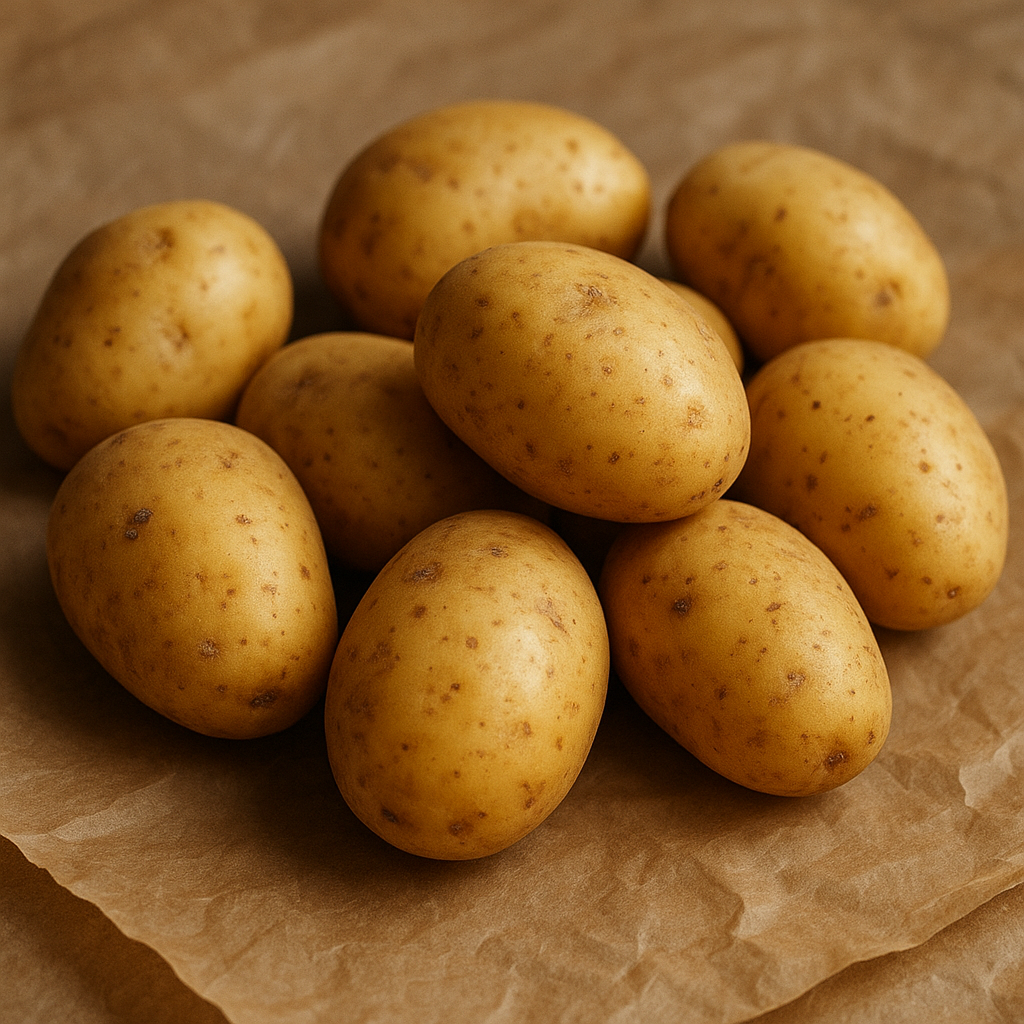
These are starchy tubers, commonly grown underground. They have a thin, light-colored skin and a firm, white flesh. White potatoes are a versatile staple ingredient, known for their mild flavor and ability to absorb other tastes. They are a good source of carbohydrates and provide energy. Their texture can change depending on how they are prepared, becoming fluffy when baked or creamy when mashed.
How people cook with it
White potatoes are a foundational ingredient in countless dishes, from simple sides to complex main courses.
- Baked and served with toppings
- Mashed for a creamy side
- Cubed for roasting
- Sliced for gratins
To prepare, wash the potatoes thoroughly to remove any dirt. You can peel them if desired, or leave the skin on for added texture and nutrients. For baking, simply prick them with a fork and place them in the oven until tender. For mashing, boil them until soft, then drain and mash with butter and milk. Roasting involves cutting them into pieces, tossing with oil and seasonings, and baking until golden brown and crispy. They can also be boiled and added to stews or soups.
How it differs from similar foods
Compared to russet potatoes, white potatoes generally have a thinner skin and a slightly waxier texture when cooked. They hold their shape better when boiled, making them ideal for potato salads or dishes where distinct pieces are desired, whereas russets tend to break down more easily.
Who it is for
Home cooks and professional chefs alike rely on white potatoes for their adaptability in everyday meals.
How to keep the rest
Store unwashed white potatoes in a cool, dark, and dry place, such as a pantry or cellar. Avoid refrigeration, as it can convert starches to sugars, affecting flavor and texture. Keep them away from onions, as the gases they release can cause each other to spoil faster.