
Grocery
Whole Wheat Flour
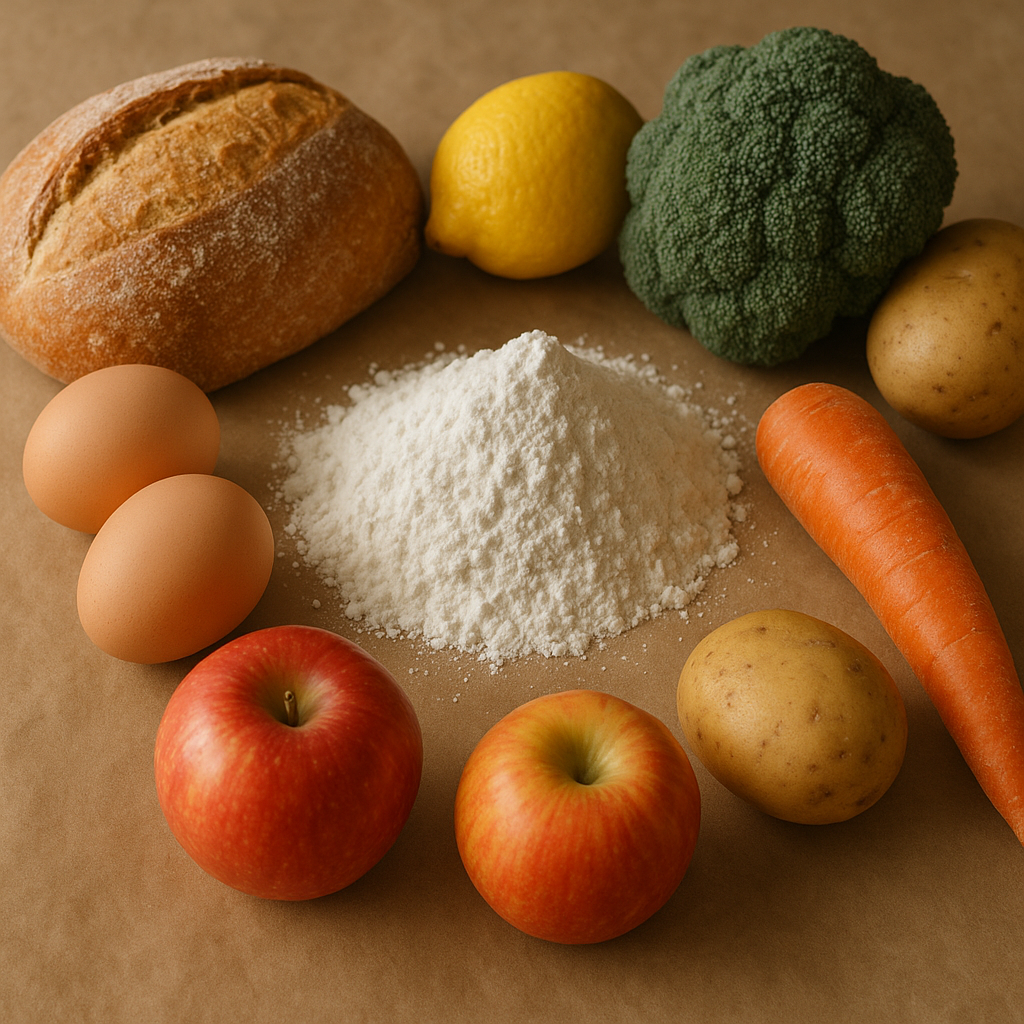
What it is
This is flour milled from the entire wheat kernel, including the bran, germ, and endosperm. It retains more of the natural components of the grain compared to refined flours. The presence of the bran and germ contributes to its characteristic texture and flavor. It is a staple in many kitchens for a variety of baking and cooking applications.
How people cook with it
Whole wheat flour is a versatile ingredient used in both sweet and savory dishes. Its hearty nature makes it a popular choice for everyday baking.
- Baking bread
- Making muffins
- Thickening sauces
- Creating pancakes
When baking with whole wheat flour, you can often substitute it for all-purpose flour, though adjustments may be needed. It absorbs more liquid than refined flour, so you might need to add a little extra moisture to your doughs or batters. For a lighter texture in baked goods, consider using a blend of whole wheat and all-purpose flour. It can also be used to add body to gravies and sauces, providing a slightly nuttier taste.
How it differs from similar foods
Unlike refined white flour, whole wheat flour contains the entire wheat berry. This means it has a coarser texture and a more robust, earthy flavor. The bran and germ give it a darker color and a denser crumb in baked goods compared to flour that has had these parts removed.
Who it is for
Home bakers and cooks looking for a more wholesome flour option will find this useful.
How to keep the rest
To maintain freshness, store any unused portion in an airtight container in a cool, dry place. This helps prevent moisture absorption and keeps the flour from becoming stale. Proper storage will extend its shelf life and preserve its quality for future use.