
Grocery
Organic Walnuts
What it is
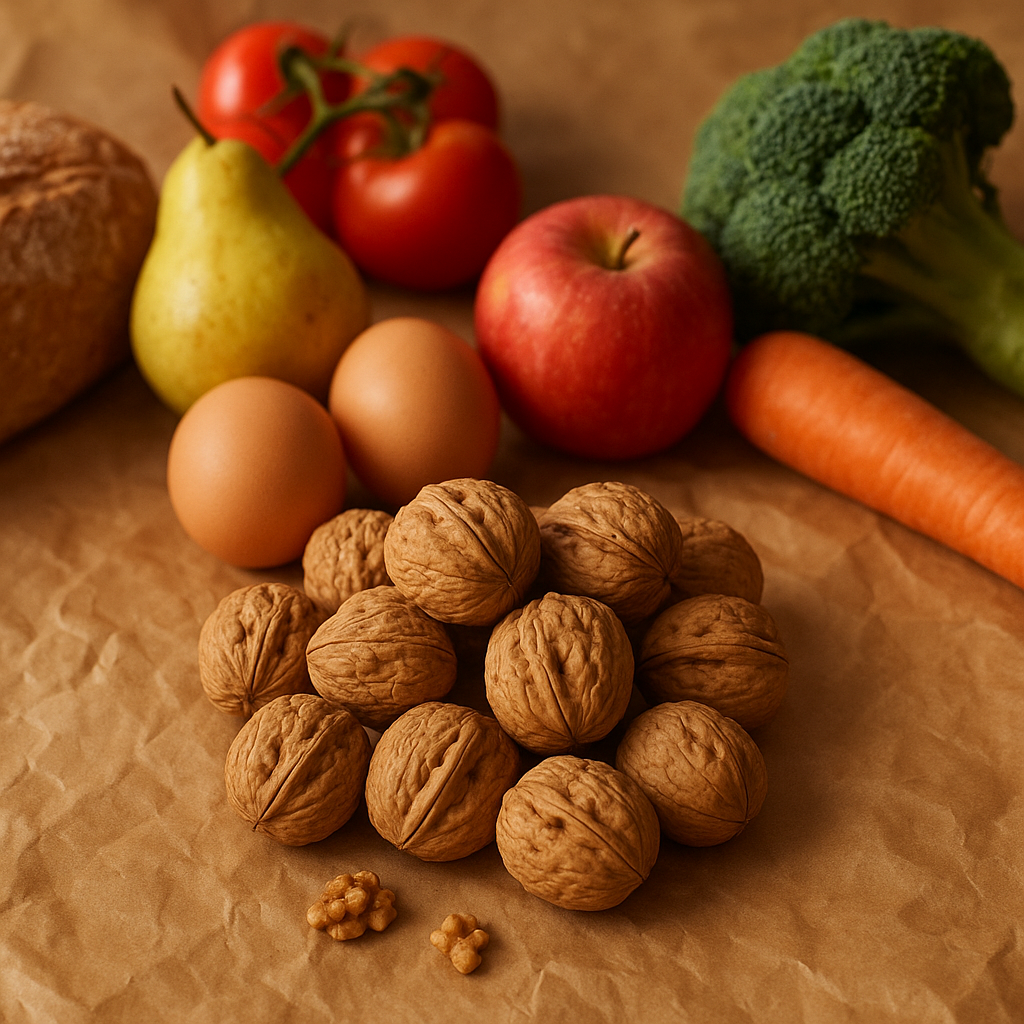
These are whole walnuts that have been grown using organic farming methods. This means they were cultivated without the use of synthetic pesticides, herbicides, or fertilizers. They are typically sold in their shells or as shelled halves and pieces. The nuts are a good source of healthy fats and have a distinct, slightly bitter flavor.
How people cook with it
Walnuts are a versatile ingredient that can be used in both sweet and savory dishes. They add texture and a rich flavor to many recipes.
- Baking into cakes and breads
- Topping for salads
- Snacking on their own
- Incorporating into pasta sauces
You can enjoy these walnuts straight from the bag as a satisfying snack. For baking, they are often chopped and added to muffins, cookies, and quick breads. In savory applications, toasted walnuts can be a delightful addition to green salads, sprinkled over roasted vegetables, or blended into pesto. They also pair well with cheeses and can be a component in homemade granola or trail mix. If using them in a cooked dish, they can be added towards the end of the cooking process to retain their crunch.
How it differs from similar foods
Organic walnuts are distinguished by their cultivation practices, adhering to specific standards for organic agriculture. This contrasts with conventionally grown walnuts, which may be treated with synthetic agricultural chemicals. The flavor and texture are generally comparable, but the organic certification appeals to consumers seeking products grown with environmental considerations.
Who it is for
Home cooks and bakers who appreciate organic ingredients will find these walnuts useful in their kitchens.
How to keep the rest
To maintain freshness, store any remaining walnuts in an airtight container in a cool, dark place. For longer storage, they can be kept in the refrigerator or even frozen. This helps to prevent them from becoming rancid and preserves their flavor and texture.