
Grocery
Unsmoked Bacon Slices
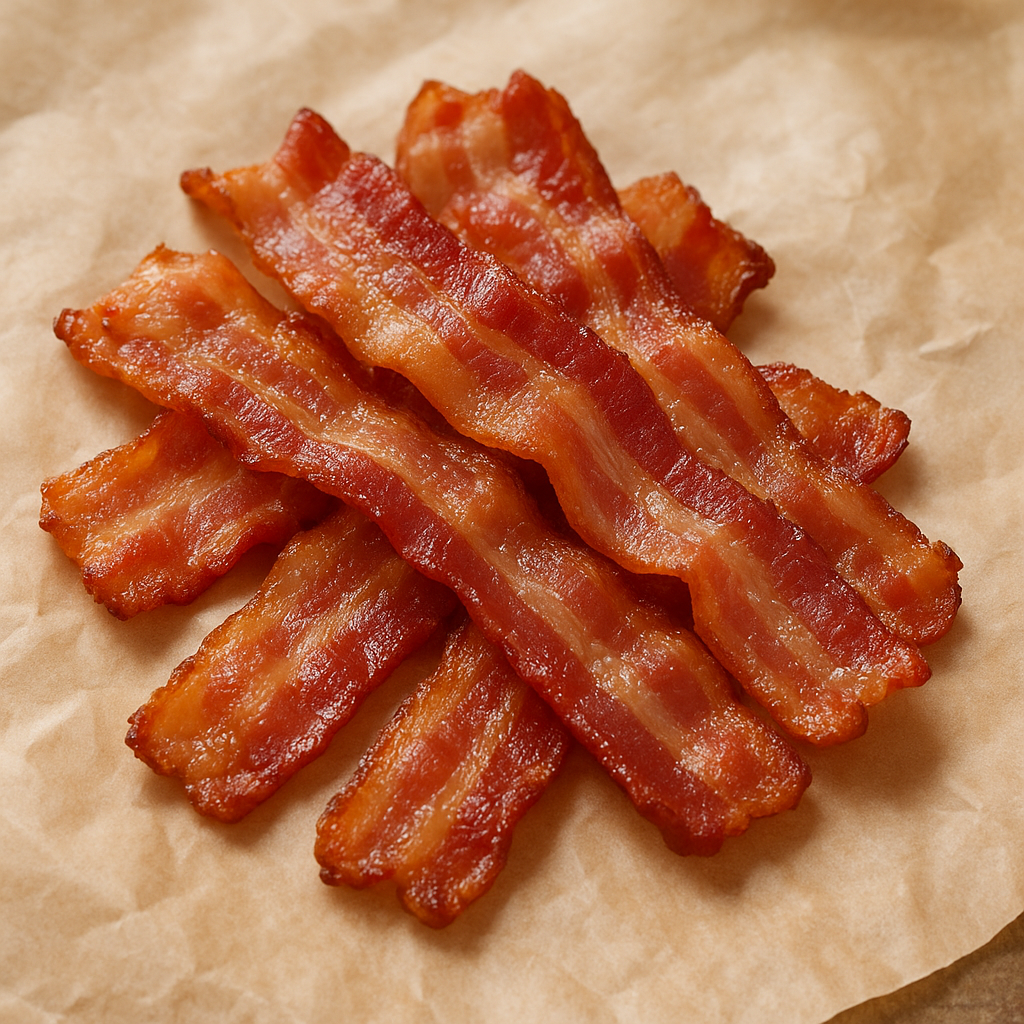
What it is
These are thin slices of cured pork belly that have not undergone a smoking process. The curing typically involves salt and sometimes sugar, which helps to preserve the meat and develop its characteristic flavor. The absence of smoke means the bacon will have a different flavor profile compared to traditional smoked varieties. The meat is usually a mix of lean muscle and fat, which renders during cooking.
How people cook with it
Unsmoked bacon is a versatile ingredient that can be used in many savory dishes. It adds a rich, salty flavor and a pleasing texture to meals.
- Crisped as a side dish
- Chopped into salads
- Added to sandwiches
- Incorporated into pasta sauces
To cook unsmoked bacon, place the slices in a cold skillet. This allows the fat to render slowly and evenly, resulting in crispier bacon. Cook over medium heat, turning the slices occasionally, until they reach your desired level of crispness. Drain the cooked bacon on paper towels to remove excess grease. The rendered fat can be saved and used for cooking other ingredients, adding a distinct pork flavor.
How it differs from similar foods
Unlike smoked bacon, unsmoked bacon lacks the distinct smoky aroma and taste imparted by wood smoke. Its flavor is primarily derived from the curing process, making it a cleaner, more pork-forward option. This difference allows other ingredients in a dish to shine through more prominently.
Who it is for
Home cooks and chefs who appreciate a pure pork flavor in their dishes will find this bacon useful.
How to keep the rest
After opening the package, store any unused unsmoked bacon tightly wrapped in plastic wrap or in an airtight container. Keep it refrigerated in the coldest part of your refrigerator. It is best to use the remaining bacon within a few days for optimal freshness and quality.