
Grocery
Unsalted Butter
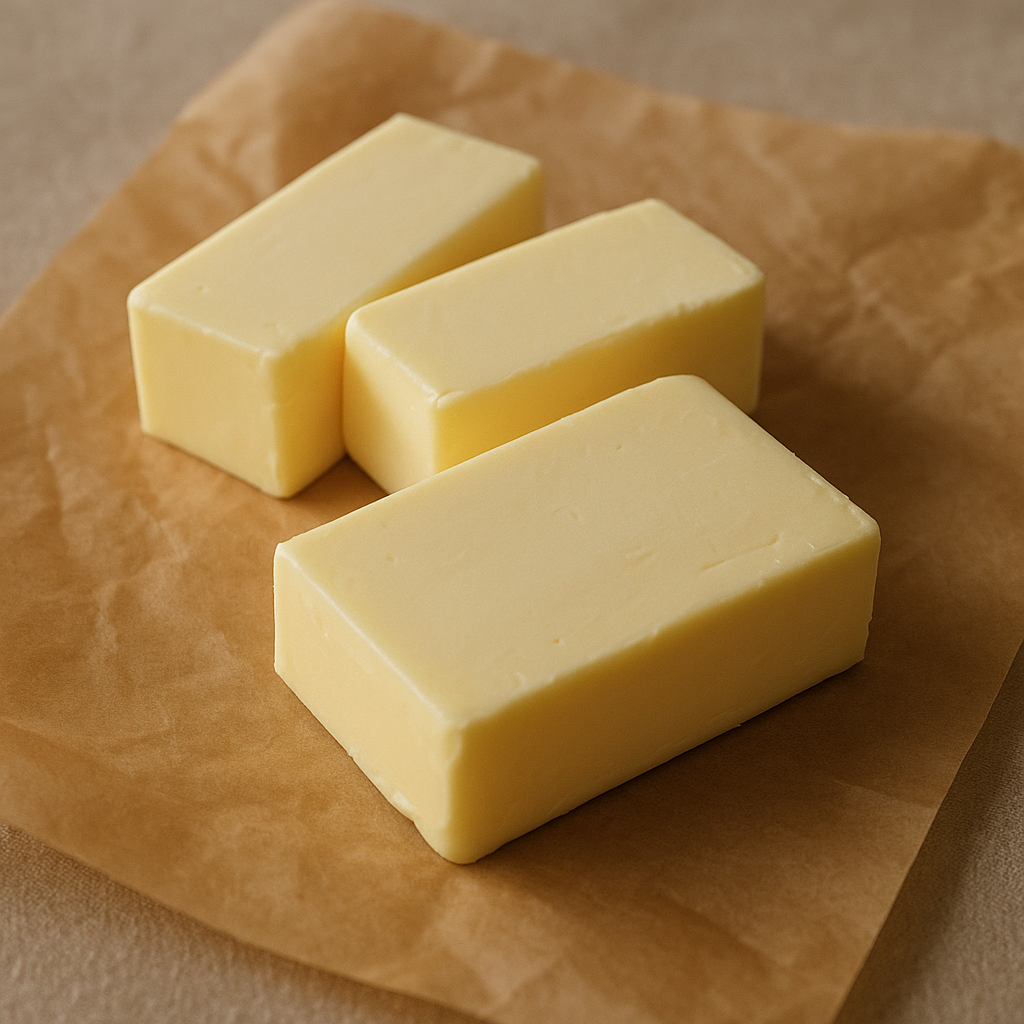
What it is
This is a dairy product made from churning cream. It is a solid fat at room temperature and melts when heated. Unsalted butter contains a higher percentage of fat compared to salted butter. It is a staple in many kitchens for both cooking and baking. The absence of added salt allows for greater control over the final flavor of dishes.
How people cook with it
Unsalted butter is incredibly versatile and can be used in a wide variety of culinary applications.
- Baking cakes and cookies
- Sautéing vegetables
- Making sauces and gravies
- Spreading on toast
When baking, unsalted butter is often preferred because it allows the baker to precisely control the amount of salt in the recipe. It can be creamed with sugar for tender cookies, melted for brownies, or cut into flour for flaky pastries. In savory cooking, it adds richness to pan sauces, helps brown meats, and provides a base for sautéing aromatics like onions and garlic. It can also be used to finish dishes, adding a glossy sheen and smooth texture.
How it differs from similar foods
Unsalted butter differs from salted butter primarily in its salt content. Salt is added to salted butter as a preservative and for flavor. Unsalted butter offers a purer, more neutral dairy flavor, which is beneficial when precise salt control is desired in recipes, especially in baking.
Who it is for
Home cooks and professional chefs use unsalted butter for its consistent quality and flavor.
How to keep the rest
To keep the rest of the unsalted butter fresh, store it in its original packaging or an airtight container in the refrigerator. For longer storage, it can be frozen. Ensure it is well-wrapped to prevent freezer burn. It is best to use it within a few months of opening for optimal freshness.