
Grocery
Salted Butter
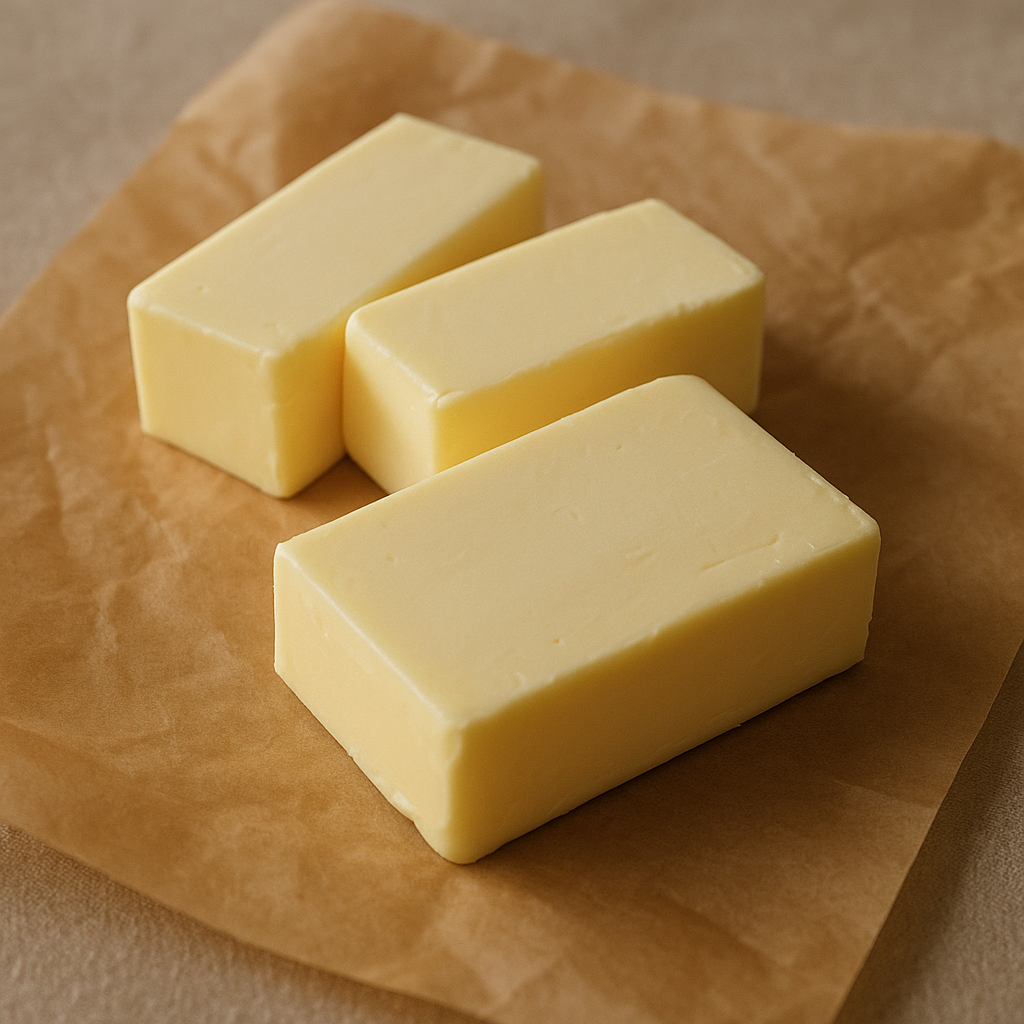
What it is
This is a dairy product made from churning cream. It is a solid fat at room temperature but softens when heated. The addition of salt enhances its flavor and also acts as a mild preservative. It is a staple in many kitchens for both cooking and baking.
How people cook with it
Salted butter is incredibly versatile and can be used in a wide variety of culinary applications.
- Baking cakes and cookies
- Sautéing vegetables
- Spreading on toast
- Sauce enrichment
When baking, salted butter provides richness and structure to doughs and batters. Its fat content contributes to tenderness in cakes and flakiness in pastries. For savory dishes, it can be melted to sauté aromatics like onions and garlic, adding a smooth texture and depth of flavor to sauces and pan-fried items. It's also excellent for finishing cooked vegetables or meats, adding a glossy sheen and a satisfying mouthfeel. Even a simple spread on warm bread can elevate a meal.
How it differs from similar foods
Compared to unsalted butter, salted butter has a distinct salty taste. This makes it ideal for applications where salt is already accounted for in the recipe or for direct consumption as a spread. Unsalted butter offers more control over the final saltiness of a dish, which is often preferred in delicate baking.
Who it is for
Home cooks and professional chefs alike rely on salted butter for its flavor and functional properties.
How to keep the rest
Keep refrigerated to maintain its firmness and prevent spoilage. Once opened, it should be stored in an airtight container to prevent it from absorbing odors from other foods in the refrigerator. It can also be frozen for longer-term storage.