
Grocery
Salted Butter
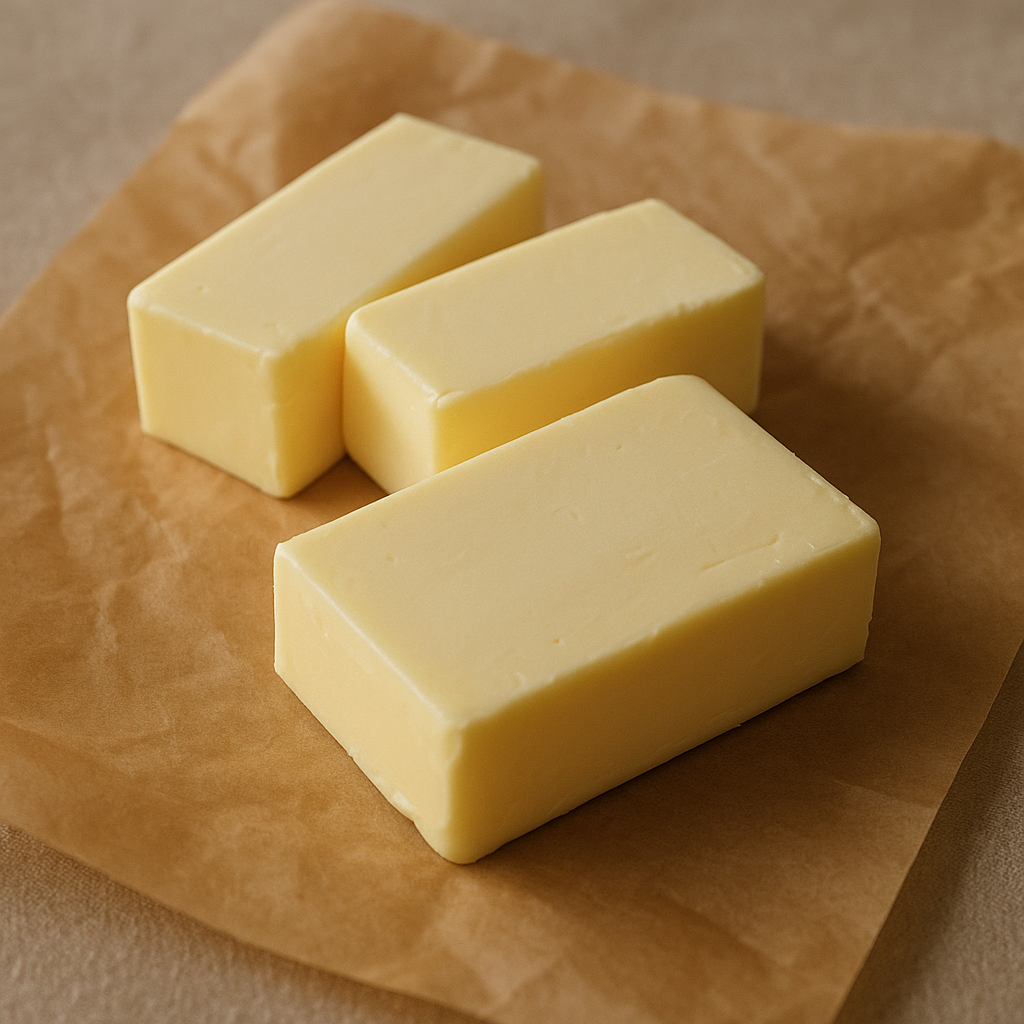
What it is
This is a dairy product made from churning cream. It has a rich, creamy texture and a distinct flavor. The addition of salt enhances its taste and also acts as a mild preservative. It is a staple in many kitchens for both cooking and baking. The fat content contributes to richness and mouthfeel in various dishes. It is typically sold in solid blocks or sticks.
How people cook with it
Salted butter is incredibly versatile and can be used in a wide array of culinary applications.
- Spreading on toast
- Baking cakes and cookies
- Sautéing vegetables
- Sauce bases
When baking, the temperature of the butter is often crucial. Cold butter can create flaky textures in pastries, while softened butter is ideal for creaming with sugar to incorporate air for lighter cakes and cookies. For sautéing, it adds flavor to the food and helps prevent sticking. It can also be melted and used as a finishing element for steamed vegetables or pasta, adding a luxurious finish. Its salt content means you may need to adjust the salt in your recipe.
How it differs from similar foods
Salted butter differs from unsalted butter primarily due to the addition of salt. This salt adds flavor and can affect the browning process in baked goods. Unsalted butter allows the baker complete control over the salt level in a recipe, which is often preferred for precise baking.
Who it is for
Home cooks and professional chefs use salted butter for its flavor and functionality in everyday cooking and baking.
How to keep the rest
To keep the remaining butter fresh, store it in its original packaging or an airtight container in the refrigerator. This helps prevent it from absorbing odors from other foods. For longer storage, butter can be frozen, though its texture may change slightly upon thawing.