
Grocery
Salted Butter
What it is
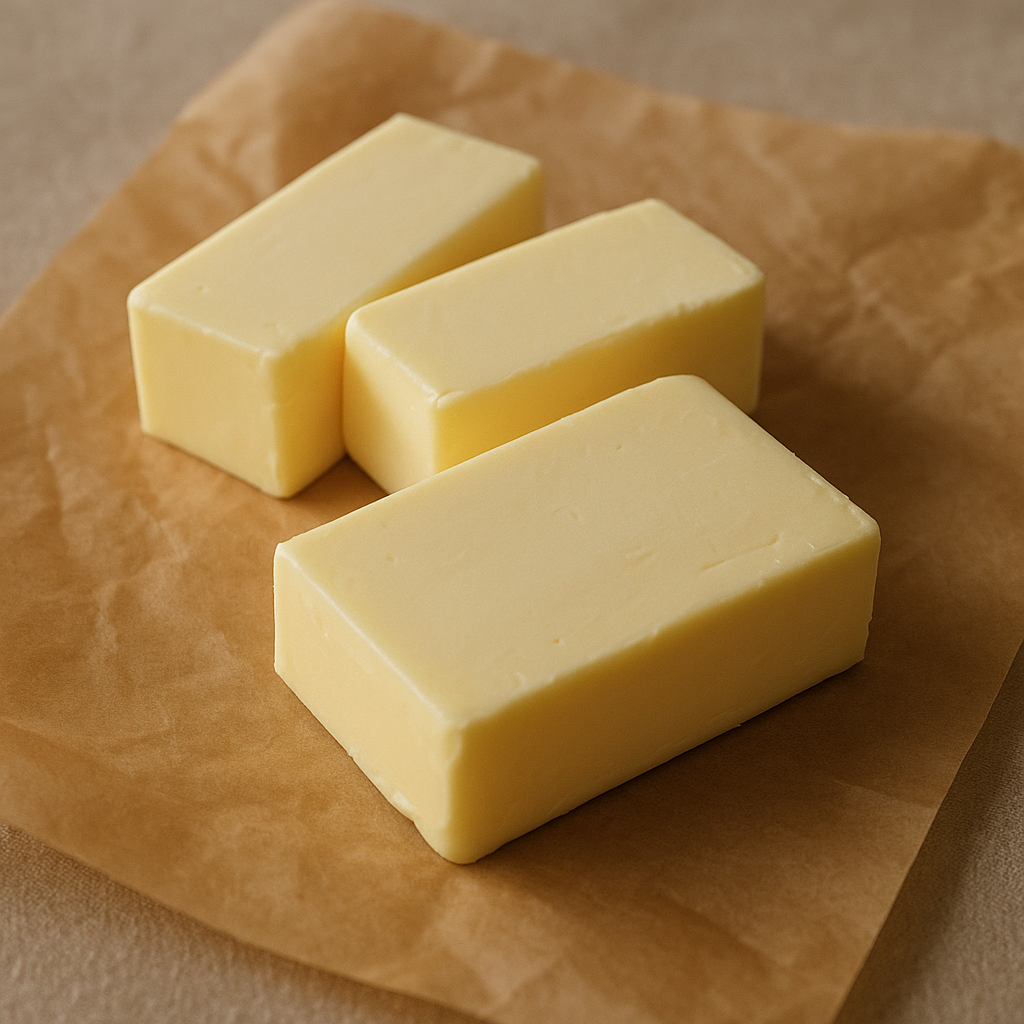
This is a dairy product made from churning cream. It has a rich, creamy texture and a distinct yellow color. Salt is added during the production process, which enhances its flavor and also acts as a mild preservative. It is a staple in many kitchens, used for both cooking and as a spread.
How people cook with it
Salted butter is incredibly versatile in the kitchen. It can be used in both sweet and savory applications, adding richness and flavor to a wide range of dishes.
- Spreading on toast
- Baking cakes and cookies
- Sautéing vegetables
- Melting over steamed corn
When baking, salted butter can often be used interchangeably with unsalted butter, though you may need to adjust the added salt in the recipe. For sautéing, it provides a lovely base for browning ingredients and adds a pleasant richness. As a finishing touch, melting it over cooked vegetables or meats adds a luxurious element. It's also excellent for creating sauces and glazes, contributing to their smooth texture and depth of flavor.
How it differs from similar foods
Compared to unsalted butter, salted butter has a noticeable saltiness. This makes it ideal for dishes where you want that salty note integrated directly, like in some baked goods or as a spread. Unsalted butter offers more control over the salt content in a recipe, which is preferred by some bakers.
Who it is for
Home cooks and professional chefs alike use salted butter for its flavor and functionality.
How to keep the rest
To keep the rest of the salted butter fresh, store it in its original packaging or an airtight container in the refrigerator. If you plan to use it within a few weeks, refrigeration is sufficient. For longer storage, it can be frozen.