
Grocery
Fresh Salmon Fillets
What it is
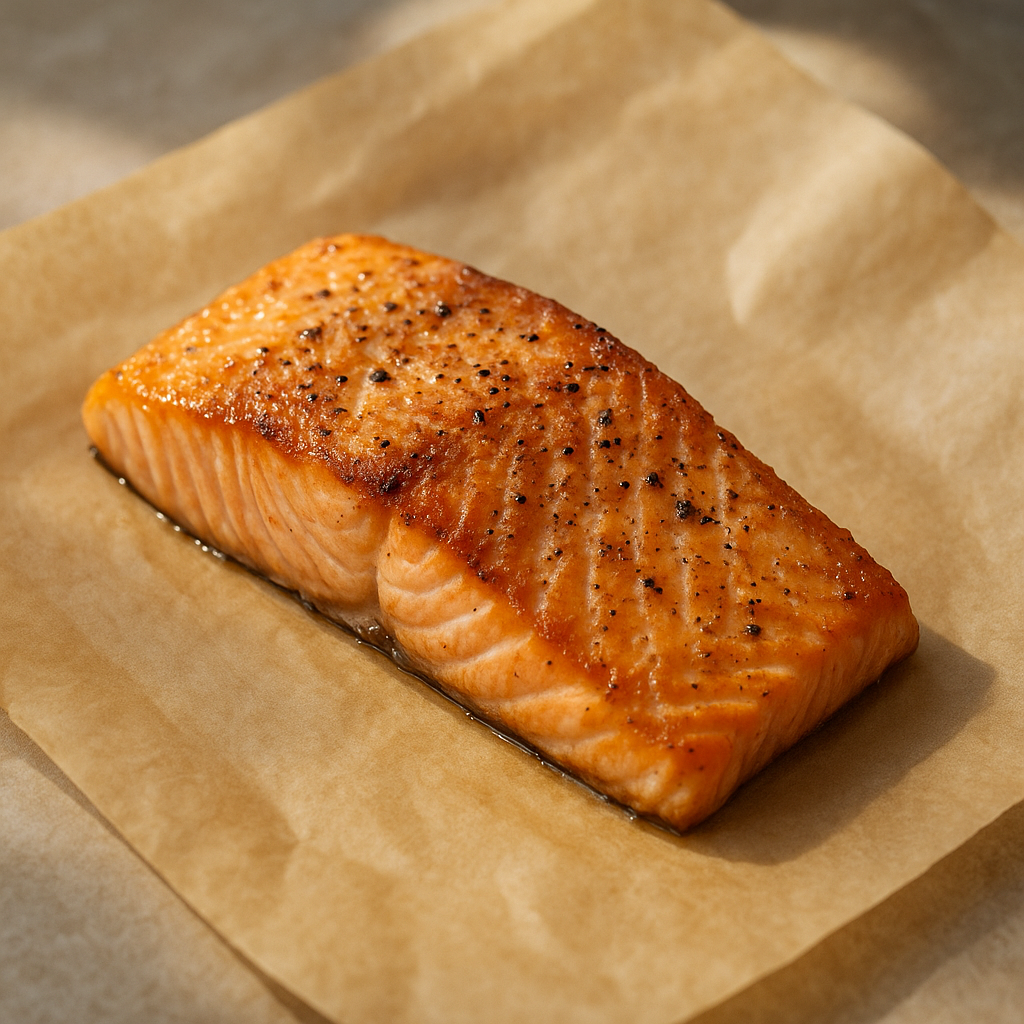
These are fresh salmon fillets, a popular type of oily fish known for its rich flavor and vibrant color. Salmon is naturally a good source of omega-3 fatty acids. The fillets are typically boneless and skin-on, making them convenient for various cooking methods.
How people cook with it
Salmon is a favorite for weeknight dinners and special occasions alike. Its rich flavor pairs well with a wide range of seasonings and accompaniments.
- Baked with lemon and herbs
- Pan-seared for a crispy skin
- Grilled with a smoky char
- Poached gently in broth
To prepare salmon, start by patting the fillets dry with paper towels. This helps achieve a better sear. Season generously with salt and pepper. For pan-searing, heat oil in a skillet over medium-high heat and cook for about 4-6 minutes per side, depending on thickness, until opaque and flaky. Baking involves placing seasoned fillets on a baking sheet and cooking in a preheated oven at around 400°F (200°C) for 12-15 minutes. Grilling requires a well-oiled grill and cooking over medium-high heat.
How it differs from similar foods
Compared to leaner white fish, salmon has a higher fat content, which contributes to its moist texture and distinct, rich taste. This fat content also makes it more forgiving when cooking, as it is less likely to dry out. Its flesh is typically a deeper pink or orange hue.
How to keep the rest
To keep fresh salmon fillets, store them in the coldest part of your refrigerator, ideally on a bed of ice in a sealed container. It is best to consume them within one to two days of purchase for optimal freshness and quality. Avoid storing them loosely in the main part of the fridge.