
Grocery
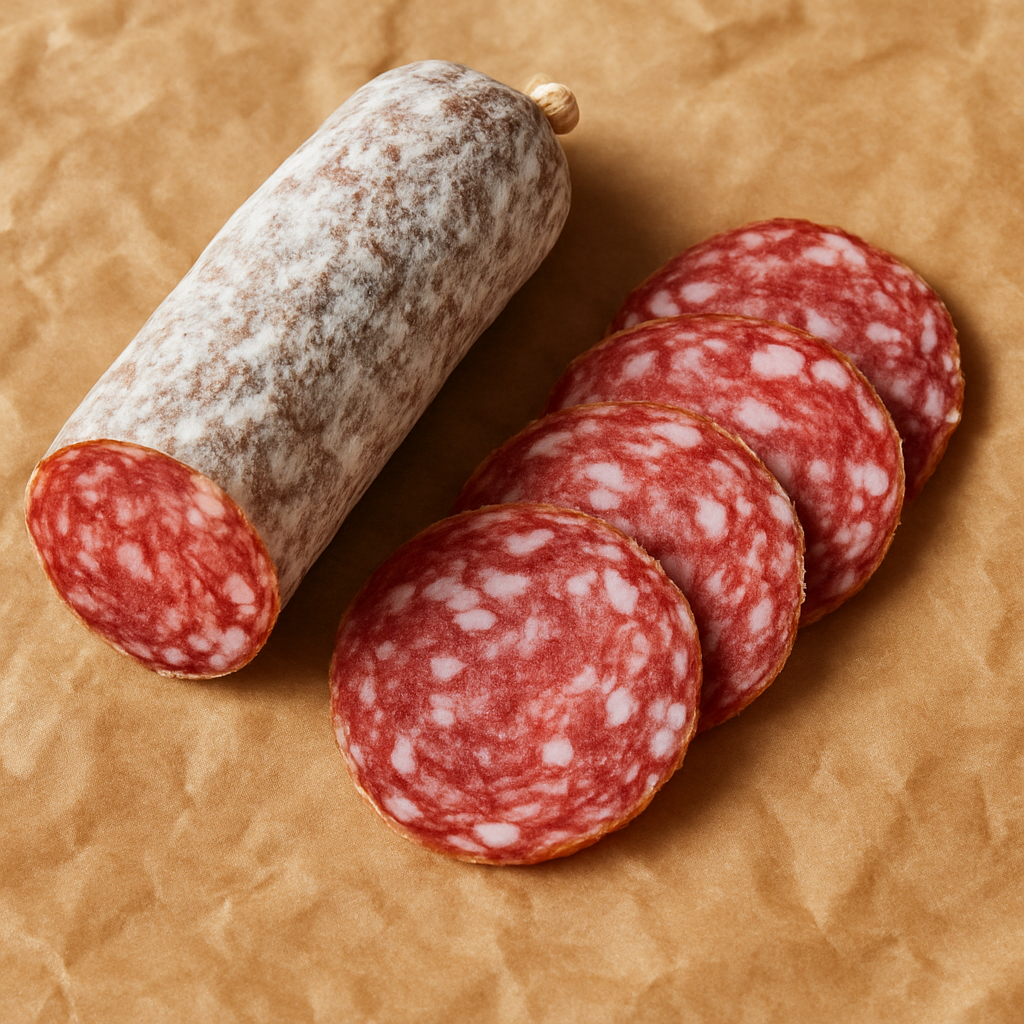
Cured Pork Salami
What it is
This is a type of dry-cured sausage originating from Italy. It is made from fermented and air-dried meat, typically pork. The curing process involves salt and often spices, which preserve the meat and develop its characteristic flavor and texture. Salami is usually sliced thinly for consumption. It is a versatile ingredient that can be enjoyed in many ways.
How people cook with it
Salami is a popular choice for charcuterie boards and as a topping for pizzas. It also adds a savory depth to sandwiches and salads.
- Sandwich filling
- Pizza topping
- Charcuterie board component
- Salad ingredient
To prepare salami for serving, simply remove it from its packaging. It is typically eaten as is, sliced thinly. For pizzas, it can be placed directly on top before baking. In sandwiches, it layers well with cheese and other deli meats. When building a charcuterie board, arrange slices alongside cheeses, crackers, and fruits. Its firm texture holds up well to various preparations. It can also be diced and added to pasta dishes or frittatas for an extra burst of flavor.
How it differs from similar foods
Unlike some other cured sausages, salami undergoes a fermentation process that contributes to its tangy flavor profile and firm, dense texture. The specific blend of spices used can also differentiate one type of salami from another, leading to variations in aroma and taste.
Who it is for
Home cooks and entertainers often use salami to add flavor and variety to meals and gatherings.
How to keep the rest
After opening, store any remaining salami in its original packaging or tightly wrapped in plastic wrap or foil. Keep it refrigerated to maintain its freshness and prevent spoilage. It is best consumed within a few days of opening for optimal taste and texture.