
Grocery
Coarse Rock Salt
What it is
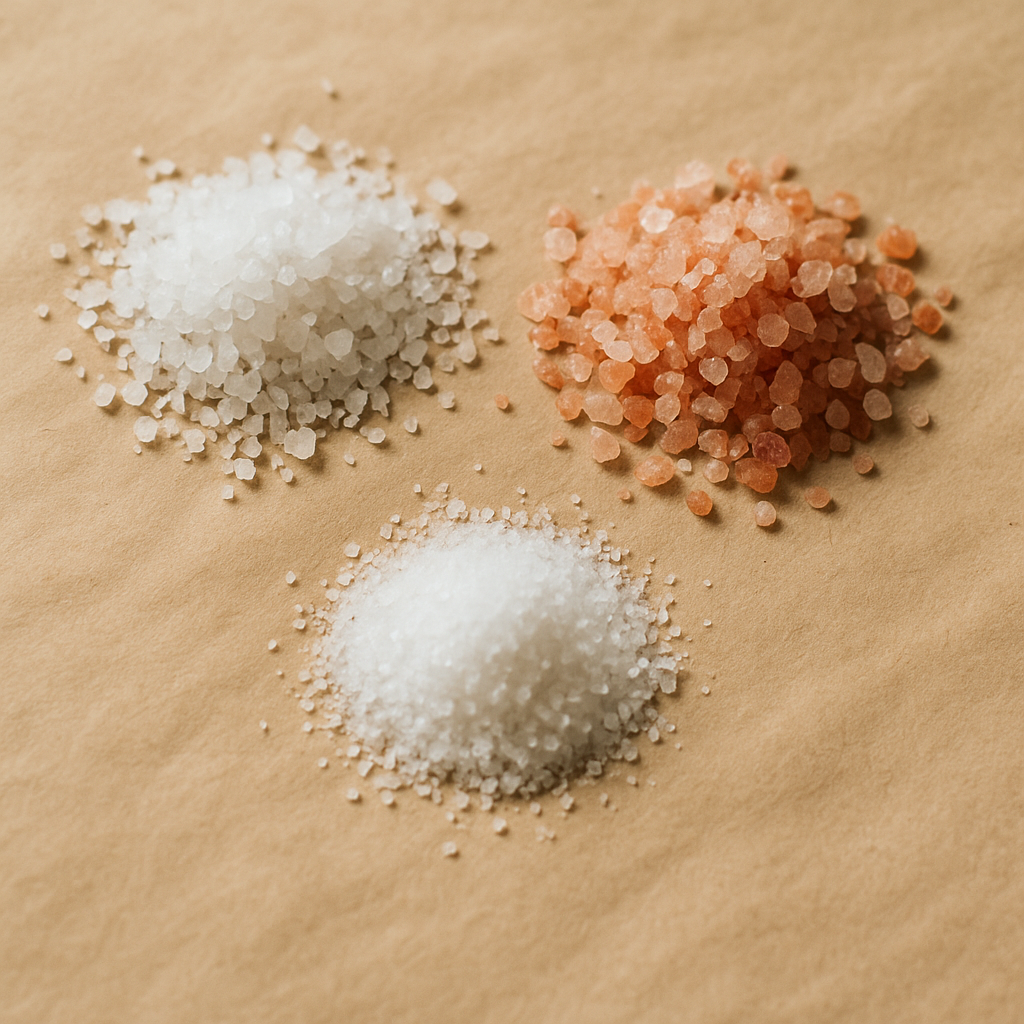
This is a coarse-grained salt, also known as halite. It is harvested from underground salt deposits. Its large crystals are less dense than finer grains, which can affect how it dissolves and distributes flavor. Rock salt is a fundamental seasoning agent, essential for enhancing the taste of many dishes. It provides a pure saltiness without added anti-caking agents or iodine that are often found in table salt.
How people cook with it
Rock salt is a versatile ingredient used in both cooking and preserving. Its coarse texture makes it suitable for specific applications where a slower release of saltiness is desired.
- Seasoning meats before roasting
- Brining poultry
- Curing fish
- Making homemade ice cream
When cooking, rock salt can be used to season large cuts of meat, such as roasts or whole poultry, before they go into the oven. The coarse crystals adhere well to the surface and slowly dissolve, infusing flavor deeply into the food. It is also a key component in brining solutions, helping to tenderize and flavor meats. For preserving, its large crystals are ideal for curing. In some culinary traditions, it is used in a salt crust for baking, which helps to evenly cook and moisten ingredients like fish or chicken.
How it differs from similar foods
Compared to table salt, rock salt has much larger, irregular crystals. This means it dissolves more slowly and can provide a different textural experience. It also typically lacks the iodine and anti-caking agents found in refined table salt, offering a more natural salt flavor profile.
Who it is for
Home cooks and professional chefs rely on rock salt for its distinct properties in various culinary techniques.
How to keep the rest
To maintain its quality, store rock salt in a cool, dry place in an airtight container. This will prevent moisture absorption, which can cause the crystals to clump together and lose their free-flowing nature. Proper storage ensures its effectiveness as a seasoning agent over time.