
Grocery
Fresh Yellow Onions
What it is
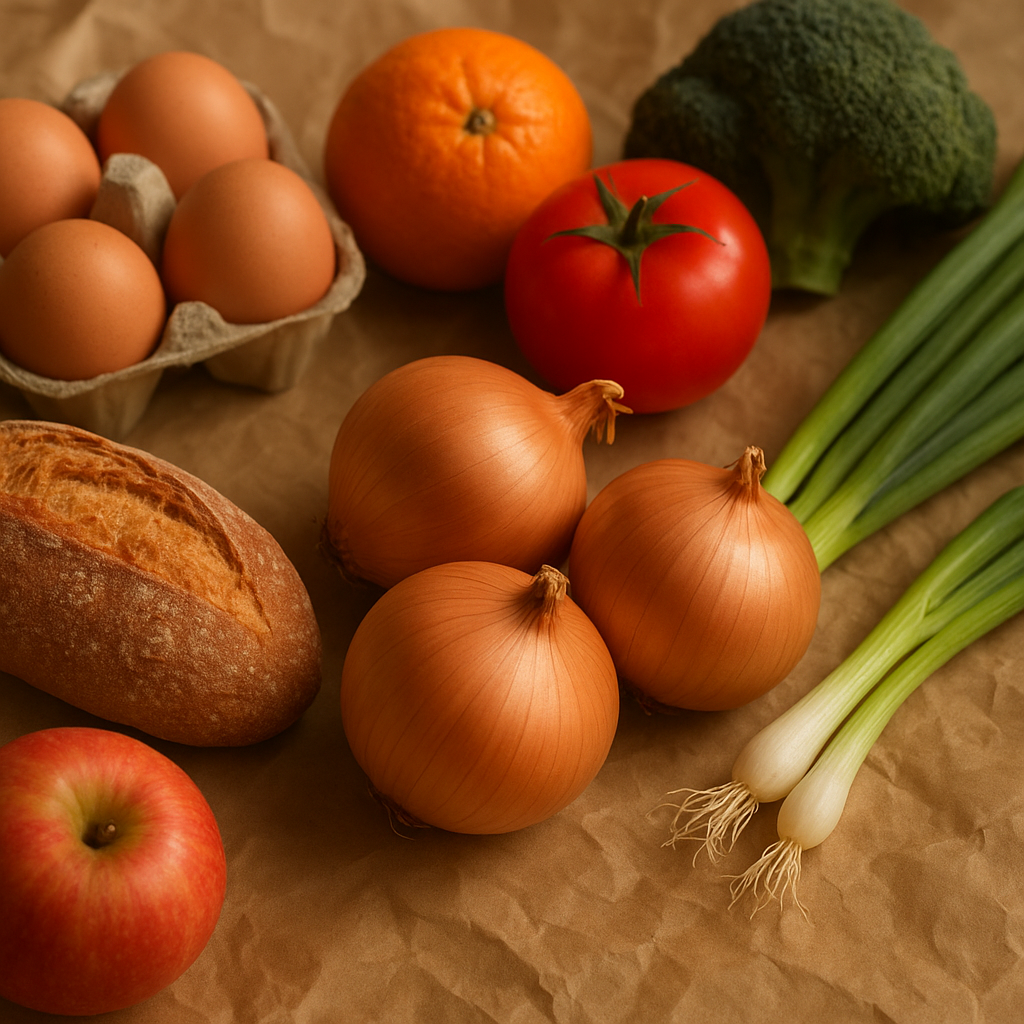
These are fresh yellow onions, a common allium vegetable. They have a papery outer skin and layers of firm flesh inside. Yellow onions are known for their balanced flavor, offering a good mix of sweetness and pungency that becomes more pronounced when cooked. They are a staple ingredient in many cuisines worldwide due to their versatility and foundational role in building flavor profiles.
How people cook with it
Yellow onions are a foundational ingredient in countless dishes. They are often the first ingredient to hit the pan when starting a savory recipe.
- Base for soups and stews
- Added to stir-fries
- Caramelized for toppings
- Chopped for salads
To prepare yellow onions, start by removing the papery outer skin. You can then slice them thinly, dice them finely, or chop them into larger pieces depending on your recipe's needs. They can be sautéed until softened and translucent, caramelized until deeply golden and sweet, or roasted to bring out their natural sugars. Raw onions can add a sharp bite to dishes, but cooking mellows their intensity and brings out a pleasant sweetness.
How it differs from similar foods
Compared to red onions, yellow onions are generally less sweet and have a more robust, pungent flavor when raw. White onions tend to be sharper and more watery. Yellow onions strike a balance, making them suitable for a wide range of cooking applications where a distinct but not overpowering onion flavor is desired.
Who it is for
Home cooks and professional chefs alike rely on yellow onions for their everyday cooking.
How to keep the rest
Store any unused yellow onions in a cool, dry, and dark place with good air circulation. Avoid storing them in plastic bags, as this can trap moisture. They should not be stored near potatoes, as they can cause each other to spoil more quickly.