
Grocery
Fresh Red Onions
What it is
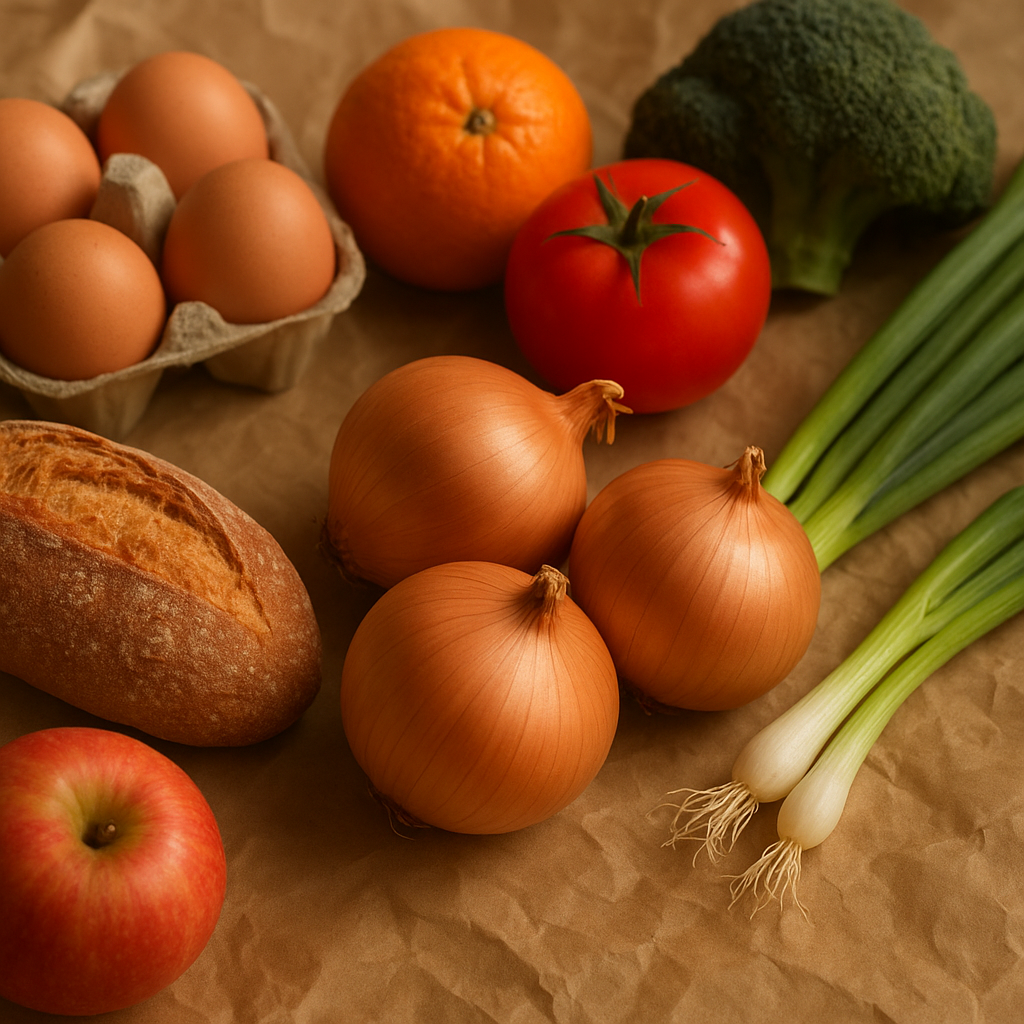
These are fresh red onions, a type of bulb vegetable known for their vibrant purple-red skin and flesh. They are a common ingredient in kitchens worldwide, prized for their distinct flavor and color. Red onions are typically larger than yellow or white onions and have a slightly sweeter taste, making them versatile for various culinary applications. They are a staple in many cuisines, adding both flavor and visual appeal to dishes.
How people cook with it
Red onions are a versatile ingredient that can be used in both raw and cooked applications. Their flavor intensifies when cooked, while their raw form offers a crisp bite.
- Salads and slaws
- Grilling and roasting
- Soups and stews
- Sautéed as a base
To prepare red onions, start by trimming off the top and root ends. Peel away the papery outer skin. You can then slice them thinly for raw applications like salads or sandwiches, or chop them into larger pieces for cooking. For grilling, cut them into thick rings. When sautéing, cook them over medium heat until they become tender and translucent, or until they caramelize for a sweeter flavor. They can also be added to slow-cooked dishes where their flavor will meld with other ingredients.
How it differs from similar foods
Compared to yellow onions, red onions are generally milder and sweeter, especially when raw. Their color also makes them a visually appealing choice for dishes where presentation matters. White onions tend to be sharper and more pungent than red onions.
Who it is for
Home cooks and professional chefs use red onions to add flavor and color to a wide array of dishes.
How to keep the rest
Store fresh red onions in a cool, dry, and well-ventilated place away from direct sunlight. Avoid storing them in plastic bags, as this can trap moisture. They can be kept at room temperature for several weeks. Once cut, store any remaining portions in an airtight container in the refrigerator for a few days.