
Grocery
Whole Chicken for Roasting
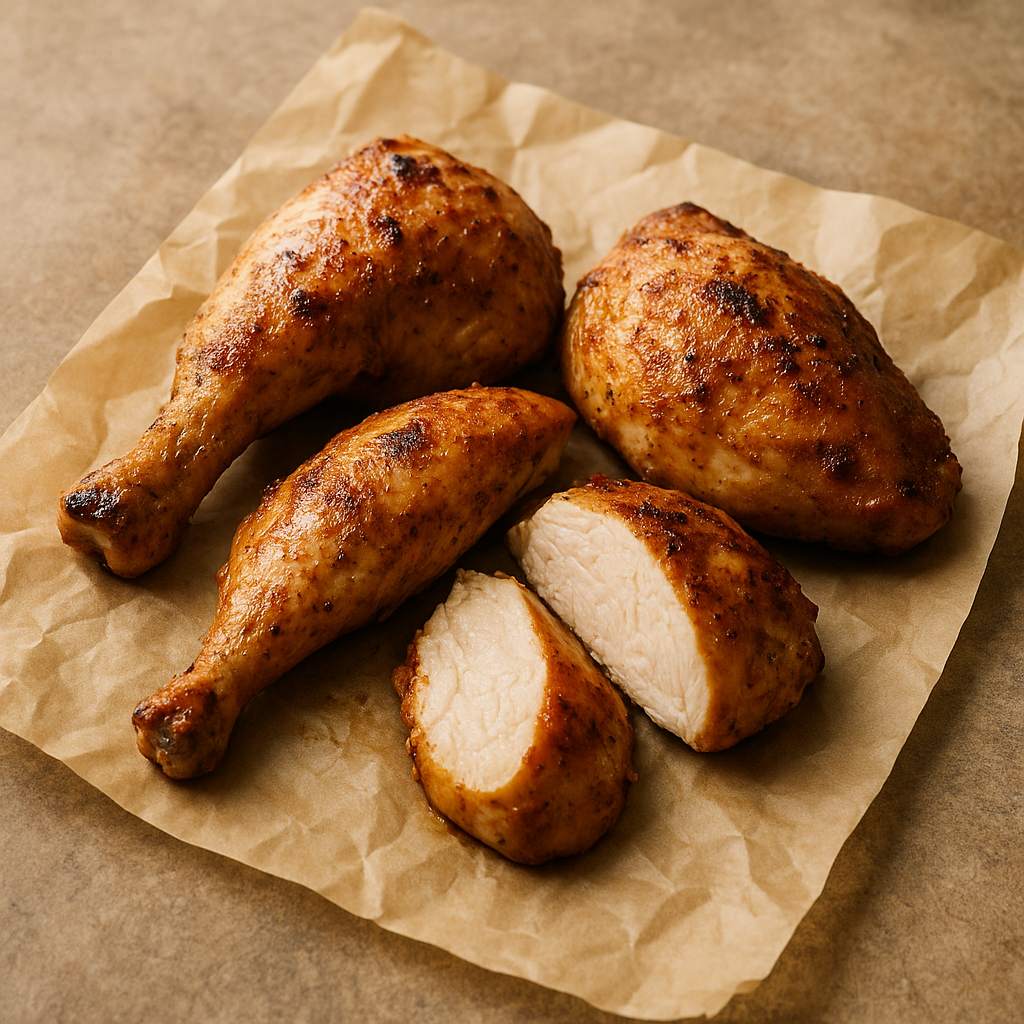
What it is
This is a whole chicken, ready for cooking. The chicken is typically sold with the giblets removed, though sometimes they are included in a separate bag inside the cavity. It offers a good balance of white and dark meat, providing different textures and flavors depending on the cut. This whole bird is a foundational ingredient for many home-cooked meals.
How people cook with it
Whole chickens are a staple for roasting and provide a foundation for numerous dishes.
- Roast whole
- Cut into pieces for frying
- Braise for stews
- Poach for salads
To prepare a whole chicken for roasting, begin by patting it dry inside and out with paper towels. This helps the skin crisp up. You can then season it generously with salt, pepper, and your favorite herbs and spices, both inside the cavity and all over the skin. Placing aromatics like lemon, garlic, or onion inside the cavity can infuse flavor as it cooks. Roasting at a moderate temperature until the internal temperature reaches a safe level ensures a juicy and tender result. The drippings can be used to make a delicious gravy.
How it differs from similar foods
Compared to chicken parts, a whole chicken offers both breast and thigh meat, which cook at slightly different rates. This means careful attention is needed during roasting to ensure everything is cooked through without drying out the breast. It provides a more economical option when feeding a family and allows for the creation of stock from the carcass.
How to keep the rest
Refrigerate any uncooked or cooked leftover chicken immediately. Store raw chicken in its original packaging on the bottom shelf of the refrigerator to prevent any juices from dripping onto other foods. Cooked chicken should be stored in an airtight container. Use raw chicken within one to two days of purchase, and cooked chicken within three to four days.