
Grocery
Organic Whole Milk
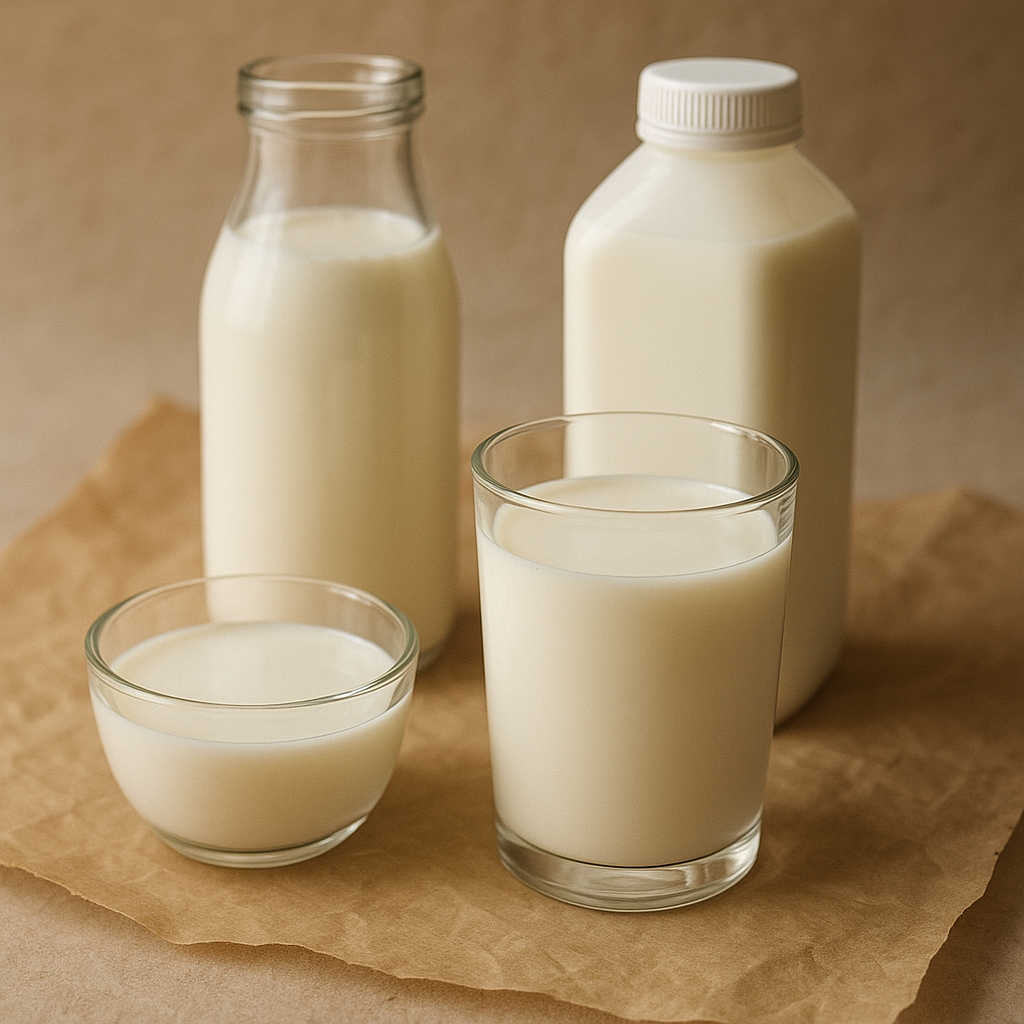
What it is
This is whole milk that comes from cows raised on organic farms. Organic farming practices mean the cows are not given synthetic hormones or antibiotics, and their feed is grown without synthetic pesticides or fertilizers. It is pasteurized to ensure safety and then homogenized, which breaks down the fat globules so they are evenly distributed throughout the milk. This process prevents the cream from separating and rising to the top.
How people cook with it
Whole milk is a versatile ingredient in many kitchens. It can be enjoyed on its own or used in a wide variety of cooking and baking applications.
- Drinking straight from a glass
- Adding to cereal
- Baking cakes and cookies
- Making creamy sauces
Whole milk is a staple for many culinary tasks. It provides richness and moisture to baked goods like muffins and breads. It is also excellent for creating smooth and flavorful sauces, gravies, and custards. When making hot beverages such as coffee or tea, it adds a satisfying creaminess. For children, it is often recommended as a primary beverage due to its fat content, which is important for development. It can also be used to make homemade ice cream or yogurt.
How it differs from similar foods
Compared to reduced-fat or skim milk, whole milk contains a higher percentage of milk fat. This higher fat content contributes to a richer flavor, a creamier texture, and a more satisfying mouthfeel. It also affects how it performs in cooking, often leading to more tender baked goods and smoother sauces.
Who it is for
Home cooks and families who prefer a richer taste and texture in their dairy products often choose whole milk.
How to keep the rest
After opening, store any remaining milk in its original container in the refrigerator. Keep it away from the door where temperatures fluctuate. Consume within the date printed on the carton for the best quality and freshness. Ensure the cap is tightly sealed to prevent spoilage.