
Grocery
Yellow Onions
What it is
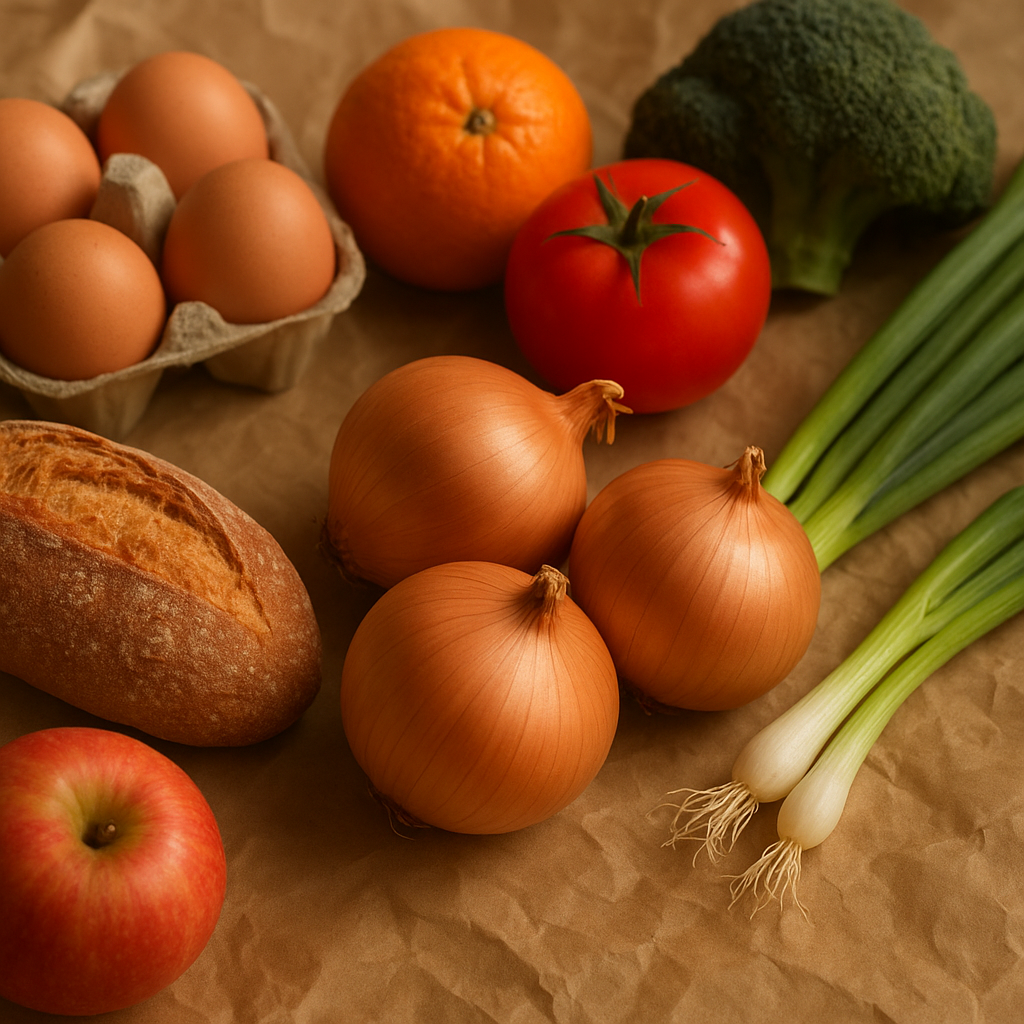
This is a common type of onion, characterized by its thin, papery yellow skin and firm, layered flesh. It has a pungent aroma and a sharp, slightly sweet flavor when raw, which mellows and sweetens considerably when cooked. Yellow onions are a staple in kitchens worldwide, forming the aromatic base for countless savory dishes. Their versatility makes them a go-to choice for everyday cooking.
How people cook with it
Onions are fundamental to building flavor in many culinary preparations. They can be cooked in numerous ways to achieve different textures and taste profiles.
- Sautéed for aromatic bases
- Caramelized for sweetness
- Sliced raw in salads
- Roasted for a tender bite
To prepare, trim off the root and stem ends, then peel away the dry outer skin. You can then slice, dice, or chop them according to your recipe's needs. Sautéing them in oil or butter over medium heat is a common first step to soften them and release their flavor. For caramelization, cook them slowly over low heat for an extended period until they turn a deep golden brown and become very sweet. They can also be added to soups, stews, and braises, where they will break down and contribute richness to the liquid.
How it differs from similar foods
Compared to red onions, yellow onions are less sweet and less pungent when raw. They also tend to hold their shape better when cooked for a long time than white onions, which can become mushy. Their flavor profile is generally considered more balanced for everyday cooking.
Who it is for
Home cooks and professional chefs alike rely on yellow onions for their foundational flavor.
How to keep the rest
Store whole, uncooked onions in a cool, dry, dark, and well-ventilated place. Avoid storing them in plastic bags, as this can trap moisture. They should not be stored near potatoes, as they can cause each other to spoil faster. Properly stored, they can last for several weeks.