
Grocery
Fresh Yellow Onions
What it is
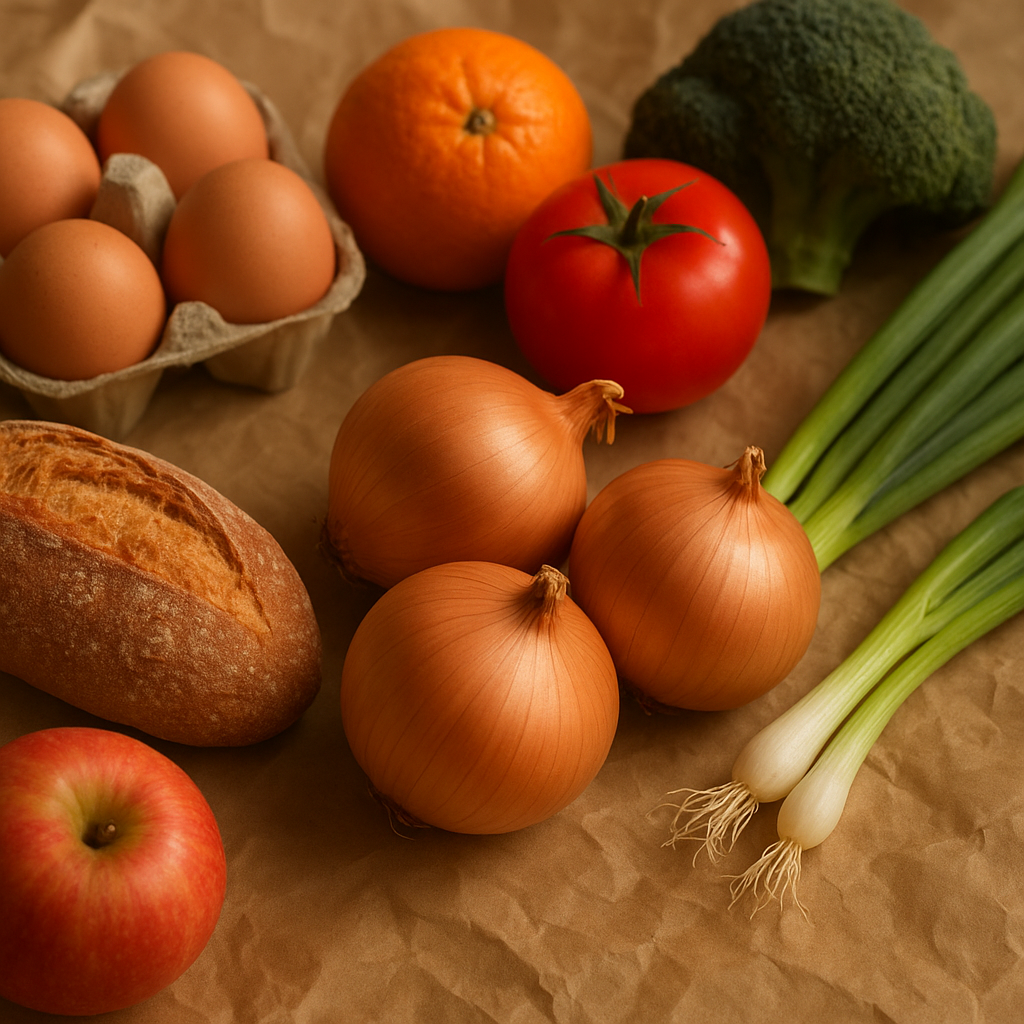
This is a fresh yellow onion, a common bulb vegetable known for its pungent flavor and aroma. It belongs to the Allium genus, alongside garlic and leeks. Yellow onions have a papery outer skin and layered flesh that becomes sweeter and milder when cooked. They are a staple in kitchens worldwide, prized for their versatility and ability to enhance a wide range of dishes.
How people cook with it
Onions form the aromatic foundation for countless savory recipes. They can be used raw, sautéed, roasted, grilled, or caramelized.
- Base for soups and stews
- Flavoring for stir-fries
- Topping for burgers and sandwiches
- Ingredient in salads
To prepare an onion, first remove the papery outer skin. Trim off the top and root ends. For dicing, cut the onion in half from root to tip, then make horizontal cuts followed by vertical cuts. Slicing can be done across the grain for rings or lengthwise for half-moons. Raw onions add a sharp bite to salads and relishes, while cooking softens their intensity and brings out a natural sweetness. Sautéing is a common first step in many recipes, building a flavor base.
How it differs from similar foods
Yellow onions are generally considered the all-purpose onion. Compared to red onions, they are less sweet and less pungent when raw. White onions tend to be sharper and more watery than yellow onions. Their balanced flavor makes them suitable for almost any cooking application.
Who it is for
Home cooks and professional chefs rely on yellow onions for their everyday cooking needs.
How to keep the rest
Store whole, unpeeled onions in a cool, dry, and well-ventilated place, away from direct sunlight. Do not store them in plastic bags, as this can trap moisture. Once cut, wrap the remaining portion tightly in plastic wrap or place it in an airtight container and refrigerate. Use cut onions within a few days.