
Grocery
Yellow Onion
What it is
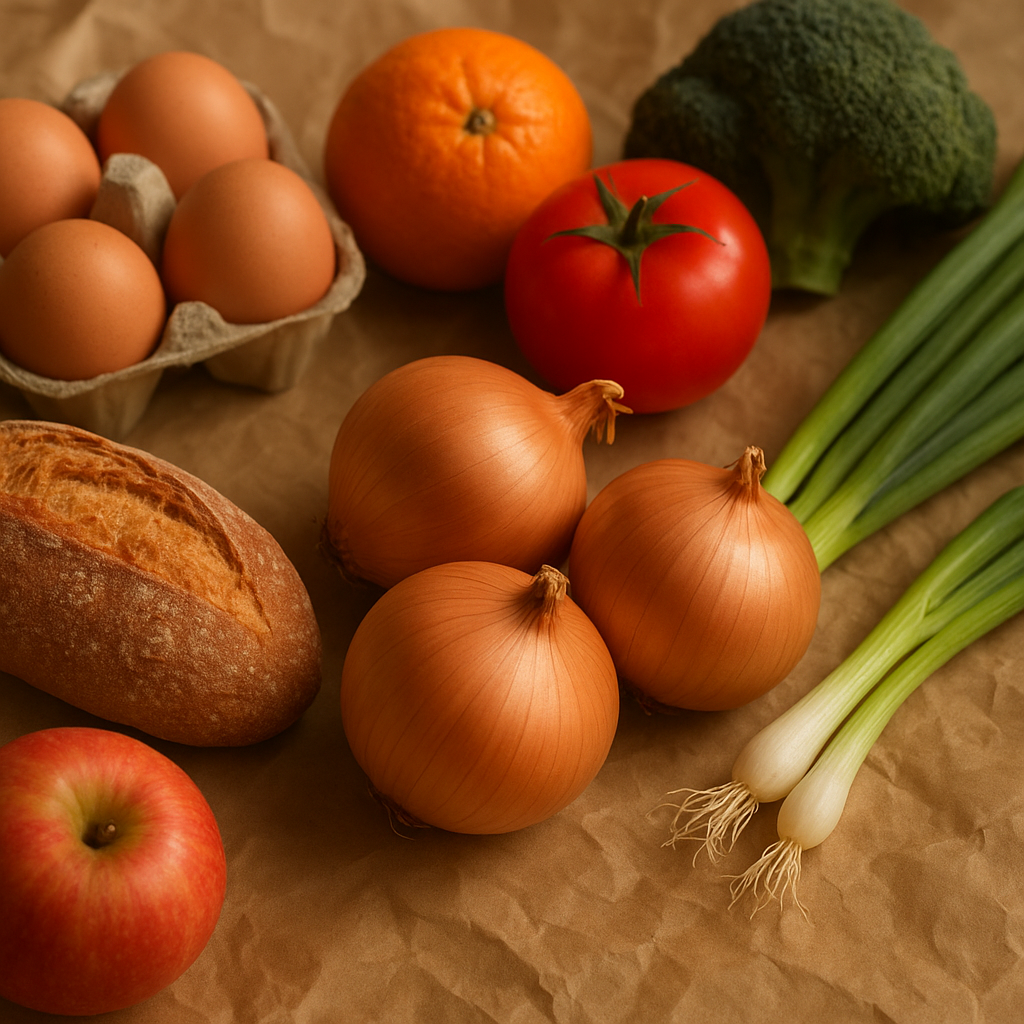
This is a common yellow onion, a staple in kitchens worldwide. It has a papery brown skin and a firm, layered interior. Yellow onions offer a balanced flavor that is neither too sharp nor too sweet, making them incredibly versatile. They are a foundational aromatic vegetable, providing depth and savory notes to countless dishes. Their natural sugars caramelize beautifully when cooked, adding richness and complexity to meals.
How people cook with it
Onions are a fundamental building block for many savory recipes. They are often the first ingredient to hit the pan, setting the stage for flavor.
- Sautéed as a base for soups
- Caramelized for toppings
- Chopped raw for salads
- Roasted alongside meats
To prepare, trim off the stem and root ends. Peel away the papery outer layers. You can then slice, dice, or chop the onion according to your recipe's needs. For a milder flavor, you can soak the chopped onion in cold water for a few minutes before using. When sautéing, cook them over medium heat until they become translucent and tender, or continue cooking until they turn golden brown and sweet for caramelization. Roasting brings out their natural sweetness.
How it differs from similar foods
Compared to red onions, yellow onions have a less pungent raw flavor and a more robust sweetness when cooked. They are less watery than white onions, which can sometimes lead to a sharper bite when raw. Their balanced profile makes them suitable for a wider range of cooking applications.
Who it is for
Home cooks and professional chefs rely on yellow onions for their everyday cooking needs.
How to keep the rest
Store whole, unpeeled onions in a cool, dry, and well-ventilated place, away from direct sunlight. Do not refrigerate whole onions, as this can make them soft and spoil faster. Once cut, wrap the remaining portion tightly in plastic wrap or place it in an airtight container and refrigerate.