
Grocery
Whole Natural Almonds
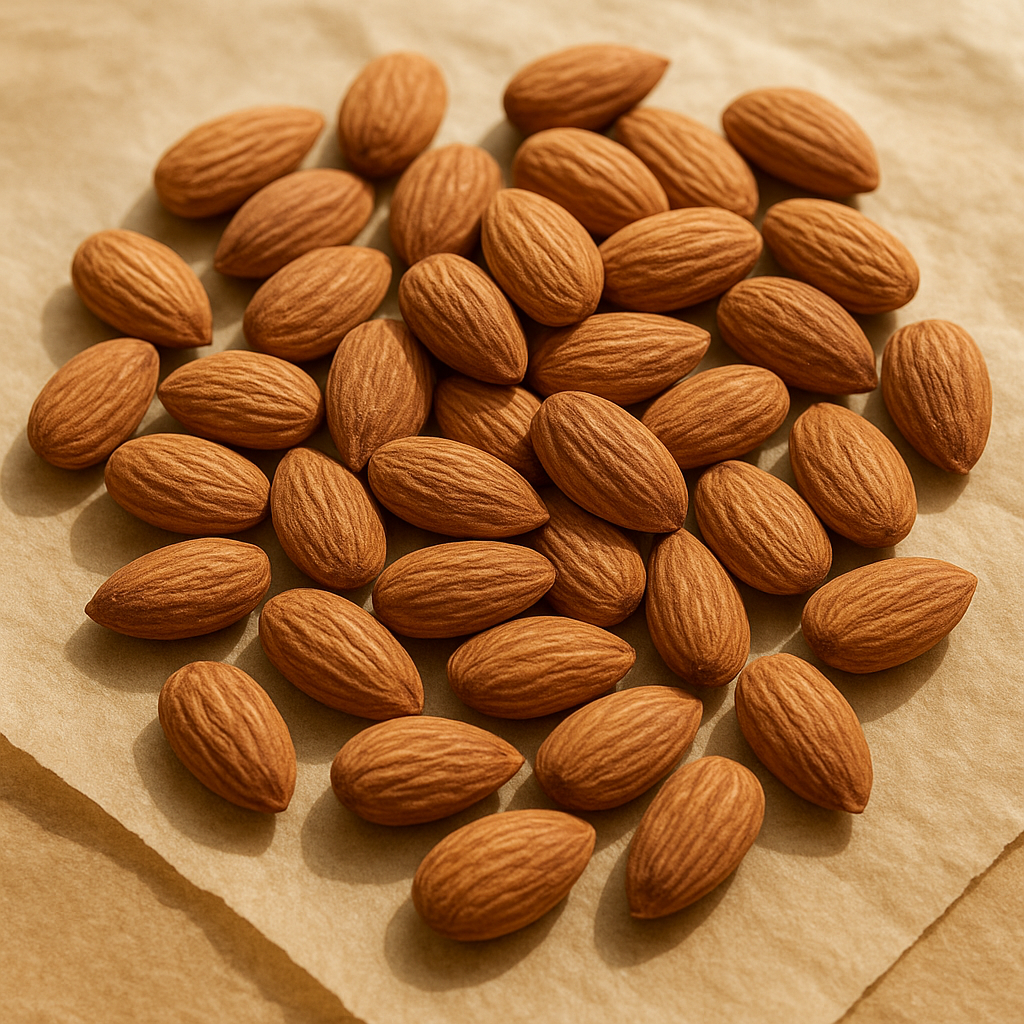
What it is
These are whole almonds that have not been roasted or seasoned. They retain their natural flavor and texture. Almonds are a type of tree nut, known for their mild, slightly sweet taste and satisfying crunch. They are often used in both sweet and savory dishes, as well as enjoyed on their own as a snack. The natural state of these almonds means they are a versatile ingredient for many culinary applications.
How people cook with it
Whole natural almonds can be incorporated into a wide variety of meals and snacks. They offer a pleasant texture and subtle nutty flavor that complements many ingredients.
- Snack on them plain
- Add to baked goods
- Incorporate into salads
- Blend into sauces
Toasting natural almonds can enhance their flavor and crispness. Spread them in a single layer on a baking sheet and toast in a preheated oven at 350°F (175°C) for 8-12 minutes, or until fragrant and lightly golden. Stir them occasionally to ensure even toasting. They can also be used raw in recipes where their natural texture is desired, such as in trail mixes or as a topping for yogurt. For smoother textures, they can be ground into almond flour or blended into almond butter.
How it differs from similar foods
Unlike roasted almonds, natural almonds have a softer texture and a milder flavor profile. Roasting brings out a deeper, nuttier taste and a more pronounced crunch. Natural almonds offer a blank canvas for flavor, allowing them to absorb other tastes when cooked or seasoned.
Who it is for
Home cooks and bakers looking for an unprocessed nut ingredient will find these almonds useful.
How to keep the rest
Store any remaining natural almonds in an airtight container in a cool, dry place. For longer storage, they can be kept in the refrigerator or freezer to maintain freshness and prevent them from becoming rancid. Ensure they are well-sealed to protect them from moisture and odors.