
Grocery
Unsalted Butter
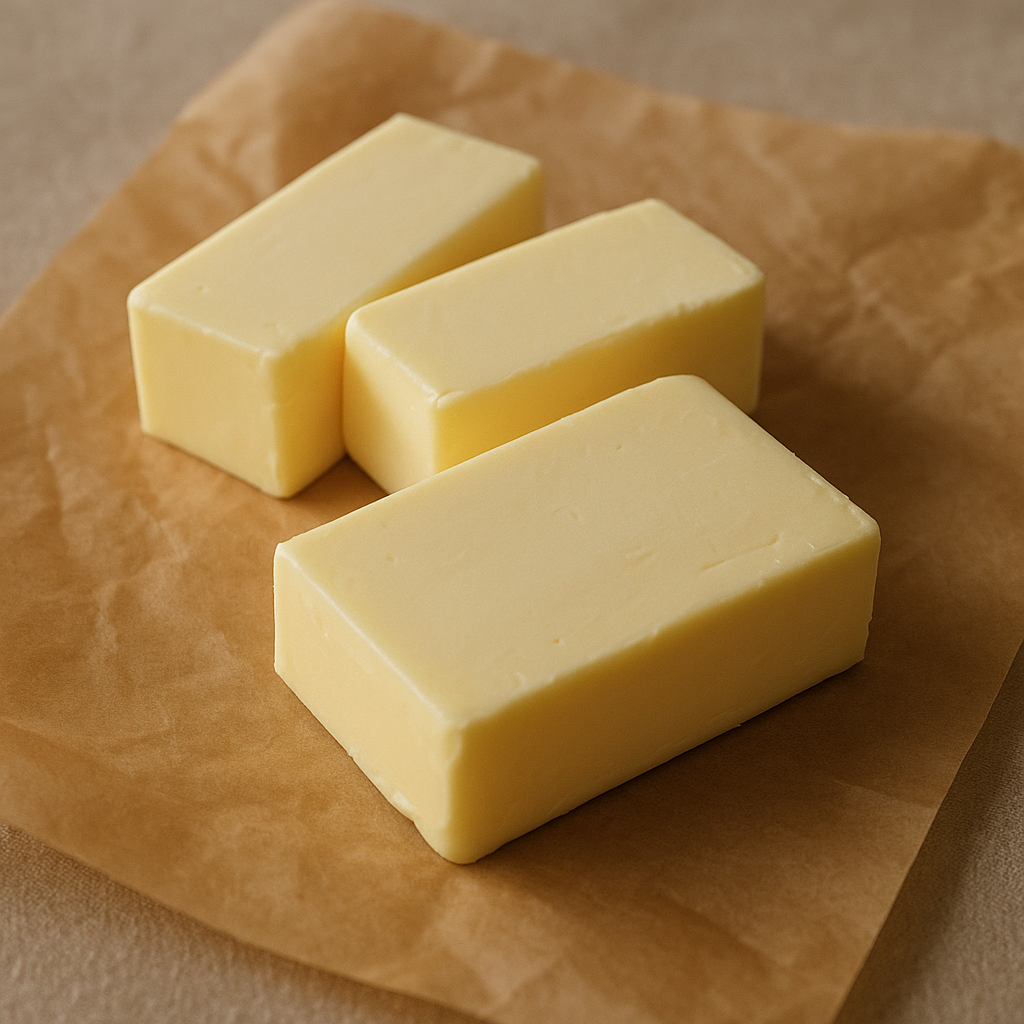
What it is
This is a block of unsalted butter, a dairy product made by churning cream. It has a rich, creamy flavor and a smooth texture. Unsalted butter is a staple in many kitchens, valued for its versatility and ability to enhance both sweet and savory dishes. Its pure butterfat content makes it ideal for baking where precise salt levels are important.
How people cook with it
Butter is a fundamental ingredient for cooking and baking. It adds richness and helps create desirable textures in many recipes.
- Baking cakes and cookies
- Sautéing vegetables
- Sauce preparation
- Spreading on toast
Butter can be used in its solid form, softened, or melted. For baking, it's often creamed with sugar to create a light and airy base. When sautéing, it provides a flavorful medium for cooking ingredients. Melted butter is excellent for drizzling over finished dishes or incorporating into sauces. Its high fat content helps to tenderize baked goods and add a glossy finish to glazes and frostings. It can also be used to grease pans, preventing food from sticking.
How it differs from similar foods
Unsalted butter differs from salted butter by the absence of added salt. This allows the cook to control the salt content of a dish more precisely, which is particularly important in baking where salt levels can significantly affect flavor and texture. The flavor profile of unsalted butter is purely that of cream.
Who it is for
Home cooks and professional chefs use unsalted butter for its controlled flavor and baking properties.
How to keep the rest
To store the remaining butter, wrap it tightly in its original packaging or plastic wrap. Keep it refrigerated to maintain freshness and prevent it from going rancid. For longer storage, butter can be frozen, ensuring it is well-sealed to avoid freezer burn.