
Grocery
Whole Milk
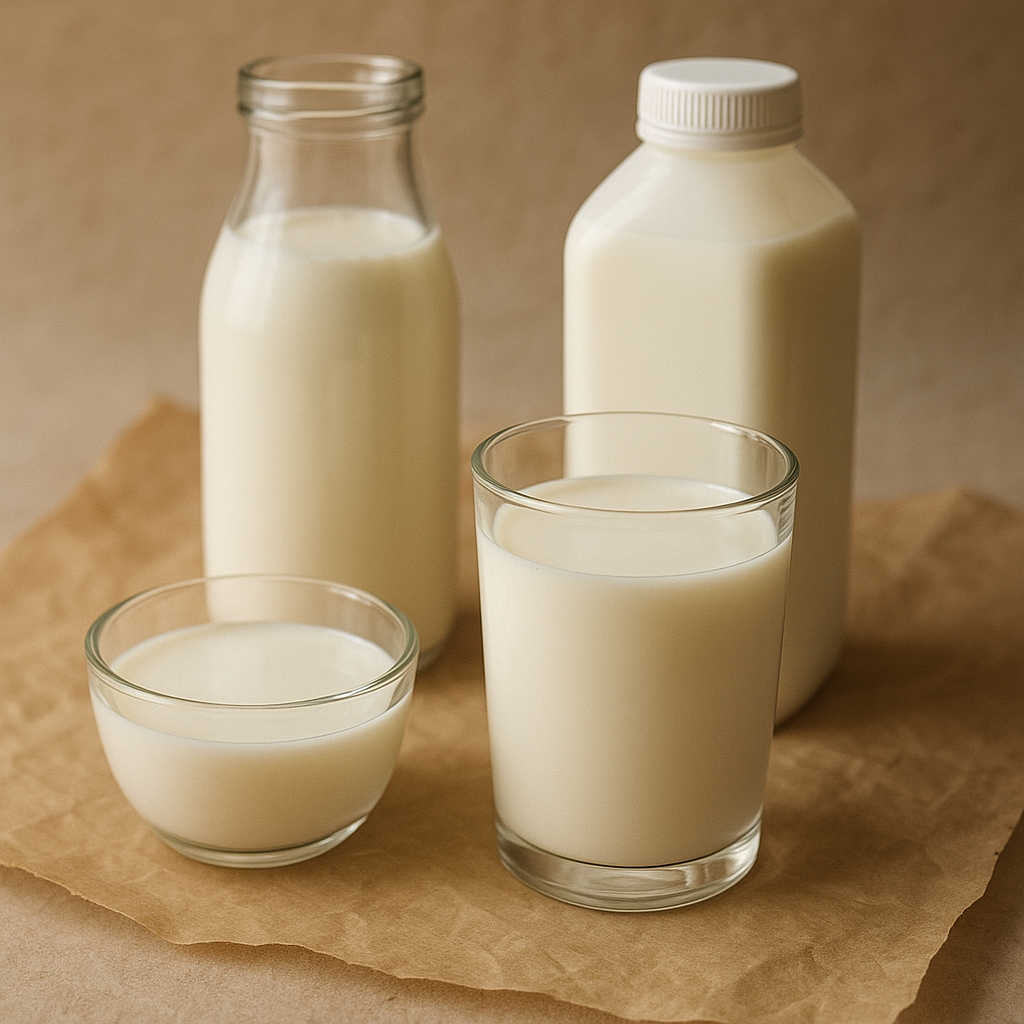
What it is
This is a dairy beverage commonly consumed by people of all ages. It is a natural product derived from cows, processed for safety and consistency. It contains fat, carbohydrates, and naturally occurring sugars. This particular type of milk has not had its fat content reduced during processing, offering a richer mouthfeel and flavor compared to lower-fat varieties. It is a staple in many households for drinking and cooking.
How people cook with it
Milk is a versatile ingredient used in both sweet and savory dishes. It can be enjoyed on its own or as a base for many culinary creations.
- Drinking
- Baking
- Sauces
- Smoothies
Whole milk can be poured directly into a glass for drinking or used in recipes that call for liquid. When baking, it contributes moisture and richness to cakes, cookies, and breads. In savory cooking, it forms the base for creamy sauces like béchamel or is used to enrich soups and stews. It can also be blended with fruits and other ingredients to create smooth and satisfying smoothies. For hot beverages, it froths well for lattes and cappuccinos.
How it differs from similar foods
Whole milk contains approximately 3.25% milkfat, which gives it a creamier texture and fuller flavor than skim or reduced-fat milks. This higher fat content also affects how it behaves in cooking, contributing to a richer outcome in baked goods and sauces.
Who it is for
This is a common dairy product for families and individuals who enjoy the taste and texture of full-fat milk.
How to keep the rest
After opening, store any unused milk in its original container in the refrigerator. Keep the carton or jug tightly sealed to prevent spoilage and absorption of odors. Consume the remaining milk within the recommended timeframe indicated on the packaging for optimal freshness.