
Grocery
Whole Milk
What it is
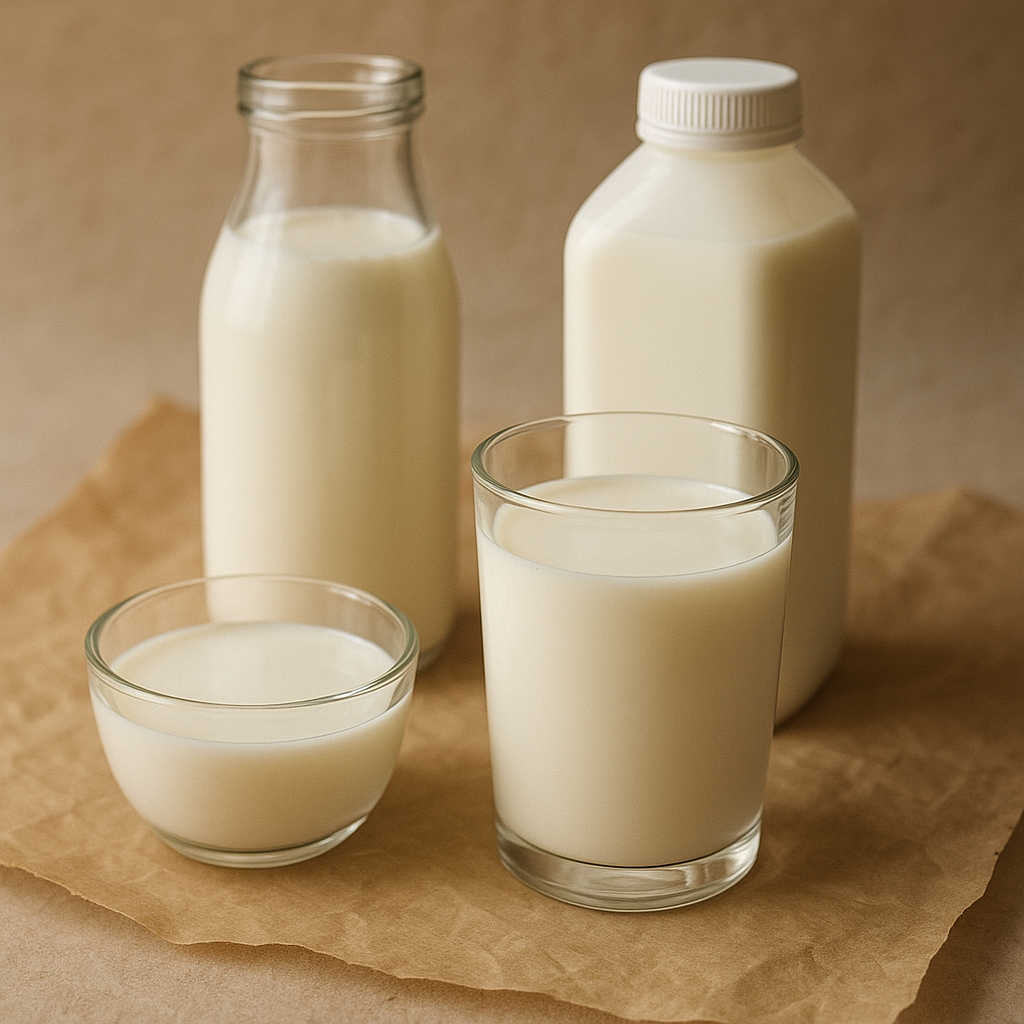
This is a dairy beverage produced from cows. It is a common source of calcium and other nutrients. Whole milk contains a significant amount of fat, which contributes to its rich flavor and creamy texture. It is pasteurized to ensure safety and then homogenized to keep the fat evenly distributed throughout the liquid. This process prevents the cream from separating and rising to the top.
How people cook with it
Milk is a versatile ingredient used in countless culinary applications, both as a beverage and a cooking component.
- Drinking straight from the carton
- Adding to cereal
- Baking cakes and cookies
- Making sauces and soups
Whole milk can be enjoyed chilled as a refreshing drink on its own. It is also a staple for breakfast, poured over cereal or oatmeal. In baking, its fat content helps create tender and moist results in cakes, muffins, and pastries. It can be used to enrich creamy sauces, gravies, and soups, adding body and a smooth finish. It is also a key ingredient in making custards, puddings, and ice cream, contributing to their luxurious texture.
How it differs from similar foods
Compared to lower-fat milks, whole milk has a higher fat content. This results in a richer mouthfeel and a more pronounced dairy flavor. Skim milk, for instance, has virtually no fat and a thinner consistency, while 2% milk offers a middle ground in terms of fat and richness.
Who it is for
Home cooks and families often choose whole milk for its familiar taste and versatility in everyday cooking and drinking.
How to keep the rest
After opening, keep the milk refrigerated in its original container. Ensure the cap is tightly sealed to prevent spoilage and absorption of odors from other foods. It is best consumed within the recommended timeframe after opening, typically about a week, to maintain its freshness and quality.