
whole milk · sleep
Whole Milk
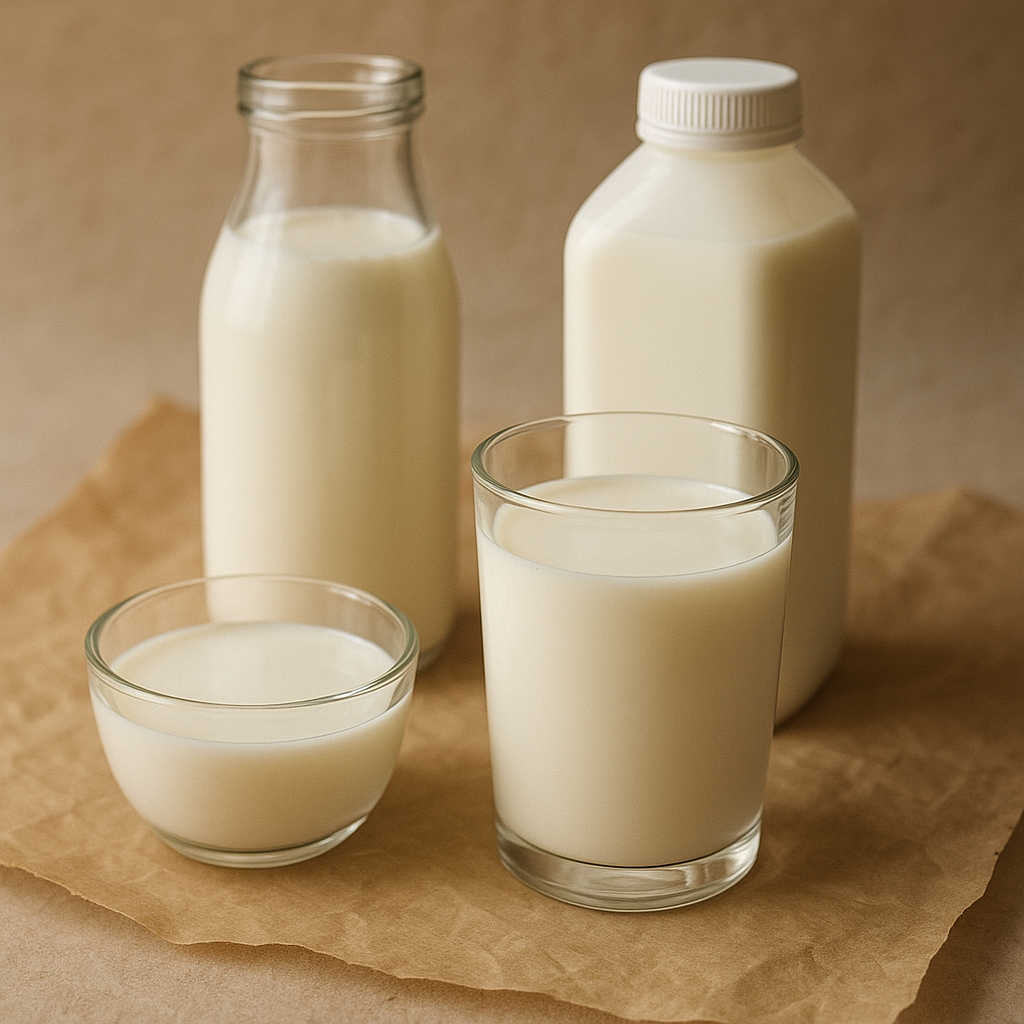
What it is
This is a dairy beverage produced from cows. It contains all of its natural fat content, which contributes to its rich flavor and creamy texture. It is a common staple in many households and is often consumed on its own or used as an ingredient in various culinary applications. The fat content provides a smooth mouthfeel that is distinct from lower-fat alternatives. It is a versatile liquid that can be enjoyed in many ways throughout the day.
How people cook with it
Whole milk is a foundational ingredient in both sweet and savory cooking. Its richness enhances many dishes.
- Pouring over cereal
- Adding to coffee
- Baking cakes
- Making sauces
People often drink whole milk as a beverage, either chilled or at room temperature. It is commonly poured over breakfast cereals, used to make smoothies, or added to coffee and tea. In baking, its fat content contributes to moisture and tenderness in cakes, cookies, and pastries. It is also a key component in many sauces, gravies, and custards, providing a smooth and rich base. For savory dishes, it can be used to create creamy soups or enrich mashed potatoes. Its versatility makes it a go-to for many kitchen tasks.
How it differs from similar foods
Compared to skim or reduced-fat milk, whole milk has a higher fat percentage. This results in a creamier texture and a richer, more pronounced flavor. The fat also affects how it behaves in cooking, contributing to a smoother emulsion in sauces and a more tender crumb in baked goods.
Who it is for
Home cooks and bakers frequently choose whole milk for its flavor and texture.
How to keep the rest
After opening, store any remaining whole milk in its original container in the refrigerator. Ensure the cap is tightly sealed to maintain freshness and prevent odor absorption. It is best consumed within a few days of opening for optimal quality. Keep it away from direct light and heat.