
Foxy
Foxy Iceberg Lettuce
What it is
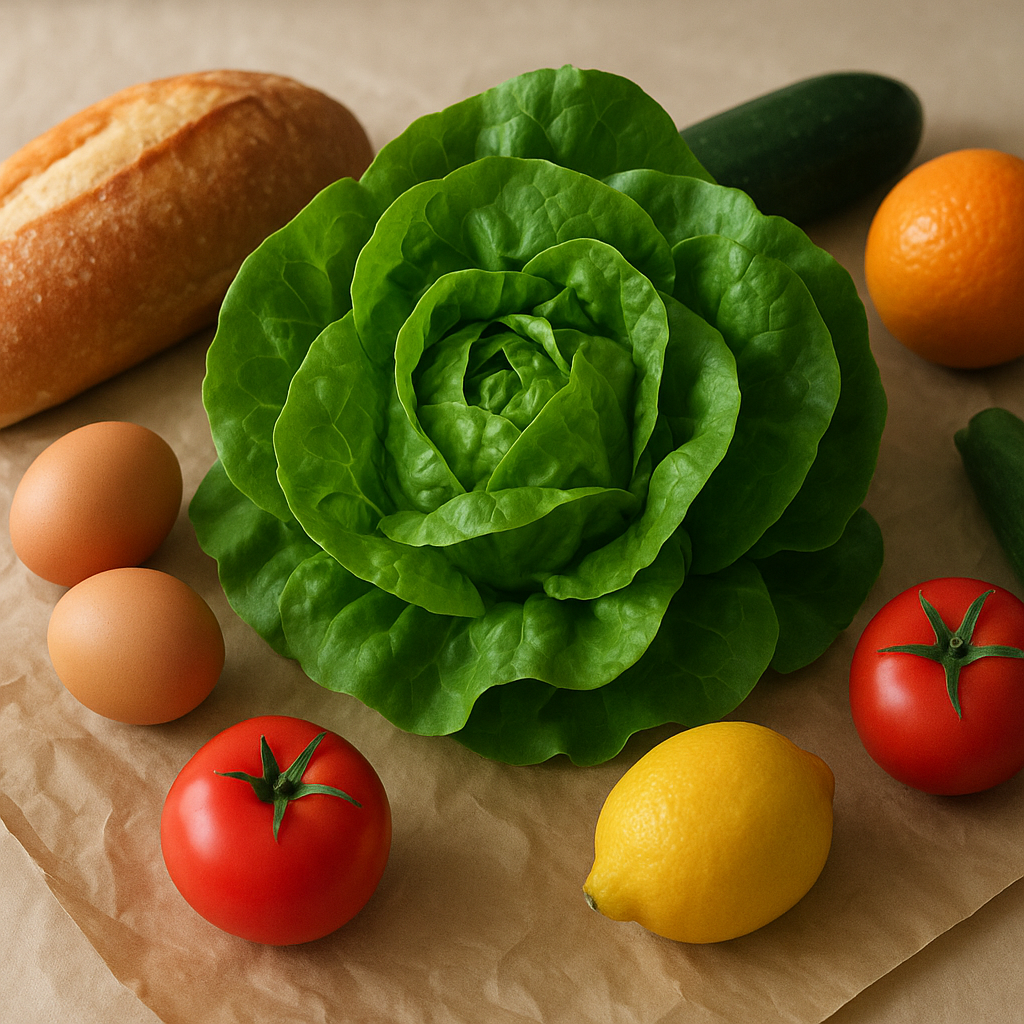
This is a head of iceberg lettuce, a crisp and refreshing vegetable. It is known for its tightly packed leaves and mild, watery flavor. Iceberg lettuce is a common choice for salads and sandwiches due to its satisfying crunch. It is a versatile ingredient that adds texture and a cool element to many dishes. The pale green leaves are firm and hold their shape well.
How people cook with it
Iceberg lettuce is a staple in many kitchens for its refreshing qualities. It is often the base for a simple salad or a crunchy addition to a sandwich.
- Salad base
- Sandwich topping
- Garnish
- Wraps
To prepare iceberg lettuce, start by removing any wilted outer leaves. You can then rinse the head under cool water, ensuring you get between the leaves. For salads, you can tear or chop the leaves into bite-sized pieces. It can also be shredded finely for tacos or wraps. For sandwiches, the leaves can be used whole or chopped. It is best served cold to maintain its crispness and refreshing taste.
How it differs from similar foods
Compared to other lettuces like romaine or butter lettuce, iceberg has a higher water content and a less pronounced flavor. Its crispness is its defining characteristic, offering a satisfying crunch that softer lettuces do not provide. It is also generally less nutrient-dense than darker leafy greens.
Who it is for
Home cooks and professional chefs alike use iceberg lettuce for its texture and mild flavor.
How to keep the rest
To keep leftover iceberg lettuce fresh, wrap the cut portion tightly in plastic wrap or place it in an airtight container. Store it in the refrigerator's crisper drawer. It is best to use the remaining lettuce within a few days for optimal crispness.