
Grocery
Sweet Hard Candy Drops
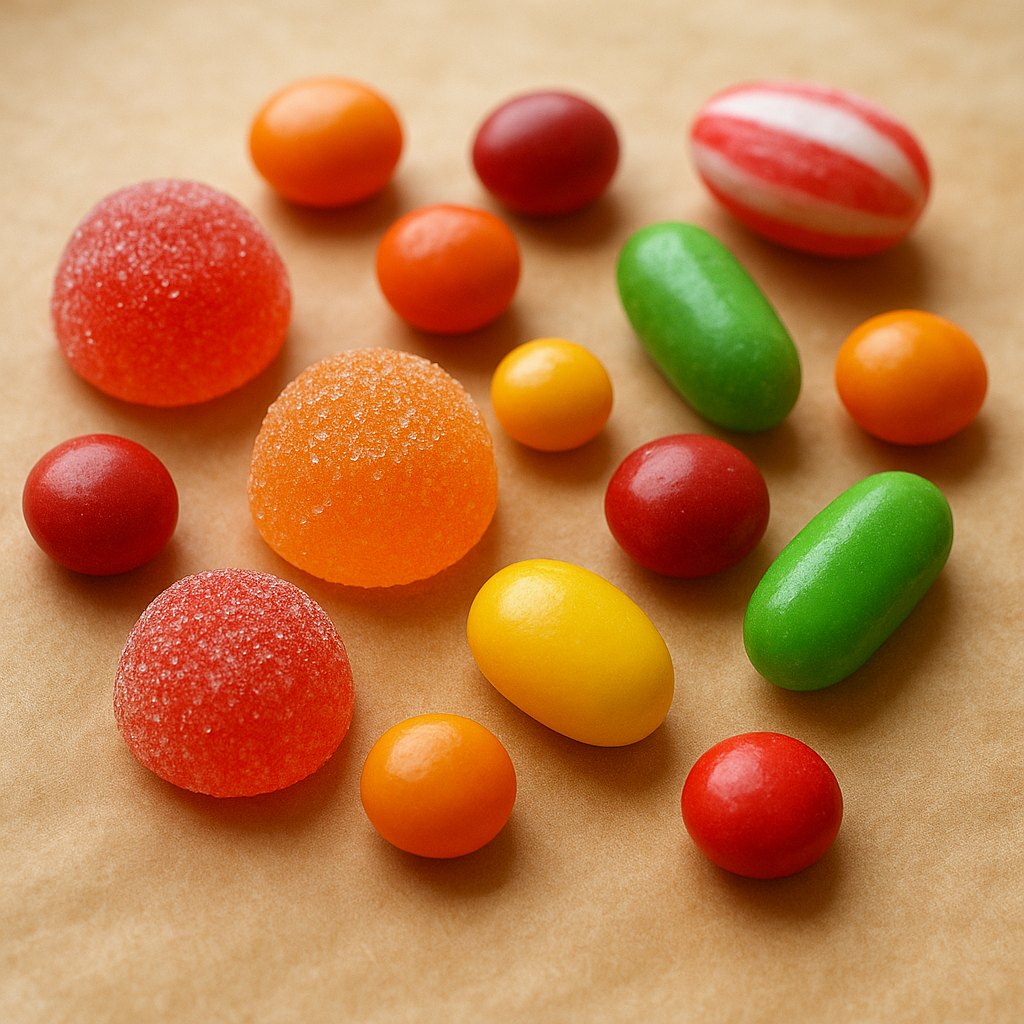
What it is
This is a type of confection made primarily from sugar, corn syrup, and flavorings. It is cooked to a high temperature, which causes the water content to evaporate, resulting in a solid, brittle texture. The candy is typically formed into small, bite-sized pieces. It offers a long-lasting sweetness and a satisfying crunch. The clear, glassy appearance is characteristic of this type of candy.
How people cook with it
Hard candies are enjoyed on their own as a simple treat. They can also be incorporated into various dessert preparations.
- Sucked on for a long-lasting sweet flavor
- Crushed and sprinkled over ice cream
- Used as edible decorations for cakes
- Added to homemade trail mix
These candies are designed to be savored slowly, allowing the flavor to dissolve gradually. For a different experience, they can be carefully crushed using a rolling pin or the flat side of a knife. The resulting shards or powder can then be used to add texture and sweetness to baked goods, or as a decorative element. When baking, consider how the heat might affect the candy's structure and flavor profile. Some bakers melt them down to create caramel-like sauces or brittle toppings.
How it differs from similar foods
Unlike chewy candies, hard candies offer a firm texture that requires patience to consume. They do not contain gelatin or other ingredients that contribute to a softer, more yielding bite. Their high sugar concentration and low moisture content also contribute to a longer shelf life compared to many other sweets.
Who it is for
People of all ages enjoy hard candies for their simple sweetness and satisfying texture.
How to keep the rest
To maintain the crispness and prevent stickiness, store any remaining candy in an airtight container. Keep it in a cool, dry place away from direct sunlight and humidity. Ensure the container is well-sealed to prevent moisture absorption, which can cause the candy to soften over time.