
Grocery · 5
Fresh Green Onions
What it is
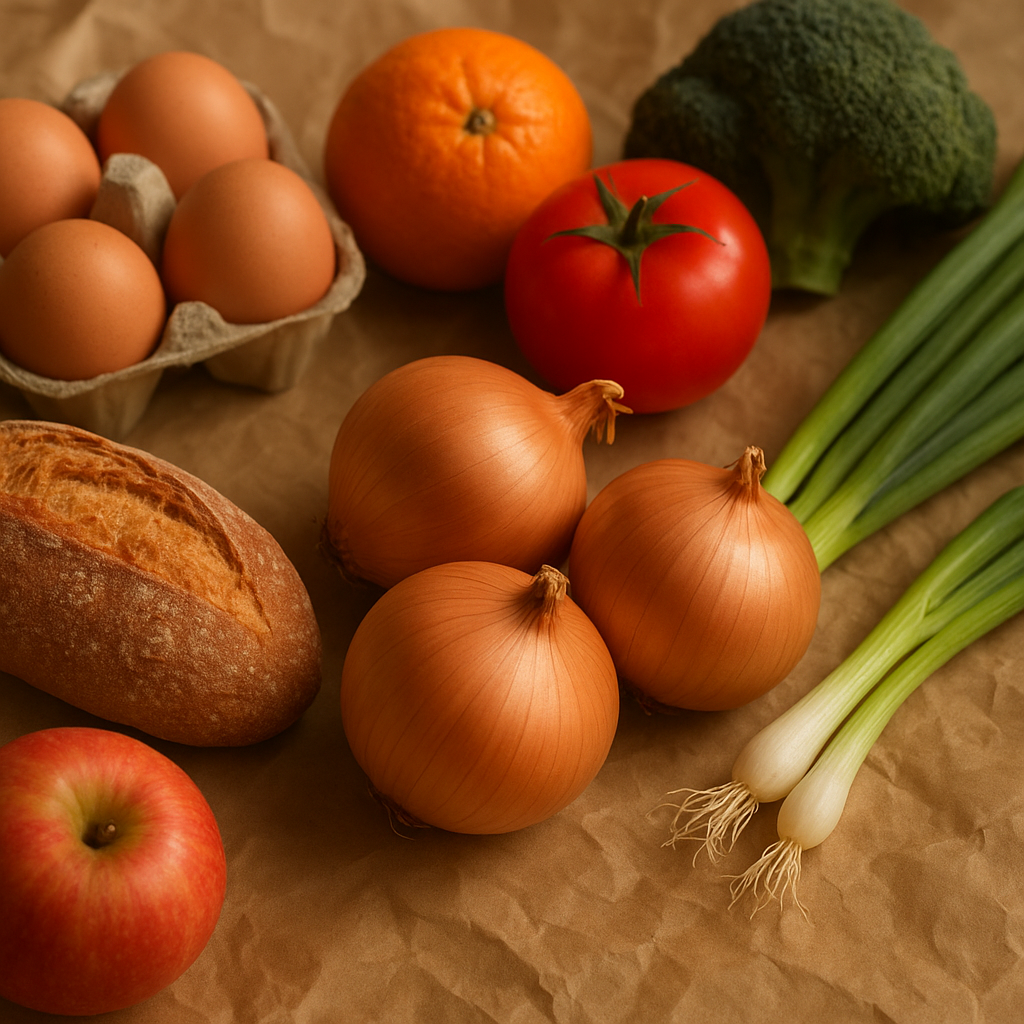
These are young onions harvested before the bulb fully develops. They feature long, hollow green stalks and a small, white or pale green base. Their flavor is milder and more delicate than mature onions, offering a fresh, slightly pungent taste. They are a versatile ingredient used in many cuisines worldwide, adding both visual appeal and a subtle onion essence to dishes.
How people cook with it
Green onions are a popular choice for adding a fresh, bright flavor and a touch of color to a wide range of dishes. They can be used both raw and cooked, bringing a pleasant onion note without the sharpness of larger onion varieties.
- Garnish for soups and stews
- Chopped into salads
- Mixed into stir-fries
- Added to omelets and scrambled eggs
To prepare green onions, trim off the roots and any wilted or damaged parts of the green tops. You can then slice them thinly, separating the white and light green parts from the dark green tops, as they have slightly different textures and intensities of flavor. The white and light green portions are often sautéed or cooked, while the dark green tops are frequently used raw as a garnish or added towards the end of cooking to preserve their fresh flavor and crispness.
How it differs from similar foods
Unlike mature onions, green onions have a much milder flavor profile. They lack the strong, pungent bite of yellow or red onions when eaten raw. Their texture is also different, with the stalks being tender and the bulbs small and less dense, making them ideal for applications where a less overpowering onion taste is desired.
Who it is for
Home cooks and professional chefs alike appreciate green onions for their mild flavor and decorative qualities.
How to keep the rest
To keep the rest of your green onions fresh, wrap the unwashed bunch loosely in a damp paper towel and place it in a plastic bag. Store them in the crisper drawer of your refrigerator. They are best used within a week of purchase for optimal freshness and flavor.