
Grocery · g
Whole Turkey
What it is
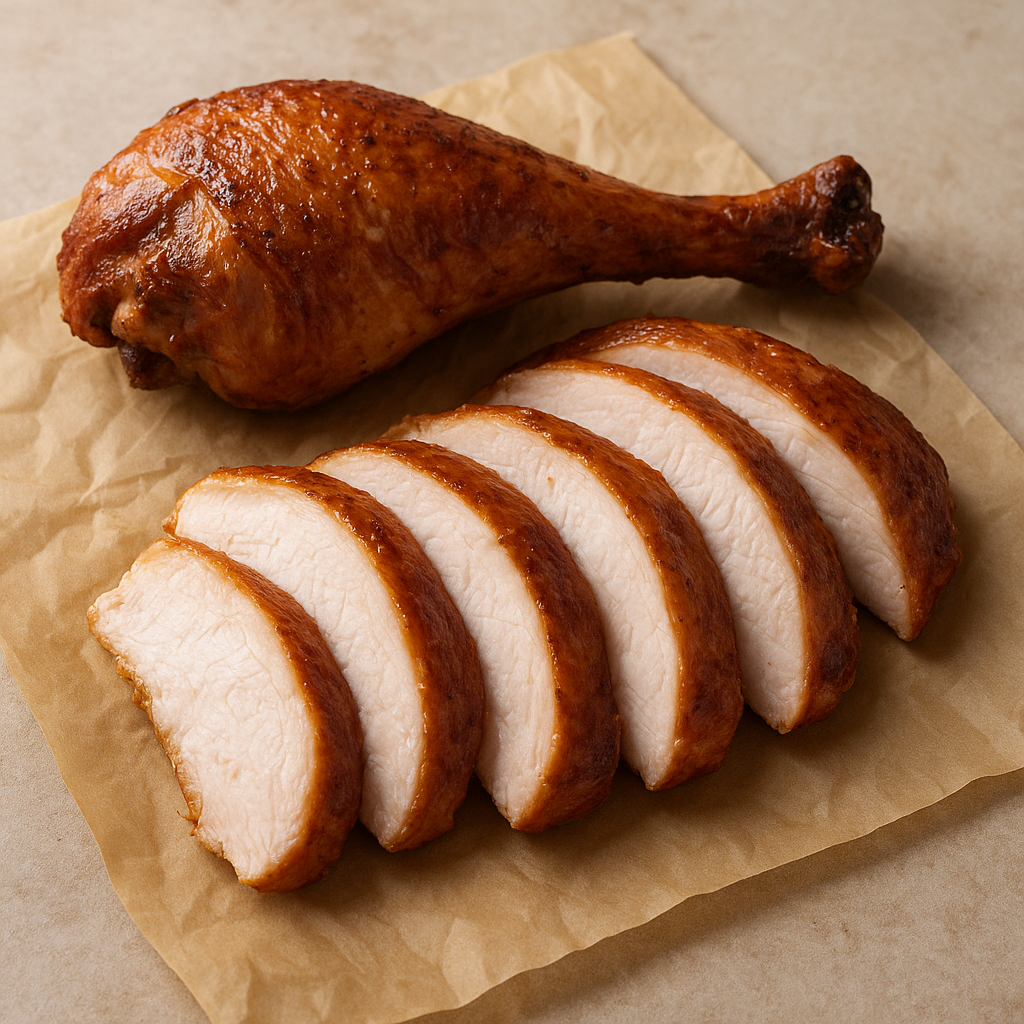
This is a whole turkey, a large poultry bird commonly prepared for special occasions. It is typically sold with the giblets and neck removed, but still intact. The meat is lean and has a mild flavor. It is a versatile ingredient that can be roasted, smoked, or even deep-fried. The skin becomes crispy when cooked, providing a delicious contrast to the tender meat inside. It is a centerpiece for festive meals.
How people cook with it
Whole turkeys are a traditional choice for holiday feasts and large gatherings.
- Roast for holidays
- Smoke for picnics
- Braise for stews
- Carve for sandwiches
To prepare a whole turkey for roasting, begin by thawing it completely if frozen. Remove the giblets and neck from the cavity. Rinse the turkey inside and out and pat it dry. Season the cavity and the outside of the bird with salt, pepper, and your preferred herbs and spices. You can stuff the cavity with aromatics like onions, carrots, and celery. Place the turkey on a rack in a roasting pan and roast in a preheated oven until the internal temperature reaches the safe level in the thickest part of the thigh. Basting occasionally helps keep the skin moist and flavorful.
How it differs from similar foods
Compared to other poultry like chicken, a whole turkey is significantly larger and has a more robust flavor profile. Its meat is generally leaner, especially the breast. The cooking time is also much longer due to its size, requiring careful temperature monitoring to ensure it is cooked through without drying out.
Who it is for
Home cooks preparing for family celebrations and large dinners often choose a whole turkey.
How to keep the rest
Refrigerate any leftover cooked turkey promptly. Wrap it tightly in plastic wrap or aluminum foil, or store it in an airtight container. It is best consumed within three to four days. For longer storage, cooked turkey can be frozen.