
Grocery
Fat-Free Milk
What it is
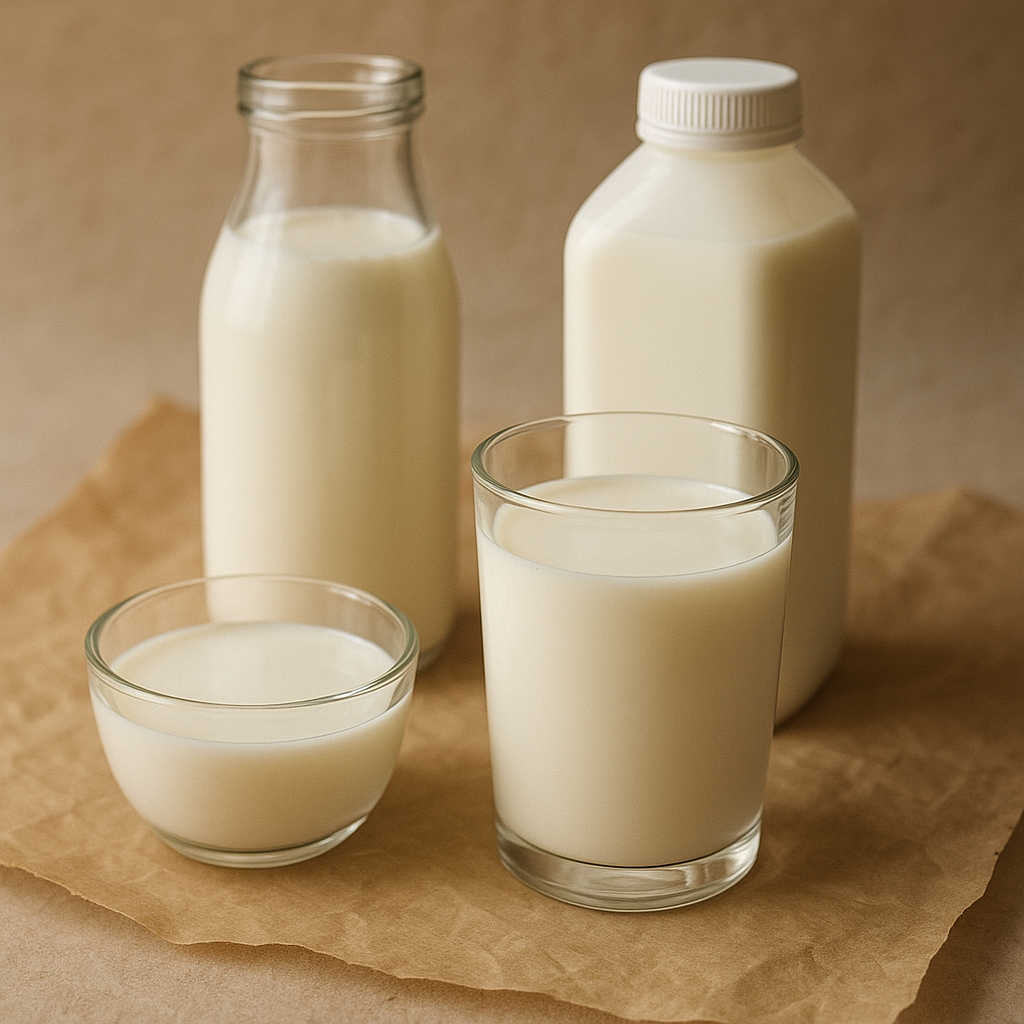
This is cow's milk that has had all of its fat removed. It is a liquid dairy product, typically white in color and opaque. The process of removing fat is done through centrifugation, separating the cream from the milk. This results in a lighter consistency compared to whole milk.
How people cook with it
Fat-free milk is a versatile ingredient used in many recipes and as a beverage.
- Drinking as a beverage
- Adding to cereal
- Using in smoothies
- Baking
Fat-free milk can be enjoyed chilled as a standalone drink. It is commonly poured over breakfast cereals, providing a liquid base for grains. In smoothies, it contributes to a thinner, lighter texture without adding fat. For baking, it can be substituted for other types of milk in recipes for cakes, muffins, and pancakes. It can also be used in sauces and soups to achieve a desired consistency, though it may not provide the same richness as higher-fat milks.
How it differs from similar foods
Fat-free milk differs from whole milk and reduced-fat milk by its complete absence of fat. This results in a thinner body and a less creamy mouthfeel. It also has a slightly different flavor profile, often perceived as more watery than milk with fat.
Who it is for
Home cooks and individuals looking for a low-fat dairy option often choose fat-free milk.
How to keep the rest
After opening, store any unused fat-free milk in its original container in the refrigerator. Ensure the cap is tightly sealed to prevent spoilage. It is best consumed within the expiration date printed on the packaging. Keep it away from strong odors in the refrigerator.