
Grocery
Fat-Free Milk
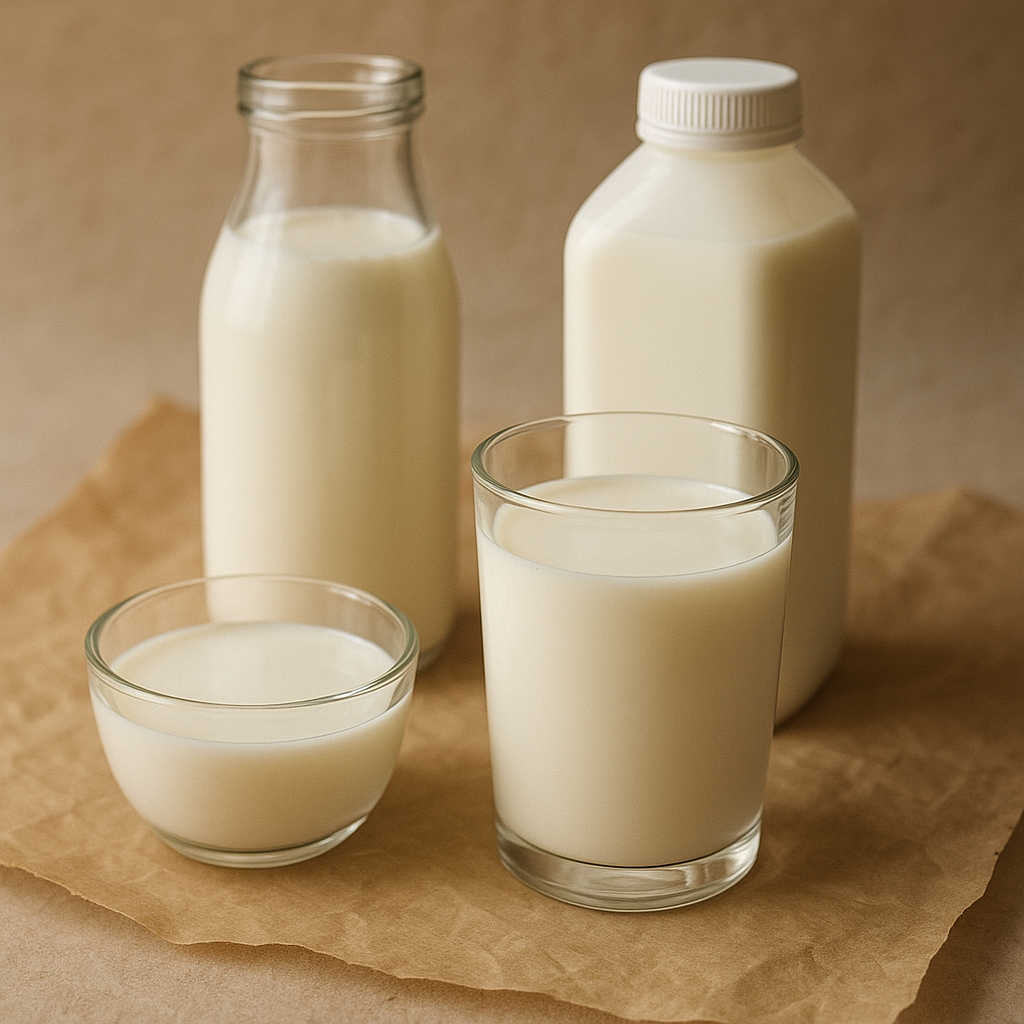
What it is
This is cow's milk that has had all of its fat removed. The process of removing fat is done through centrifugation, separating the cream from the milk. The resulting milk is then homogenized and pasteurized for safety and shelf stability. It is a staple in many households for drinking and cooking.
How people cook with it
Fat-free milk is a versatile ingredient used in both sweet and savory dishes, as well as for drinking on its own.
- Drinking
- Baking
- Cooking
- Smoothies
Fat-free milk can be used in place of whole milk in most recipes. It is excellent for making lighter sauces, gravies, and creamy soups. When baking, it contributes moisture and helps activate leavening agents. It can also be used as a base for smoothies, milkshakes, or simply enjoyed chilled. For cooking, it can be added to stews or casseroles to enrich their flavor and texture. Its neutral taste makes it a good choice when you want the other ingredients to shine.
How it differs from similar foods
Compared to whole milk, fat-free milk has a thinner consistency and a less rich flavor due to the absence of fat. Skim milk is another term for fat-free milk, indicating the removal of the cream.
Who it is for
Home cooks and individuals looking for a lower-fat dairy option often choose fat-free milk.
How to keep the rest
After opening, refrigerate any unused fat-free milk. Keep it in its original container to prevent contamination and maintain freshness. It should be consumed within the expiration date printed on the carton for optimal quality and safety. Proper refrigeration is key to its shelf life.