
Grocery
Fat-Free Milk
What it is
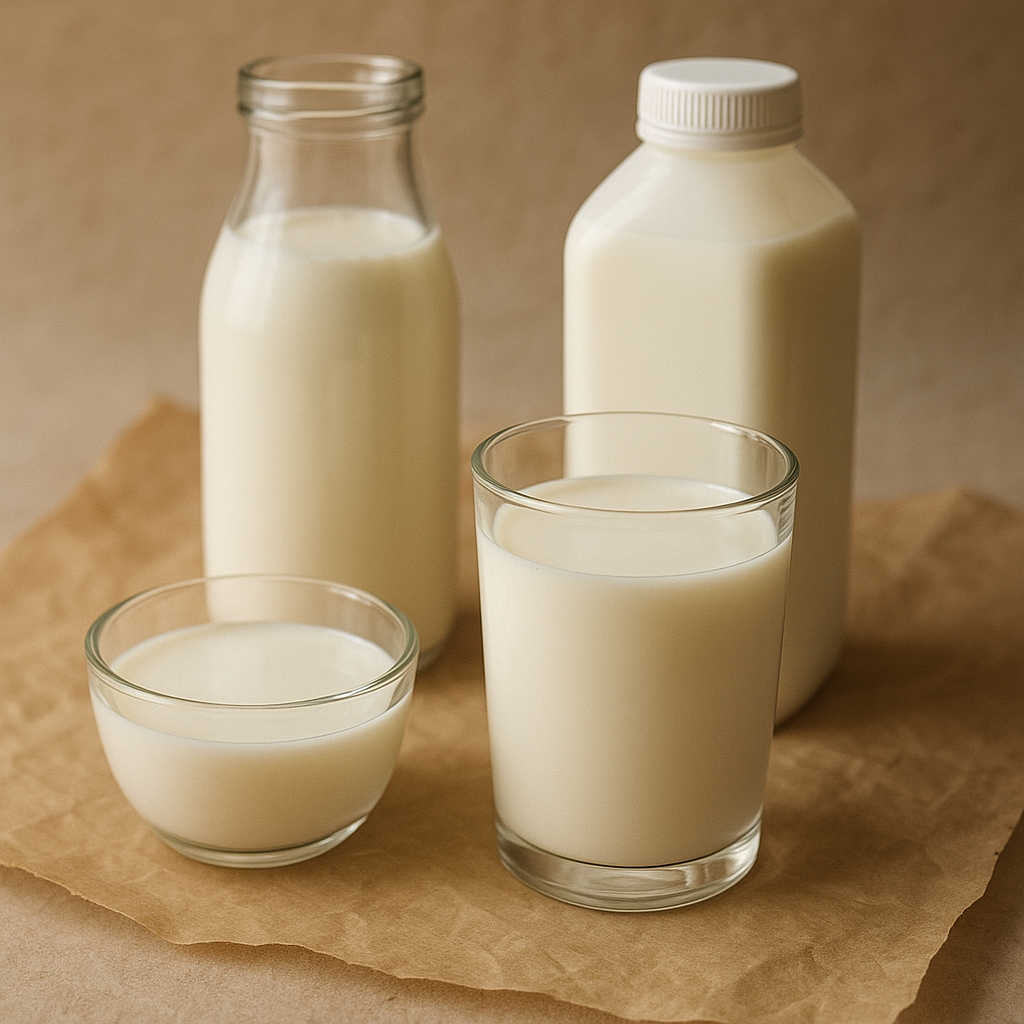
This is cow's milk that has had nearly all of its fat removed. It is a liquid dairy product that is white and opaque. The removal of fat results in a lighter texture and a less rich flavor compared to whole or reduced-fat milk. It is a common beverage and cooking ingredient.
How people cook with it
Fat-free milk is a versatile ingredient used in many everyday recipes and as a standalone beverage.
- Drinking
- Cereal
- Baking
- Sauces
People drink fat-free milk chilled as a refreshing beverage. It is often poured over breakfast cereals, providing a light base. In baking, it can be used in place of other milk types for cakes, muffins, and breads, contributing moisture and structure without adding fat. It is also a common component in making lighter versions of creamy sauces, soups, and gravies, where it helps achieve a smooth consistency.
How it differs from similar foods
Compared to whole milk, fat-free milk has a thinner consistency and a less creamy mouthfeel due to the absence of fat. It also has a more neutral flavor profile. Reduced-fat milk, like 1% or 2% milk, falls between whole milk and fat-free milk in terms of fat content, texture, and richness.
Who it is for
Home cooks and individuals looking for a lighter dairy option often choose fat-free milk.
How to keep the rest
After opening, store any remaining fat-free milk in its original container in the refrigerator. Ensure the cap is tightly sealed to maintain freshness and prevent spoilage. Consume within the recommended timeframe after opening, typically a few days, to ensure the best quality and taste.