
Grocery
Enriched Unbleached All-Purpose Flour
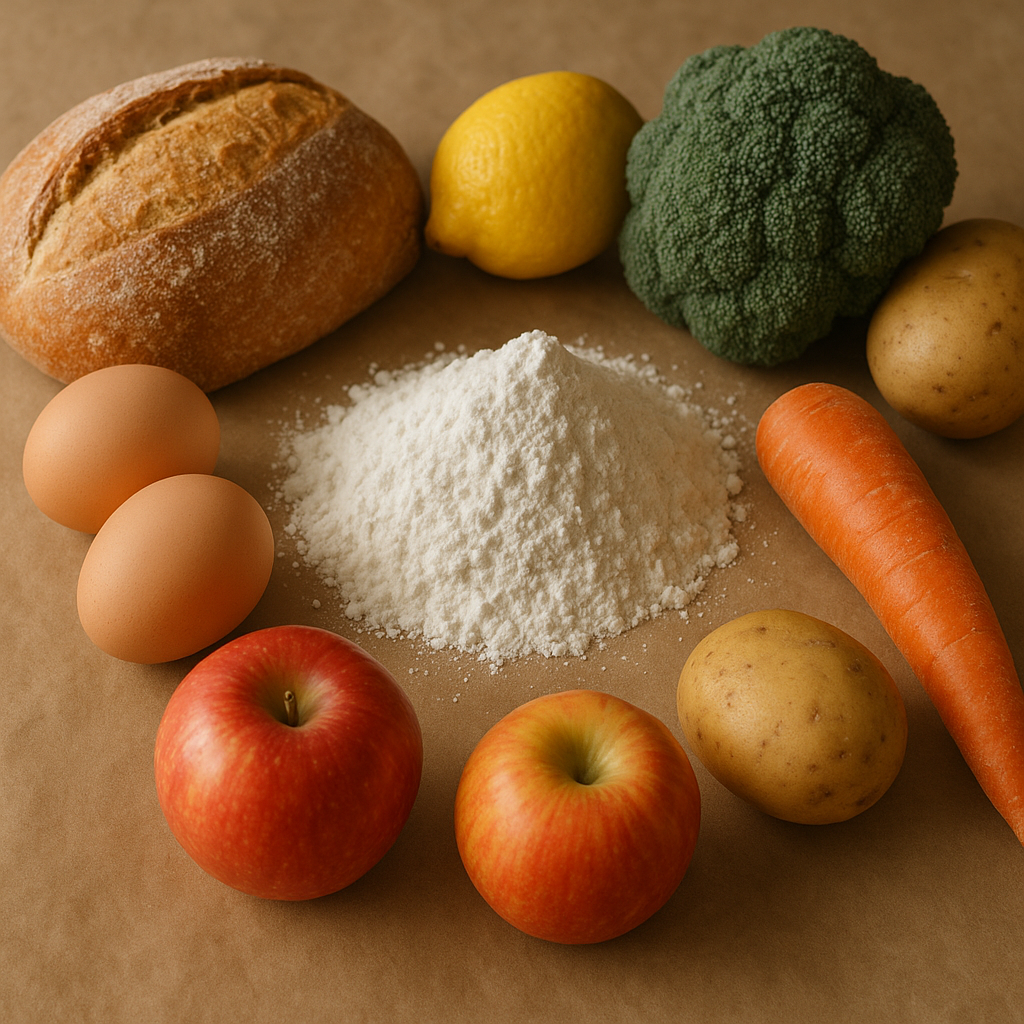
What it is
This is a staple baking ingredient made from wheat. The unbleached nature means it has not undergone a bleaching process, which can affect its color and texture slightly compared to bleached flour. It is a versatile flour suitable for a wide range of baking and cooking applications.
How people cook with it
This flour is fundamental for many baked goods and savory dishes. It provides structure and binding in recipes.
- Baking cakes and cookies
- Making bread and pastries
- Thickening sauces and gravies
- Coating meats and vegetables
When baking, this flour is typically measured by volume or weight and incorporated into batters and doughs. It can be sifted to aerate and remove lumps, which is especially helpful for delicate cakes. For thickening, it is often mixed with a liquid to form a slurry before being added to hot liquids, preventing clumps. It can also be used to create a crispy coating for fried foods.
How it differs from similar foods
Unbleached flour is generally a bit denser and has a slightly creamier color than bleached flour. Some bakers prefer it for its natural taste and texture. It can also absorb liquids differently, which might require minor adjustments in some recipes.
Who it is for
Home bakers and cooks rely on this flour for everyday culinary creations.
How to keep the rest
To maintain freshness, store the remaining flour in its original packaging or an airtight container. Keep it in a cool, dry place away from direct sunlight and moisture to prevent spoilage and insect infestation. Proper storage ensures its quality for future use.