
Grocery
All-Purpose Wheat Flour
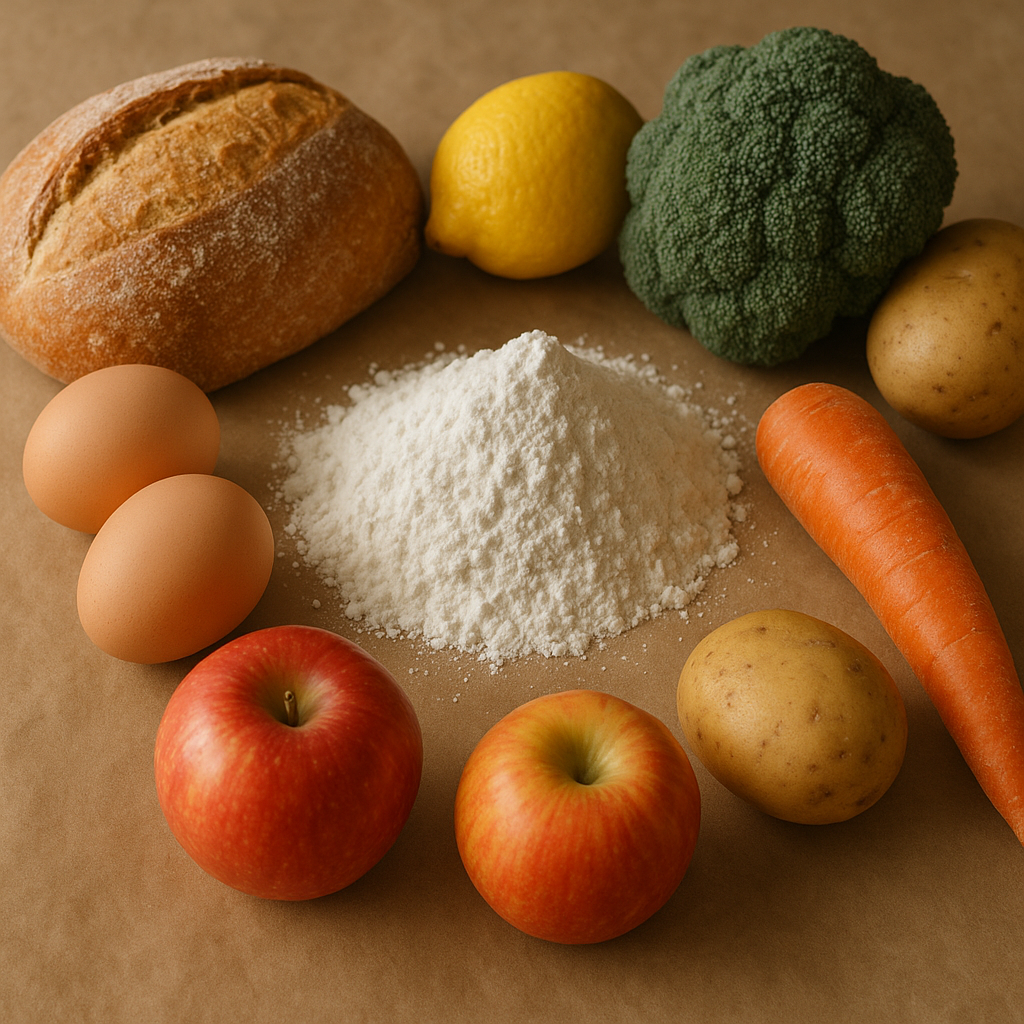
What it is
This is a finely milled flour made from wheat. It has been bleached, a process that whitens the flour and can affect its texture and baking performance. The enrichment process adds back certain nutrients that may have been lost during milling. It is a staple ingredient in many kitchens, used for a wide variety of baked goods and cooking applications. The fine texture allows it to blend smoothly into batters and doughs.
How people cook with it
This flour is incredibly versatile and forms the base for countless recipes.
- Baking cakes and cookies
- Making bread and rolls
- Thickening sauces and gravies
- Coating fried foods
When baking, this flour provides structure to cakes, cookies, and breads. It absorbs liquid and fat, creating the dough or batter. For savory dishes, it can be used to create a roux for thickening sauces and gravies, or as a coating for meats and vegetables before frying to achieve a crispy exterior. It is important to measure it accurately for consistent results.
How it differs from similar foods
Compared to unbleached flour, bleached flour is softer and whiter. This can lead to a more tender crumb in cakes and pastries. It also absorbs liquids slightly differently. Whole wheat flour, on the other hand, contains the entire wheat kernel and has a denser texture and nuttier flavor.
Who it is for
Home bakers and cooks who enjoy making a variety of baked goods and savory dishes often keep this flour on hand.
How to keep the rest
To maintain its freshness, store the remaining flour in a cool, dry place in an airtight container. This prevents moisture absorption and keeps out pests. Properly stored, it can last for several months.