
Grocery
Fresh Farm Eggs
What it is
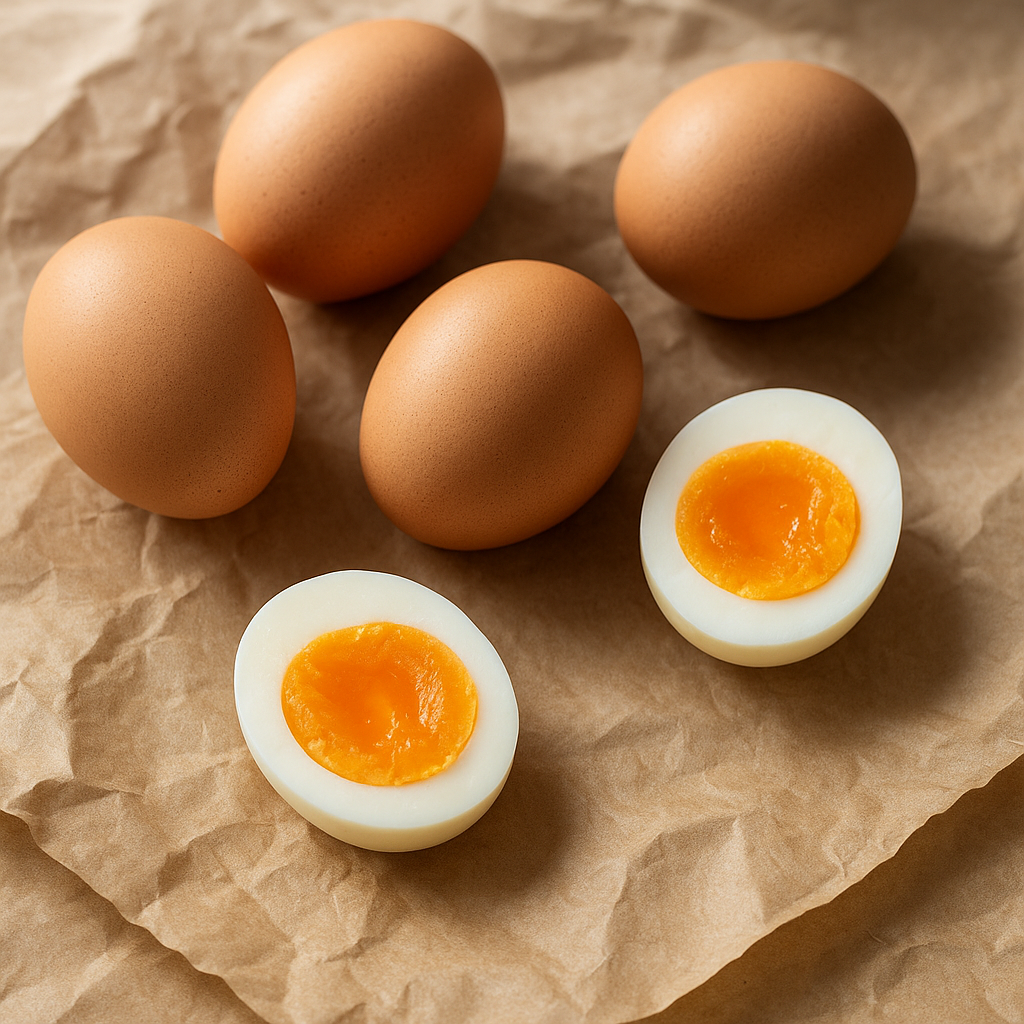
These are fresh eggs laid by hens. They are a common staple in kitchens around the world. They come in a protective shell that keeps the inside fresh until ready for use. The color of the shell can vary depending on the breed of the hen. The inside consists of a yolk and an albumen, commonly known as the egg white. Both parts are edible and used in various culinary preparations.
How people cook with it
Eggs are a fundamental ingredient in countless dishes, both sweet and savory. They can be the star of a meal or a supporting player that binds ingredients together.
- Breakfast scrambles
- Baking cakes
- Sauce emulsification
- Binding patties
Eggs can be prepared in many ways. They can be fried, scrambled, boiled, or poached for simple meals. In baking, they contribute to structure, richness, and leavening. When whisked, they can create light and airy textures for meringues or mousses. They are also crucial for making emulsions like mayonnaise and hollandaise sauce, where the lecithin in the yolk helps to combine oil and water. Their ability to coagulate when heated makes them useful for binding ingredients in dishes like meatloaf or meatballs.
How it differs from similar foods
The primary difference between types of eggs often relates to the breed of the hen and their diet, which can subtly affect the yolk color and flavor. Brown eggs and white eggs are nutritionally the same; the color difference is purely genetic. Freshness is key, and older eggs may have a thinner white and a flatter yolk.
Who it is for
Home cooks and professional chefs rely on eggs for their adaptability in everyday cooking and complex culinary creations.
How to keep the rest
To maintain freshness, store eggs in their original carton in the refrigerator. The carton helps protect them from absorbing odors and prevents them from cracking. It is best to use them within a few weeks of purchase for optimal quality.