
Grocery
Danish Croissant Pastry
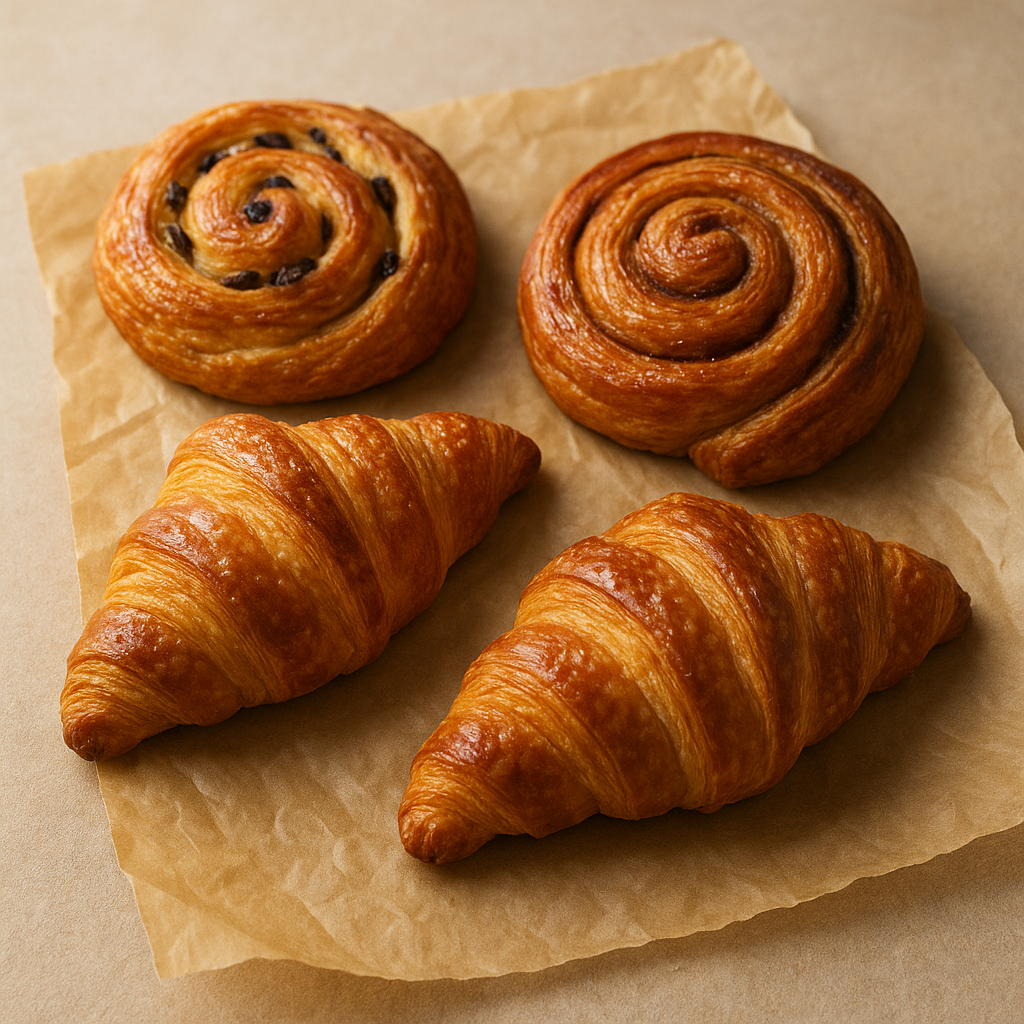
What it is
This is a classic Danish pastry, known for its flaky, buttery layers and slightly sweet dough. It's a rich and satisfying baked good, often enjoyed as a breakfast treat or a delightful snack. The dough is typically made with yeast and a significant amount of butter, which is folded in multiple times to create the characteristic texture. Its golden-brown exterior promises a tender and airy interior.
How people cook with it
These pastries are versatile and can be enjoyed on their own or as a base for other flavors. They are a popular choice for morning meals and afternoon breaks.
- Enjoy with coffee
- Serve with fruit
- Fill with cream
- Pair with jam
To best enjoy this Danish croissant, it is recommended to warm it slightly. You can place it in a preheated oven at a low temperature for a few minutes until it is just warmed through and its flaky layers are re-crisped. Alternatively, a brief period in a toaster oven can achieve a similar effect. Avoid microwaving, as this can make the pastry soft and less appealing. It is also delicious served at room temperature.
How it differs from similar foods
Compared to a standard croissant, a Danish pastry often has a richer, sweeter dough and may include fillings or toppings. The lamination process, while similar, can result in a slightly different texture, often a bit more tender and less crisp than a French croissant.
Who it is for
Home bakers and pastry enthusiasts who appreciate traditional European baked goods will enjoy this item.
How to keep the rest
To keep any remaining pastries fresh, store them in an airtight container at room temperature. For longer storage, wrap them tightly in plastic wrap and then place them in a freezer-safe bag. They can be frozen for up to a month and thawed at room temperature.