
Grocery
Whole Wheat Flour
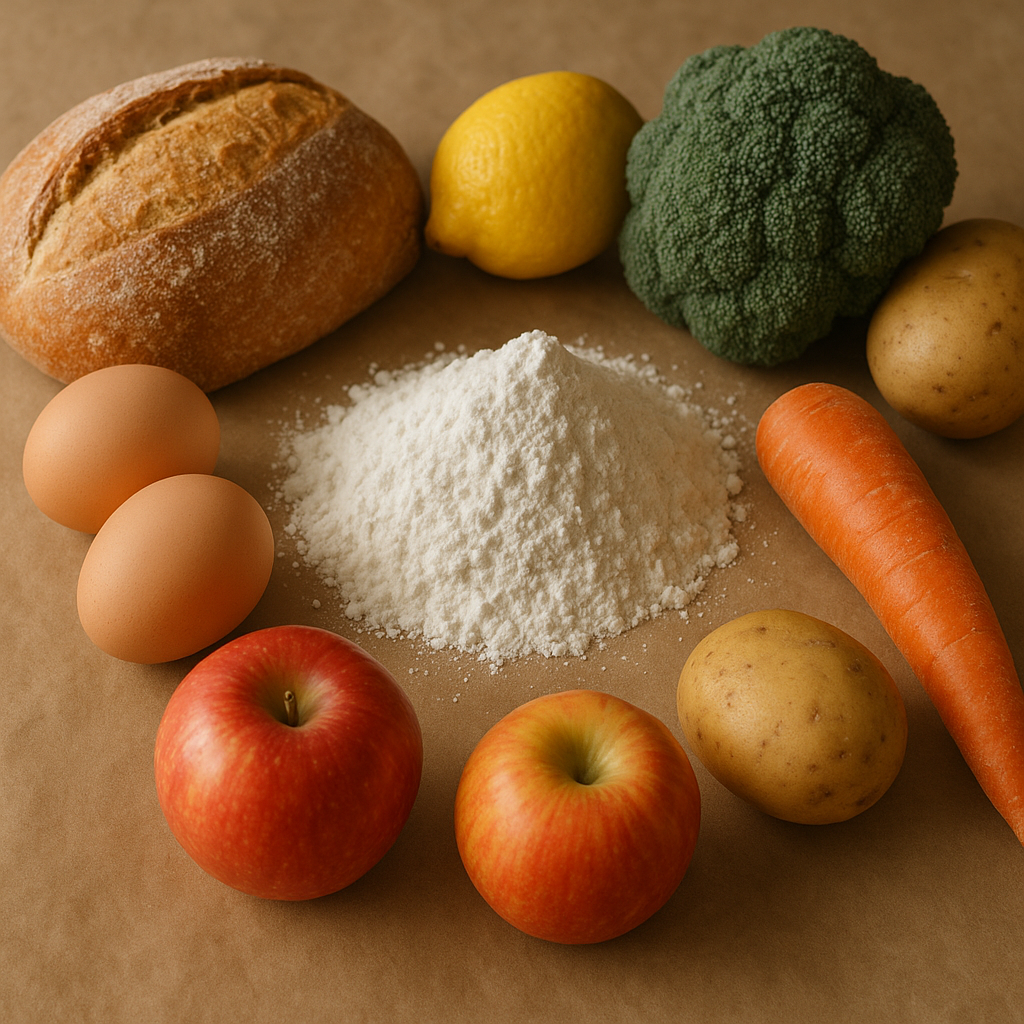
What it is
This is finely ground flour made from the entire wheat kernel. It includes the bran, germ, and endosperm. The presence of these components gives it a distinct texture and flavor compared to refined flours. It is a common staple in many kitchens for baking and cooking.
How people cook with it
Whole wheat flour is a versatile ingredient used in a wide range of baked goods and savory dishes.
- Baking bread
- Making pancakes
- Thickening sauces
- Creating pasta
When baking, whole wheat flour can often be substituted for all-purpose flour, though adjustments may be needed. It absorbs more liquid, so you might need to add a bit more moisture to your dough or batter. For yeast breads, it can create a denser loaf with a heartier texture. It works well in quick breads, muffins, and cookies, contributing a slightly nutty taste. It can also be used to coat meats or vegetables before frying.
How it differs from similar foods
Unlike refined white flour, whole wheat flour retains the bran and germ, which contribute to its darker color, coarser texture, and more robust flavor. This difference in composition affects how it behaves in recipes, particularly in terms of moisture absorption and final product density.
Who it is for
Home bakers and cooks who prefer a whole grain option often choose this flour.
How to keep the rest
To maintain freshness, store whole wheat flour in an airtight container in a cool, dry place. Refrigeration or freezing can extend its shelf life significantly, especially in warmer climates. It is best to use it within a few months for optimal flavor and texture.