
Grocery
Whole Chicken
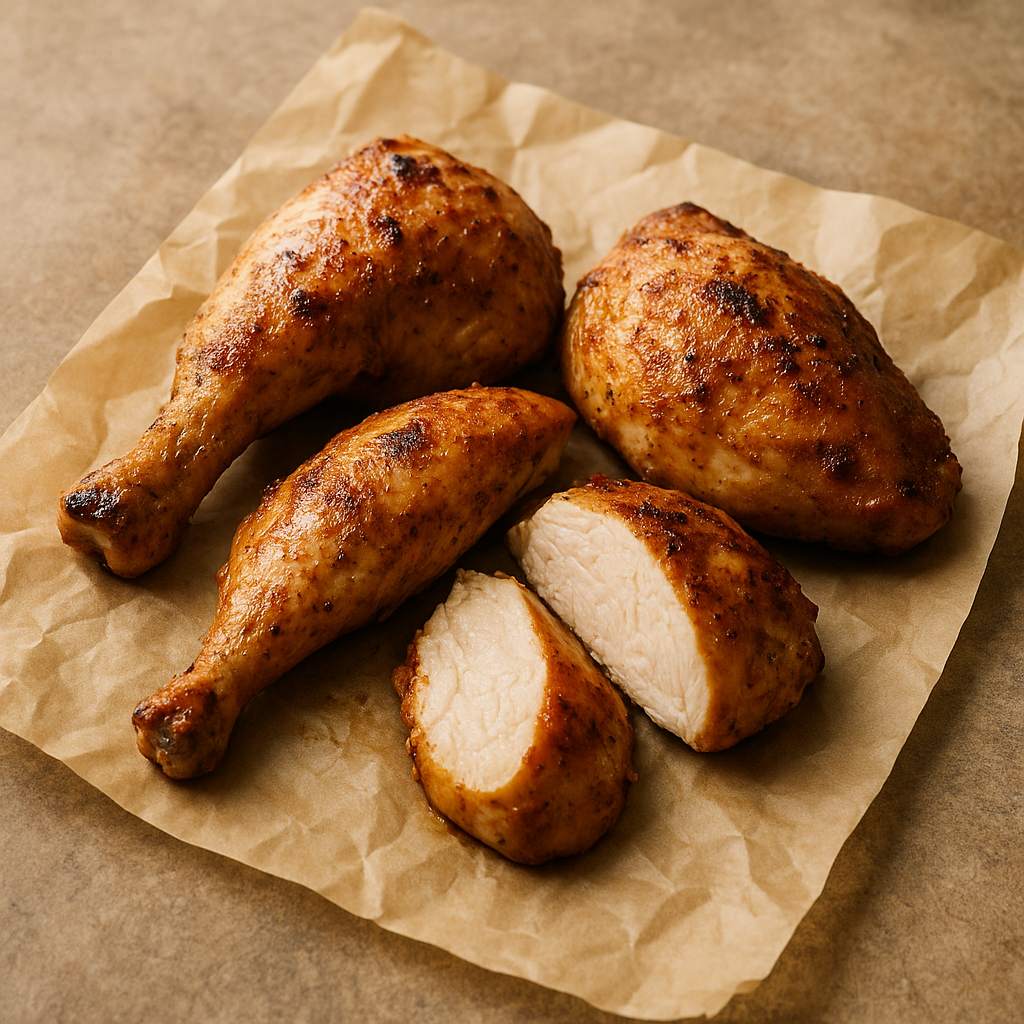
What it is
This is a whole, uncooked chicken, typically sold with the giblets removed from the cavity. The skin provides a layer of fat that can contribute to moisture and flavor during cooking. The meat itself can be white or dark, depending on the cut and the chicken's diet.
How people cook with it
A whole chicken is a foundational ingredient for many home-cooked meals, offering flexibility in how it is prepared and served.
- Roasting
- Braising
- Poaching
- Cutting into pieces
To prepare a whole chicken, begin by ensuring it is thawed if frozen. You can rinse it under cold water and pat it dry thoroughly with paper towels. Season the cavity and the exterior with salt, pepper, and your preferred herbs and spices. Many people stuff the cavity with aromatics like onion, garlic, or lemon before roasting. For even cooking, you can truss the legs together. The cooking time will vary based on the size of the chicken and the cooking method, but the internal temperature should reach 165 degrees Fahrenheit in the thickest part of the thigh.
How it differs from similar foods
Compared to chicken parts like breasts or thighs, a whole chicken offers a complete bird. This allows for varied textures and flavors from different parts of the animal. Cooking a whole bird often results in a more moist and flavorful outcome due to the natural basting from its own juices.
How to keep the rest
Refrigerate the uncooked chicken immediately after purchase. Store it on the bottom shelf of your refrigerator, preferably in a container or on a plate to prevent any juices from dripping onto other foods. Use within one to two days for optimal freshness and safety.