
Grocery
Unsalted Butter
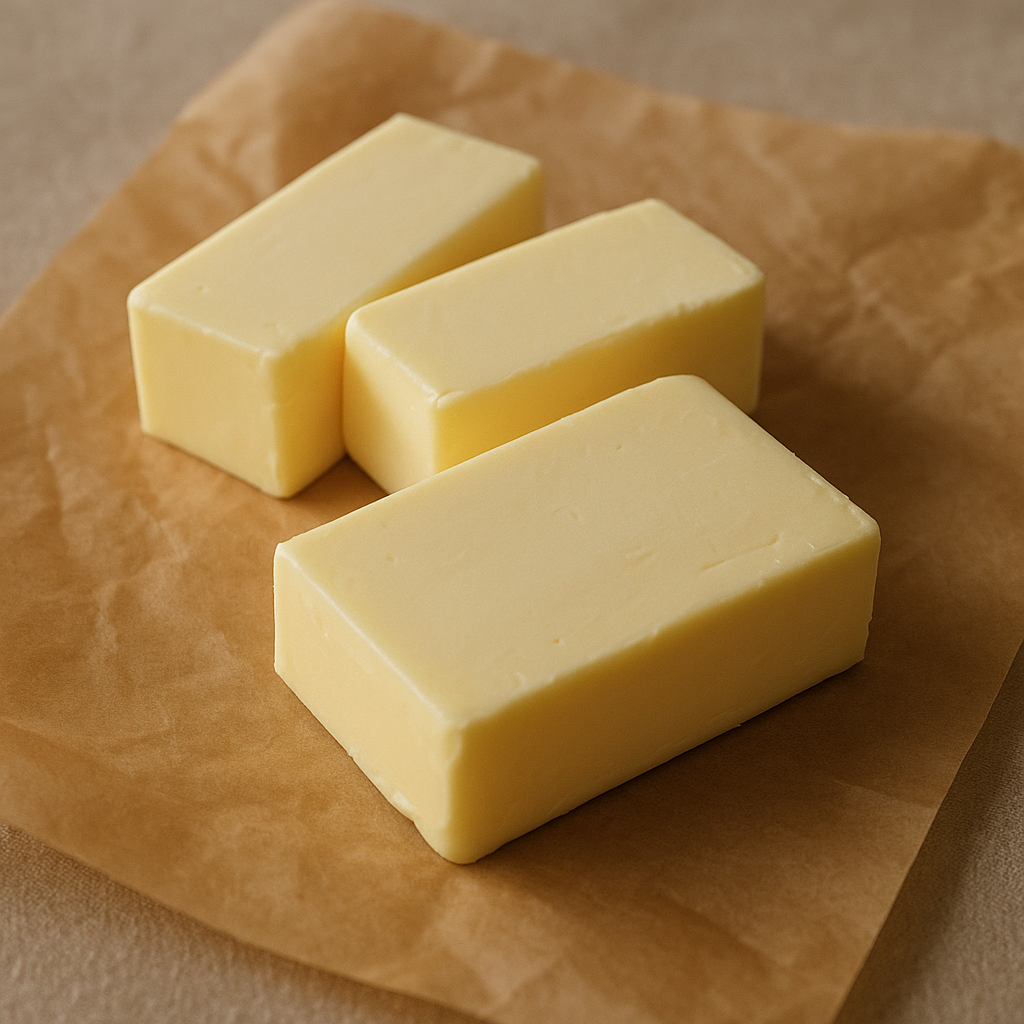
What it is
This is a dairy product made from churning cream. It is a solid fat at room temperature and melts when heated. Unsalted butter contains only butterfat, milk solids, and water. It is a staple in many kitchens for both sweet and savory cooking applications. The absence of salt allows for greater control over the final flavor of a dish.
How people cook with it
Unsalted butter is incredibly versatile and can be used in a wide range of culinary preparations.
- Baking cakes and cookies
- Sautéing vegetables
- Sauce bases
- Spreading on toast
Unsalted butter can be softened for creaming with sugar in baked goods, melted for sauces or drizzling, or used cold and cut into flour for pastries. Its mild flavor makes it ideal for recipes where you want to highlight other ingredients. It browns nicely when heated, adding a rich depth of flavor to pan-fried items. It can also be used to grease pans, preventing food from sticking.
How it differs from similar foods
Unlike salted butter, unsalted butter does not contribute additional saltiness to a dish. This is important in baking, where precise salt levels can affect texture and flavor. It also has a slightly sweeter taste due to the absence of salt.
Who it is for
Home cooks and professional chefs use unsalted butter for its predictable flavor and texture.
How to keep the rest
Keep unsalted butter refrigerated to maintain its firmness and prevent spoilage. For longer storage, it can be frozen. Ensure it is tightly wrapped to prevent it from absorbing odors from other foods in the refrigerator or freezer.