
Grocery
Unsalted Butter
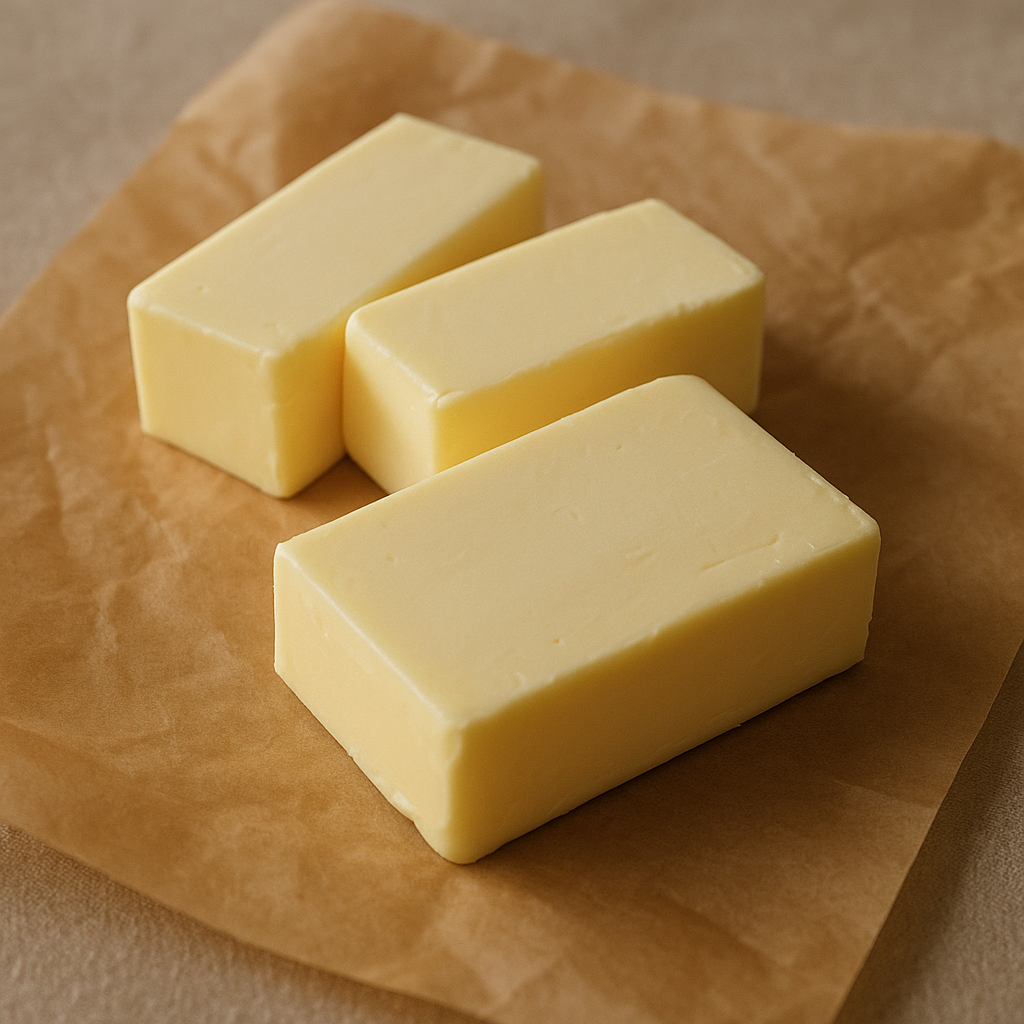
What it is
This is unsalted butter, a dairy product made by churning cream. It is a solid fat at room temperature but softens and melts when heated. Unsalted butter is a staple in many kitchens due to its versatility in both sweet and savory cooking. It provides richness and helps bind ingredients together.
How people cook with it
Butter is fundamental for baking and cooking. It adds flavor and texture to a wide range of dishes.
- Baking cakes and cookies
- Sautéing vegetables
- Making sauces
- Spreading on toast
Unsalted butter can be creamed with sugar for baked goods, melted to coat foods, or used to create emulsions in sauces. It's excellent for browning meats, adding a glossy finish to vegetables, or simply melting into a warm bowl of oatmeal. When baking, its controlled salt content allows for precise flavor adjustments with added salt. It also contributes to the flakiness of pastries and the tenderness of cakes.
How it differs from similar foods
Unsalted butter differs from salted butter by the absence of added salt. This distinction is important for bakers who want to control the salt level in their recipes precisely. It also tends to have a slightly fresher flavor profile compared to its salted counterpart.
Who it is for
Home cooks and professional chefs rely on unsalted butter for consistent results in their culinary creations.
How to keep the rest
To store the remaining butter, wrap it tightly in its original packaging or parchment paper. Keep it refrigerated to maintain its firmness and prevent spoilage. For longer storage, butter can be frozen, ensuring it remains fresh for several months.