
Grocery
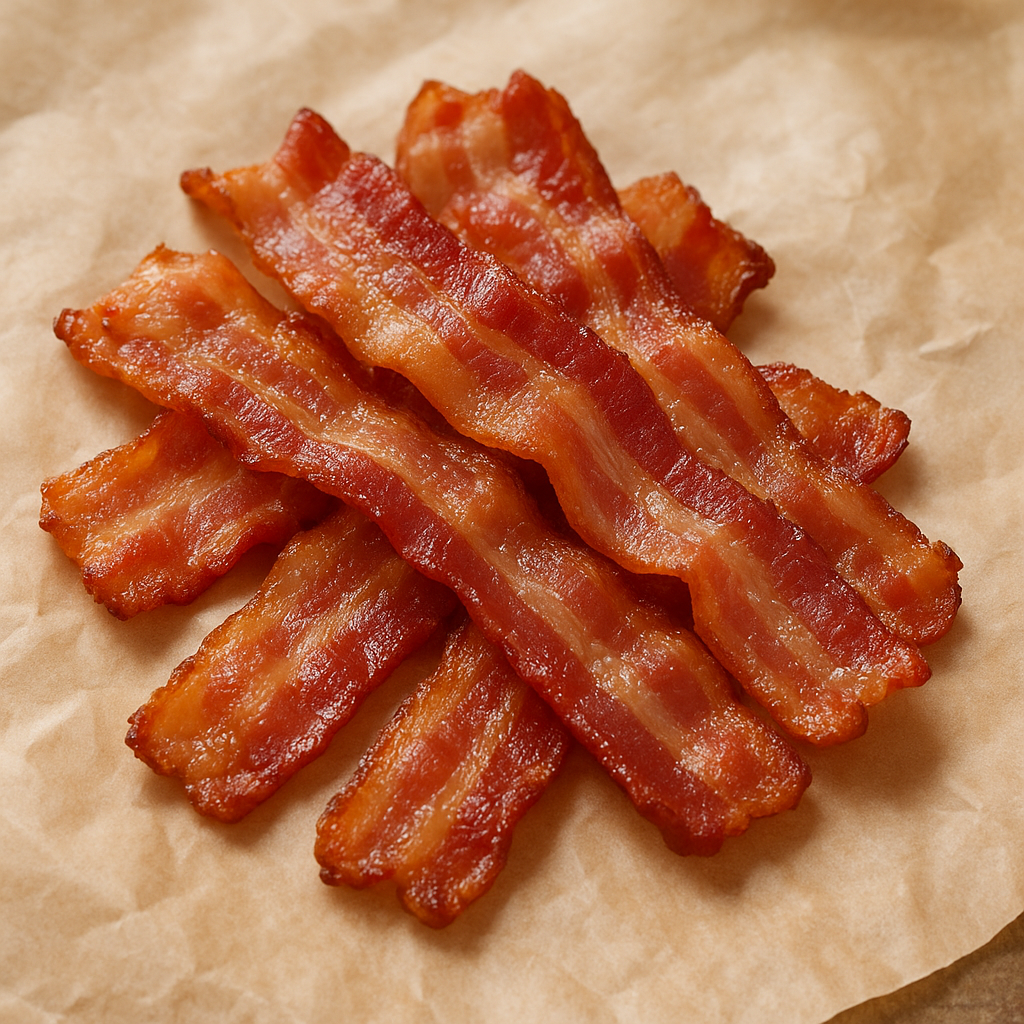
Pork Bacon Slices
What it is
This is a package of thinly sliced pork belly that has been cured. The curing process typically involves salt and sometimes sugar, nitrates, or other seasonings. This curing gives the bacon its characteristic flavor and helps preserve it. The slices are usually separated by paper or plastic to prevent them from sticking together, making them easy to handle for cooking. The fat content can vary depending on the cut and how it is processed.
How people cook with it
Bacon is a versatile ingredient that can be enjoyed on its own or used to enhance the flavor of many dishes.
- Breakfast side dish
- Sandwich topping
- Salad ingredient
- Flavor enhancer for soups
To cook bacon, place the slices in a cold skillet in a single layer. Cook over medium heat, turning occasionally, until the desired crispness is reached. The fat will render out as it cooks. For a less messy method, you can bake bacon on a rack set over a baking sheet in a preheated oven. This allows the fat to drip away, resulting in evenly cooked, crispy bacon. Drain on paper towels to remove excess grease before serving or adding to other recipes.
How it differs from similar foods
Different cuts of pork belly and curing methods result in variations in bacon. Some bacon is leaner with less fat, while other varieties are fattier and richer. The cut of the belly can also influence the size and shape of the strips, affecting how they cook and their texture when done.
Who it is for
Home cooks and professional chefs use bacon to add a savory, smoky flavor to their meals.
How to keep the rest
After opening, store any unused bacon tightly wrapped in its original packaging or in an airtight container in the refrigerator. It should be consumed within a few days for the best quality. For longer storage, bacon can be frozen, which will preserve its quality for several months.