
Grocery
Fresh Avocados
What it is
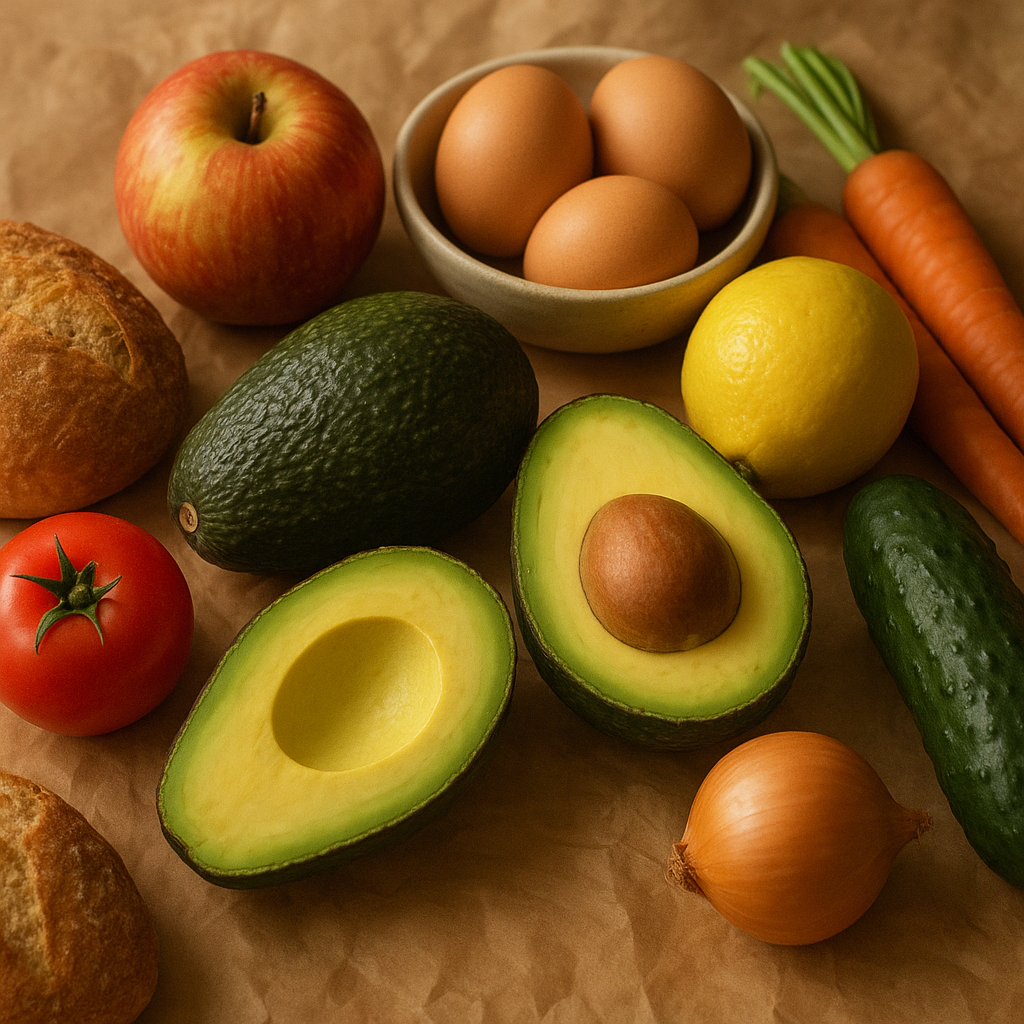
These are fresh avocados, a fruit known for its creamy texture and mild, nutty flavor. They are typically oval or pear-shaped with a dark green to black skin that can be smooth or pebbly. Inside, the flesh is a pale green, surrounding a large, hard pit. Avocados are versatile and can be enjoyed in many ways, from simple snacks to complex dishes. Their unique texture makes them a popular ingredient in various cuisines worldwide.
How people cook with it
Avocados are a staple in kitchens for both their taste and texture. They can be used in a wide range of culinary applications.
- Sliced in salads
- Mashed for guacamole
- Blended into smoothies
- Spread on toast
To prepare an avocado, first cut it in half lengthwise around the pit. Twist the halves to separate them. You can then remove the pit by carefully striking it with the heel of your knife and twisting, or by scooping it out with a spoon. The flesh can be scooped out with a spoon, diced, or sliced directly from the skin. Avocados are best used when ripe, which is indicated by a slight give when gently squeezed. Overripe avocados may have brown spots.
How it differs from similar foods
Unlike many fruits, avocados are high in healthy fats, which contribute to their rich, buttery texture. This makes them a satisfying addition to meals, providing a different kind of richness compared to fruits that are primarily high in sugars and water content. Their flavor is also more subtle and less sweet than most fruits.
Who it is for
Home cooks and professional chefs alike appreciate avocados for their culinary flexibility.
How to keep the rest
To store unripe avocados, keep them at room temperature until they yield to gentle pressure. Once ripe, store them in the refrigerator to slow down the ripening process. If you have cut an avocado, press plastic wrap directly onto the cut surface to minimize oxidation and store it in the refrigerator.