
Grocery
Apple Cider Vinegar
What it is
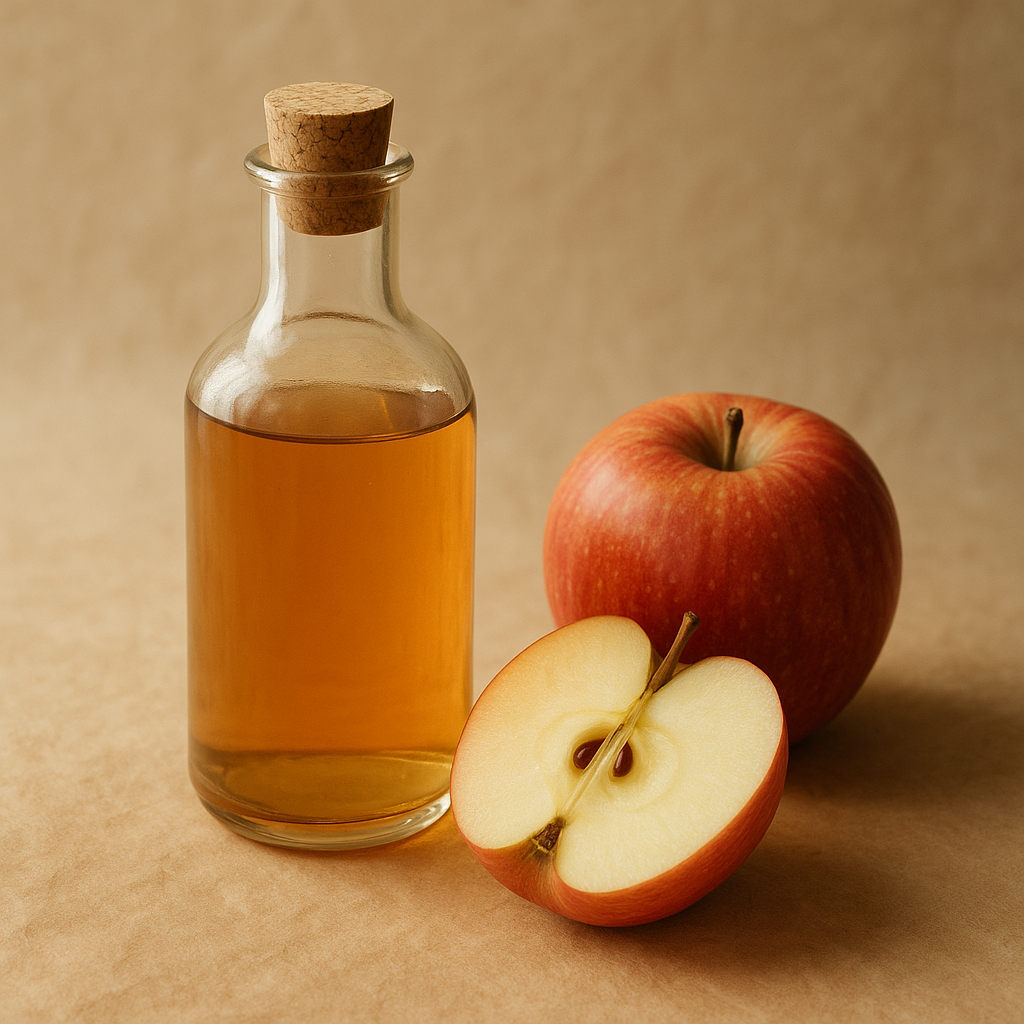
Apple cider vinegar is a type of vinegar made from fermented apple juice. The fermentation process converts the sugars in the apples into alcohol, and then into acetic acid. This gives the vinegar its characteristic sour taste and pungent aroma. It is often sold unfiltered and unpasteurized, which means it may contain a cloudy substance called the 'mother,' a collection of bacteria and yeast that contributes to its flavor and potential uses. This vinegar is a versatile pantry staple.
How people cook with it
Apple cider vinegar can be used in a variety of culinary applications, from dressings to marinades.
- Salad dressings
- Marinades for meats
- Pickling vegetables
- Baking ingredient
In cooking, apple cider vinegar adds a bright, tangy flavor. It is a common ingredient in homemade salad dressings, where its acidity balances the richness of oils. It can also tenderize meats when used in marinades, breaking down tough fibers. For pickling, it provides the necessary acidity to preserve vegetables and impart a distinct taste. In baking, a small amount can react with baking soda to help leaven baked goods, adding a subtle depth of flavor. It can also be used in sauces and chutneys.
How it differs from similar foods
Compared to white distilled vinegar, apple cider vinegar has a fruitier, less harsh flavor profile due to its apple origin. Its color is also a distinguishing factor, ranging from pale yellow to a deeper amber, unlike the clear appearance of distilled vinegar. This makes it suitable for applications where visual appeal is a consideration.
Who it is for
Home cooks and bakers often keep apple cider vinegar on hand for its unique flavor and versatility.
How to keep the rest
To maintain its quality, store apple cider vinegar in a cool, dark place, such as a pantry. Keep the bottle tightly sealed to prevent evaporation and contamination. Refrigeration is not typically necessary for unopened bottles, but it can help preserve the flavor and clarity over extended periods, especially after opening.