
Grocery
Whole Almonds
What it is
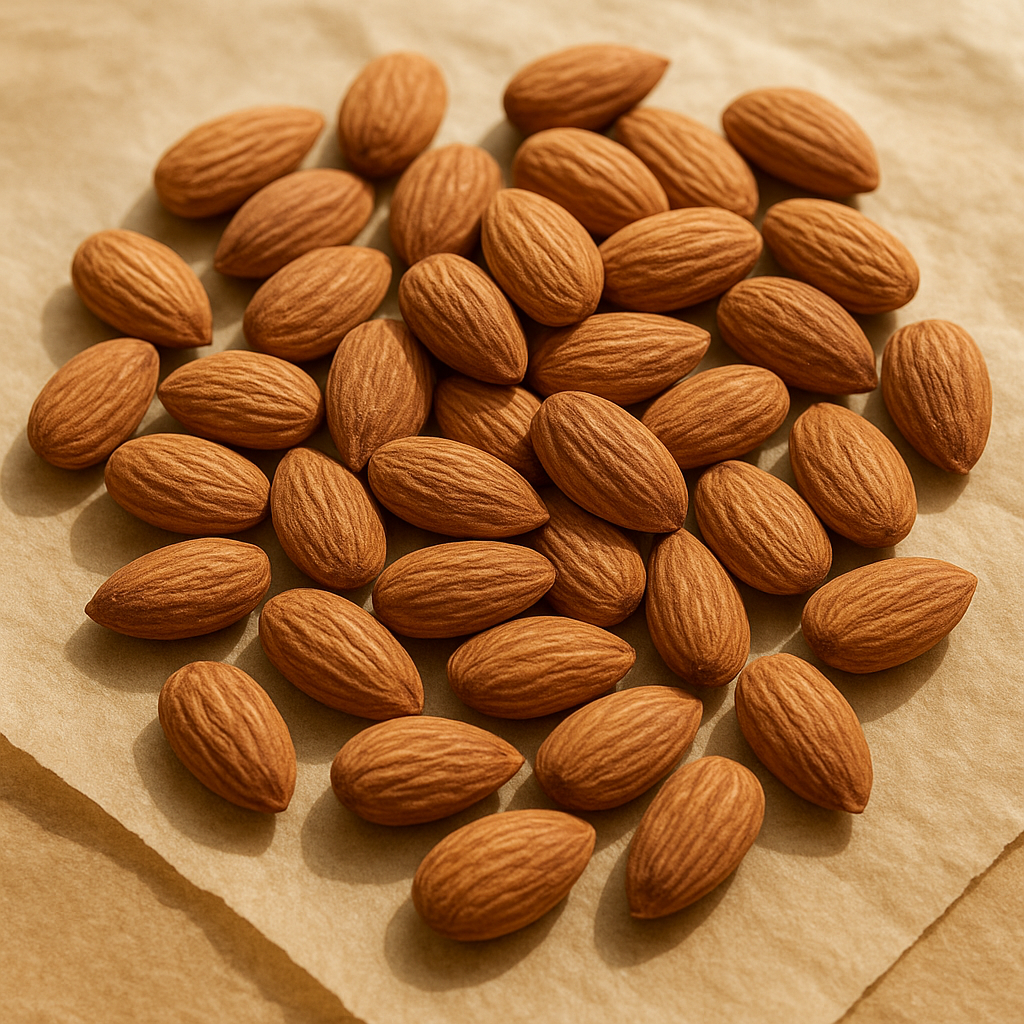
These are whole, raw almonds, presented in their natural state. They are the edible seeds of the almond tree, known for their firm texture and mild, nutty flavor. Each almond is a complete kernel, retaining its characteristic shape and skin. They are a common pantry staple for many home cooks and bakers.
How people cook with it
Almonds are incredibly versatile in the kitchen. They can be enjoyed on their own or incorporated into a wide range of sweet and savory dishes.
- Snacking
- Baking
- Toppings
- Smoothies
Whole almonds can be eaten directly from the bag as a convenient snack. For baking, they are often chopped or ground into flour to add texture and flavor to cakes, cookies, and breads. They can also be toasted to enhance their nuttiness, making them a delicious addition to salads, yogurt, or oatmeal. In savory cooking, they can be added to stir-fries or used to create sauces and pestos. Their versatility allows for both raw and cooked applications.
How it differs from similar foods
Unlike slivered or sliced almonds, whole almonds offer a more substantial bite and a more visually appealing presentation when left intact. Their skin provides a slightly different texture and a subtle earthy note compared to blanched almonds, which are processed to remove the outer layer.
Who it is for
Home cooks and bakers who appreciate natural ingredients and seek versatile additions to their recipes.
How to keep the rest
To maintain freshness, store any remaining whole almonds in an airtight container in a cool, dry place. This helps to prevent them from becoming stale or absorbing unwanted odors. For longer storage, refrigeration is an option, especially in warmer climates.