
Grocery
Whole Raw Almonds
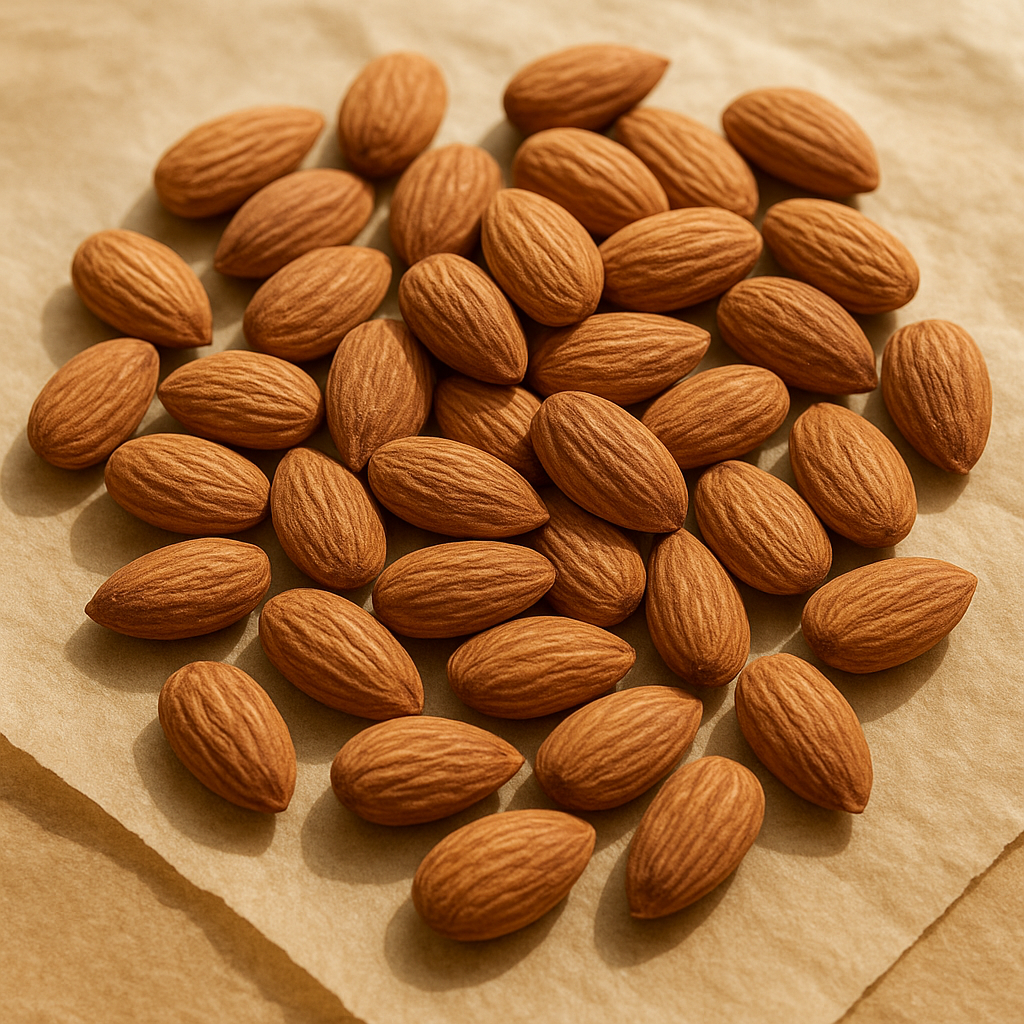
What it is
These are whole almonds, meaning they have not been blanched, roasted, or chopped. They retain their natural brown skin, which contributes to their texture and flavor. The nuts are typically dry and ready for use in various culinary applications or as a standalone snack. They offer a satisfying crunch and a mild, earthy taste that pairs well with both sweet and savory ingredients.
How people cook with it
Whole almonds are a versatile pantry staple. They can be enjoyed as is or incorporated into a wide range of dishes.
- Snack on them directly
- Add to baked goods
- Incorporate into salads
- Blend into sauces
You can enjoy these whole almonds straight from the package as a quick and satisfying snack. For baking, they can be added to cookies, cakes, and muffins, either whole or roughly chopped. They also make a wonderful addition to savory dishes, such as stir-fries, curries, and grain bowls, providing a pleasant textural contrast. Toasting them lightly in a dry pan or oven can enhance their nutty flavor and crispness, making them even more appealing for snacking or as a topping for yogurt and oatmeal.
How it differs from similar foods
Unlike blanched almonds, these whole almonds retain their natural skin. This skin adds a slightly more robust flavor and a subtle chewiness. Roasted almonds, on the other hand, have undergone a heating process that alters their texture and intensifies their nutty notes, whereas these are raw and have a softer bite.
Who it is for
Home cooks and snack enthusiasts often keep these on hand for a variety of uses.
How to keep the rest
To maintain freshness, store any remaining almonds in an airtight container in a cool, dry place. This helps prevent them from becoming stale or absorbing unwanted odors. For longer storage, you can also keep them in the refrigerator or freezer, which further extends their shelf life.