
Grocery
Apple Cider Vinegar
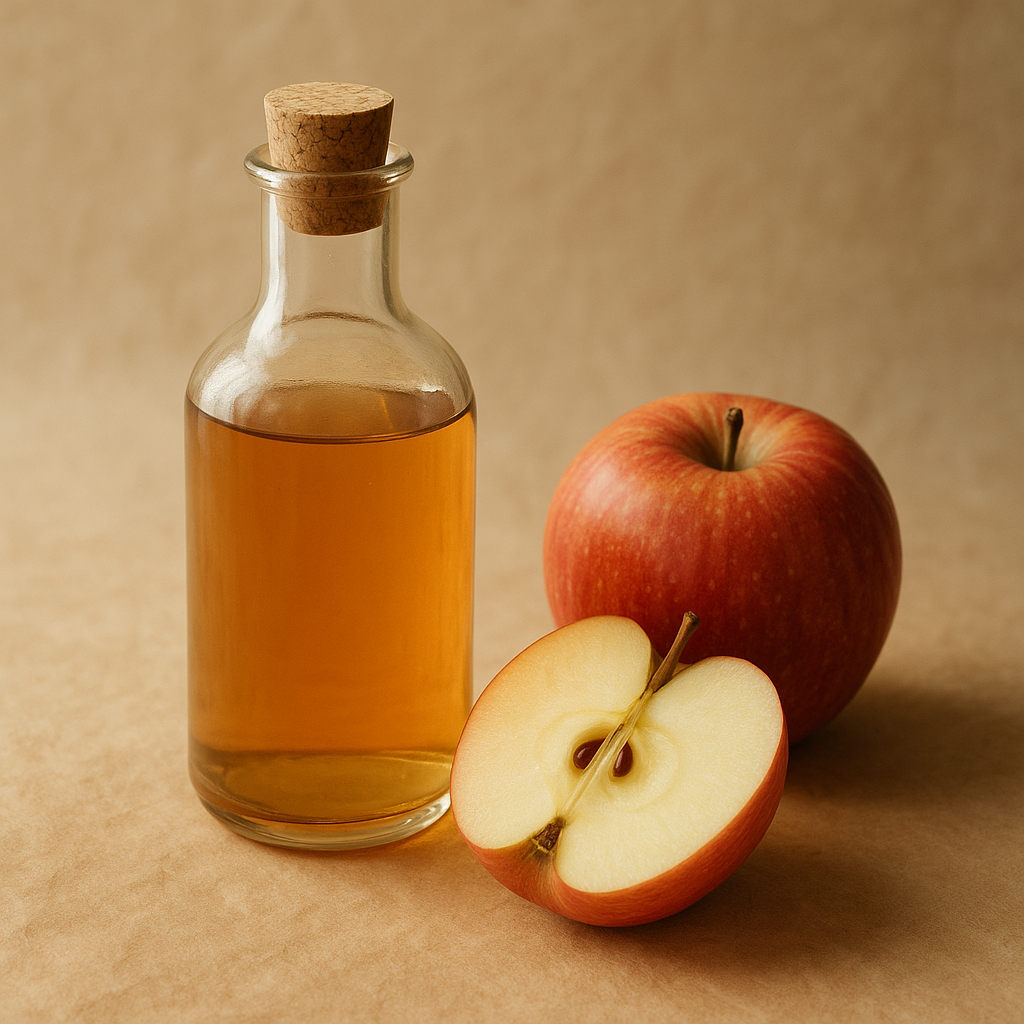
What it is
Apple cider vinegar is a type of vinegar made from fermented apple juice. The fermentation process converts the sugars in the apples into alcohol, and then further fermentation turns the alcohol into acetic acid. This acetic acid is what gives vinegar its characteristic sour taste and pungent aroma. It is often sold unfiltered and unpasteurized, which may result in a cloudy appearance due to the presence of "the mother," a colony of beneficial bacteria and enzymes.
How people cook with it
This versatile ingredient is a staple in many kitchens, used for both culinary and household purposes.
- Salad dressings
- Marinades
- Pickling
- Cleaning
In cooking, apple cider vinegar adds a bright, tangy flavor to dishes. It is commonly used as a base for salad dressings, often combined with oil and seasonings. It can also tenderize meats when used in marinades and adds a pleasant acidity to sauces and stews. Beyond the kitchen, its acidic properties make it useful for cleaning surfaces, removing hard water stains, and as a natural deodorizer. Some people also consume small amounts diluted in water.
How it differs from similar foods
Compared to white distilled vinegar, apple cider vinegar has a fruitier flavor profile and a less harsh acidity. White vinegar is typically made from grain alcohol and has a sharper, more neutral taste, making it better suited for cleaning and certain pickling recipes where a pure acidic bite is desired.
Who it is for
Home cooks and bakers often reach for apple cider vinegar to add depth and complexity to their recipes.
How to keep the rest
To maintain its quality, store apple cider vinegar in a cool, dark place, such as a pantry. Once opened, it does not require refrigeration. If you notice sediment or cloudiness, it is a natural occurrence and does not affect the vinegar's usability.