
Grocery
Apple Cider Vinegar
What it is
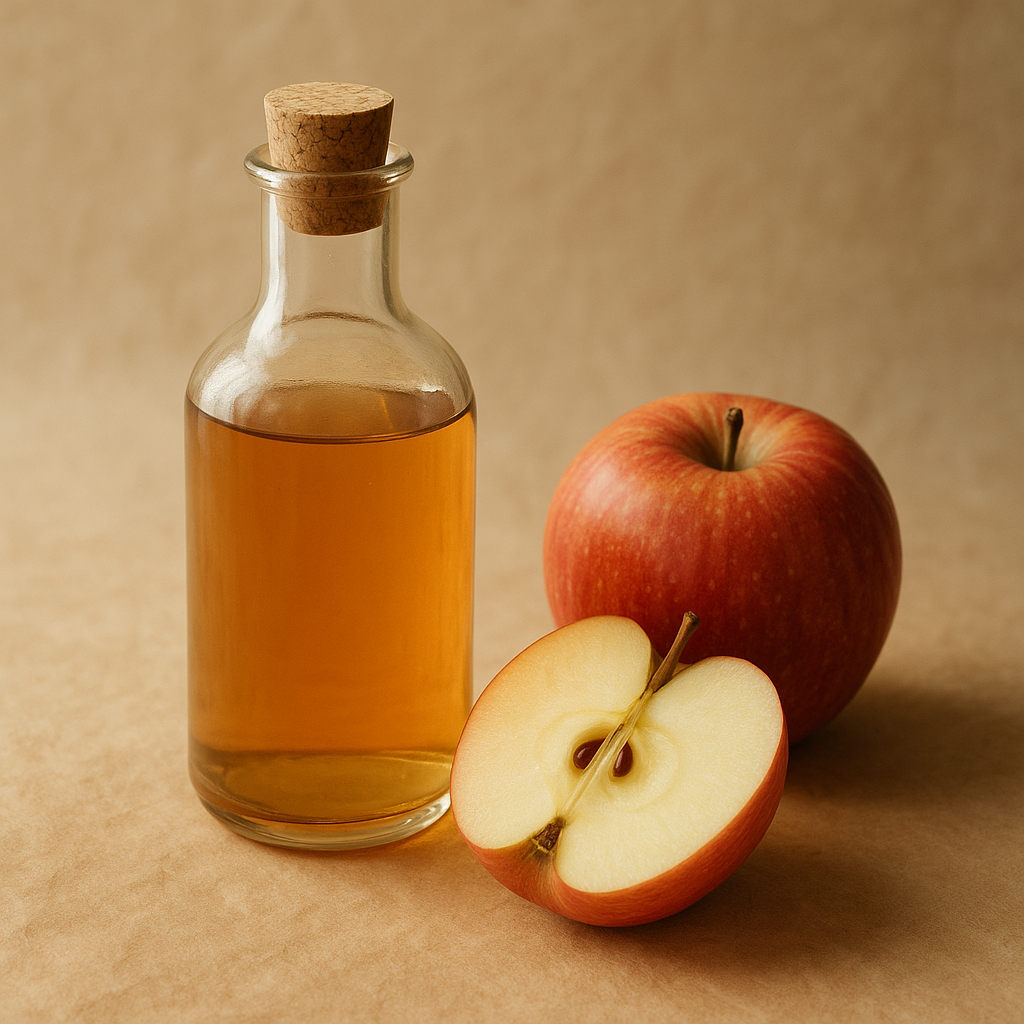
Apple cider vinegar is a type of vinegar made from fermented apple juice. The fermentation process converts the sugars in the apples into alcohol, and then the alcohol is further converted into acetic acid. This acetic acid is what gives vinegar its characteristic sour taste and pungent aroma. It is a common ingredient in many kitchens and is used for a variety of culinary and household purposes.
How people cook with it
People use apple cider vinegar in cooking and for other household tasks. It adds a distinct flavor to dishes and can be used in cleaning solutions.
- Salad dressings
- Marinades
- Pickling brine
- Household cleaning
In cooking, apple cider vinegar can be added to salad dressings to provide a tangy counterpoint to richer ingredients. For pickling, it forms the base of the brine, preserving vegetables and fruits. Beyond the kitchen, its acidity makes it effective for cleaning surfaces, cutting through grease and grime. It can also be diluted with water for various household applications.
How it differs from similar foods
Compared to white distilled vinegar, apple cider vinegar has a fruitier flavor profile due to its apple origin. It is less sharp and can impart a subtle sweetness. Other vinegars, like red wine or balsamic, have even more distinct flavor profiles and are often used in different culinary contexts.
Who it is for
Home cooks and individuals interested in natural cleaning solutions often keep apple cider vinegar on hand.
How to keep the rest
To maintain its quality, store apple cider vinegar in a cool, dark place, such as a pantry or cupboard. Keep the bottle tightly sealed to prevent evaporation and contamination. Refrigeration is not typically necessary, but it can help preserve its flavor and clarity over extended periods.